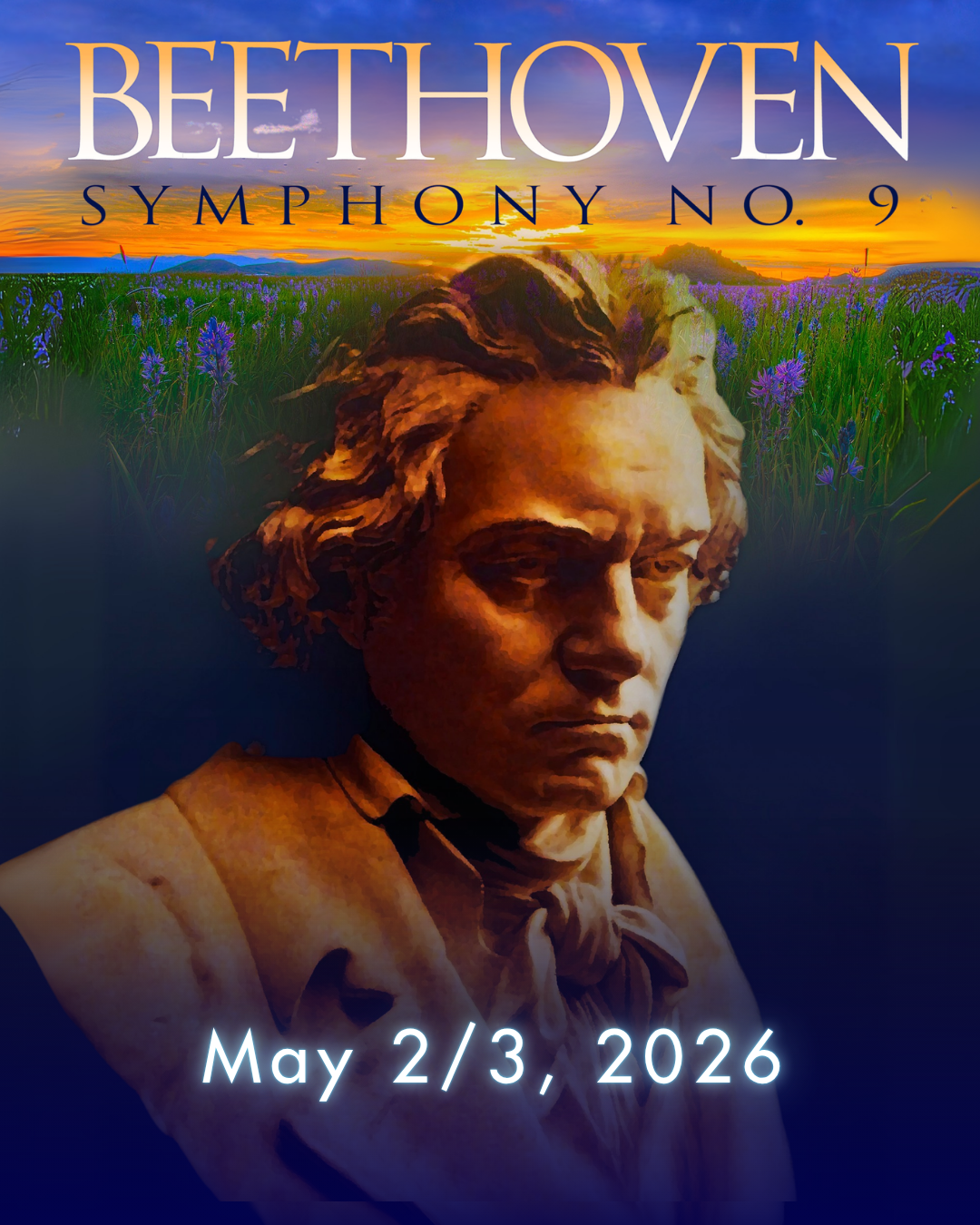
The greatest of all symphonies: A review of the May 2/3, 2026 Beethoven Symphony No. 9 concerts

by Professor Martin Gaskell

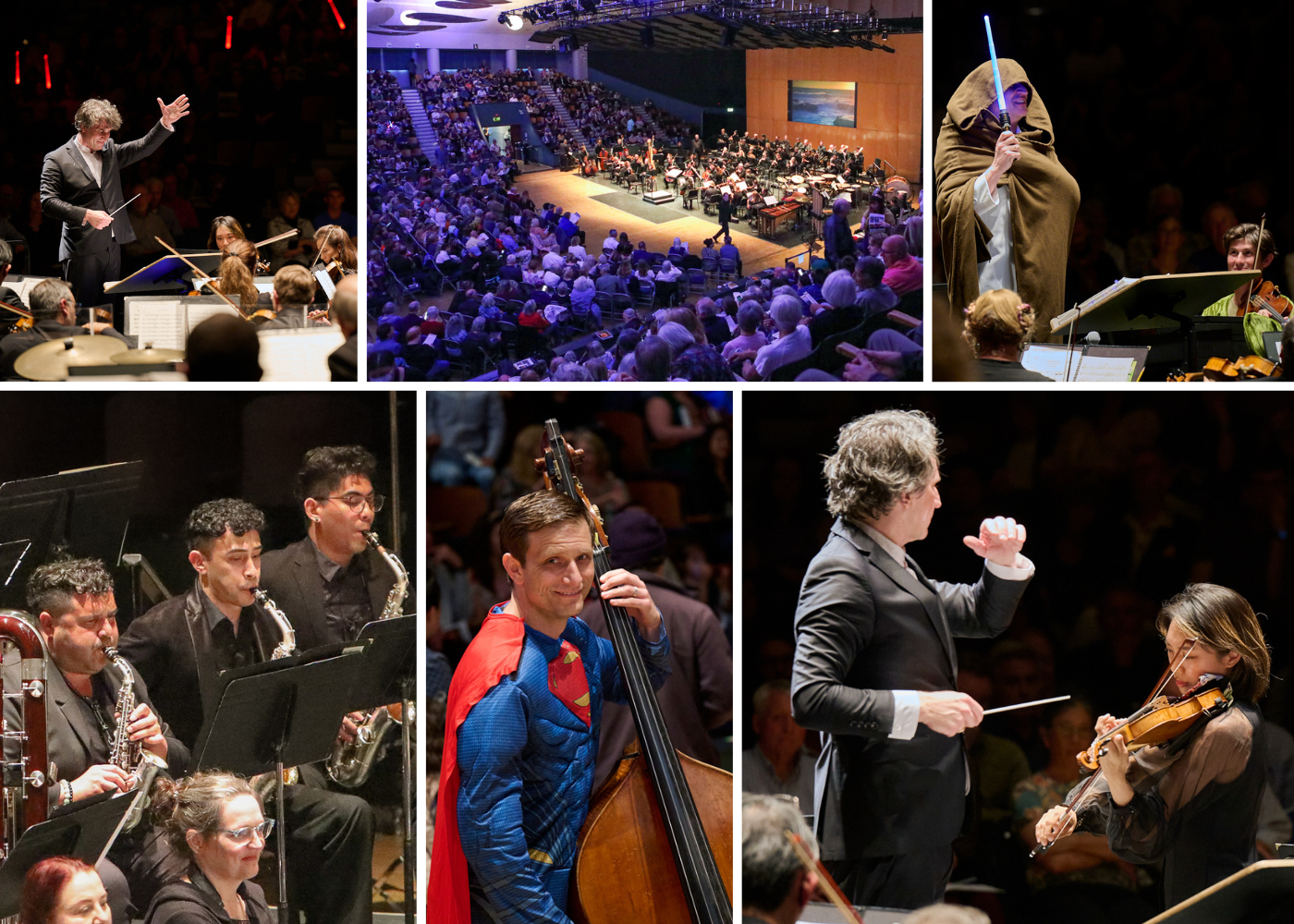
This weekend Santa Cruz Symphony, under Daniel Stewart, the Cabrillo Symphonic Chorus under Dr. Carlin Truong, and a stellar quartet of vocal soloists treated local audiences to stunning performances of what Frederick Stock, famous conductor of the Chicago Symphony, called “the greatest of all symphonies,” Beethoven’s Symphony No. 9. It is a work ranked by musicians and critics alike as one of the, if not the, greatest musical creations of all time.

The weekend’s sold-out concerts capped a highly successful season of Santa Cruz Symphony Classical Series concerts. One sign of this season’s popularity was that there were no season program books handed out at this weekend’s concerts. They had run out with the previous month’s Amadeus performances!

Beethoven’s Symphony No. 9, like the similarly large-scale symphonies of Bruckner and Mahler, always presents a programming problem: what else does one put on the program?

At the first performance in 1824 in a theater intermediate in size between the Civic Auditorium and the Mello Center (and probably with similar acoustics), Symphony No. 9 was preceded by Beethoven’s now rarely played “Consecration of the House” overture, and an hour’s worth of his Missa Solemnis. One 19th-century conductor solved the problem by performing the entire Symphony No. 9 twice in one concert!

Daniel Stewart took a more modest approach. The program began with Dvořák’s exuberant Carnival Overture. It matched the mood of the audience perfectly. At the end people were ecstatic.
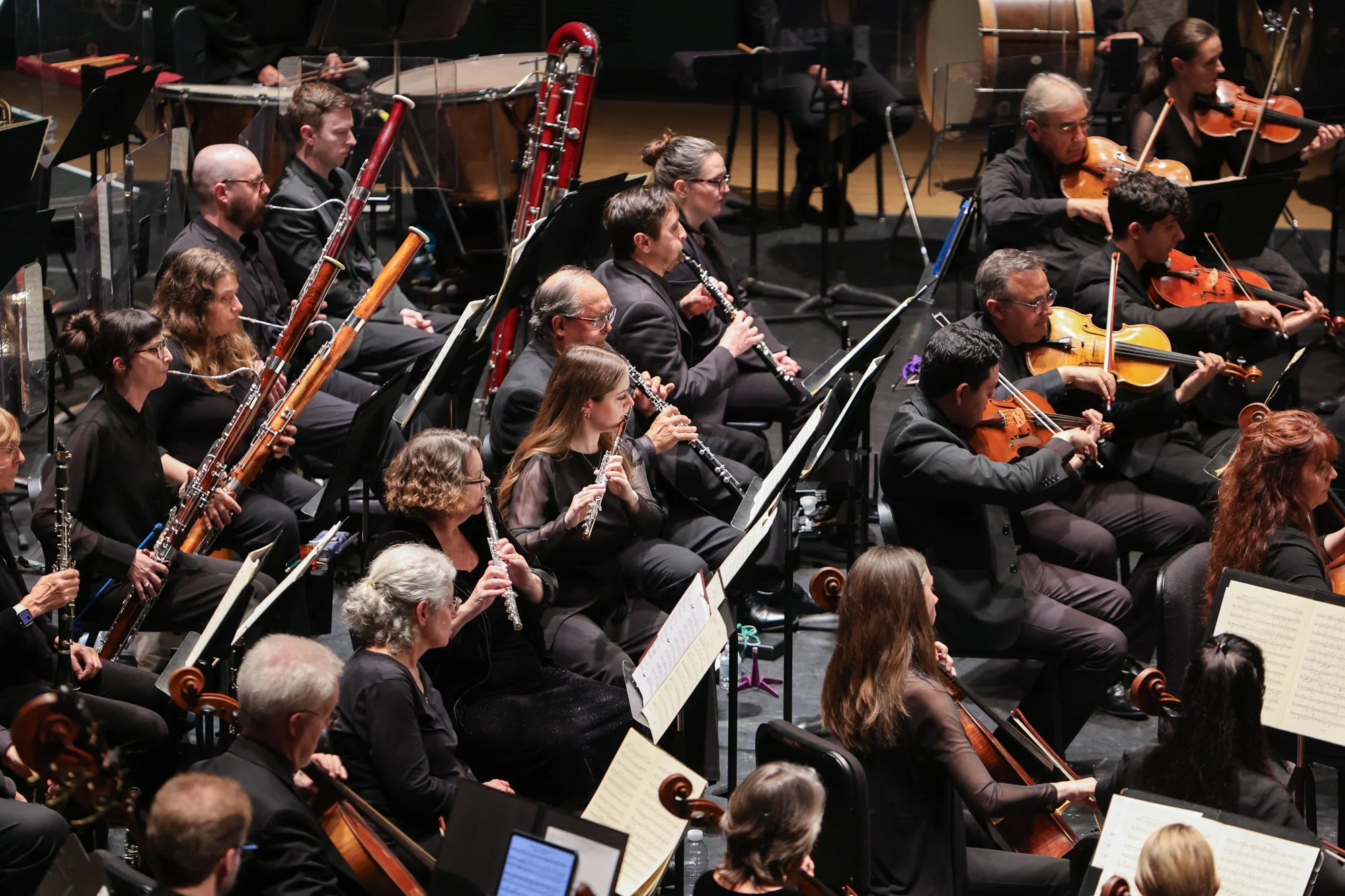
In the calmer part of the overture there were some notable solos for the cor anglais (Meave Cox), Principal Flute Sarah Benton, Principal Clarinet Karen Sremac, and Kiri Murakami-Loehmann, who was filling in as Concertmaster at short notice. Maestro Stewart had them take solo bows at the end of the piece. Norman Peck’s varied tambourine technique was also interesting to watch and hear.

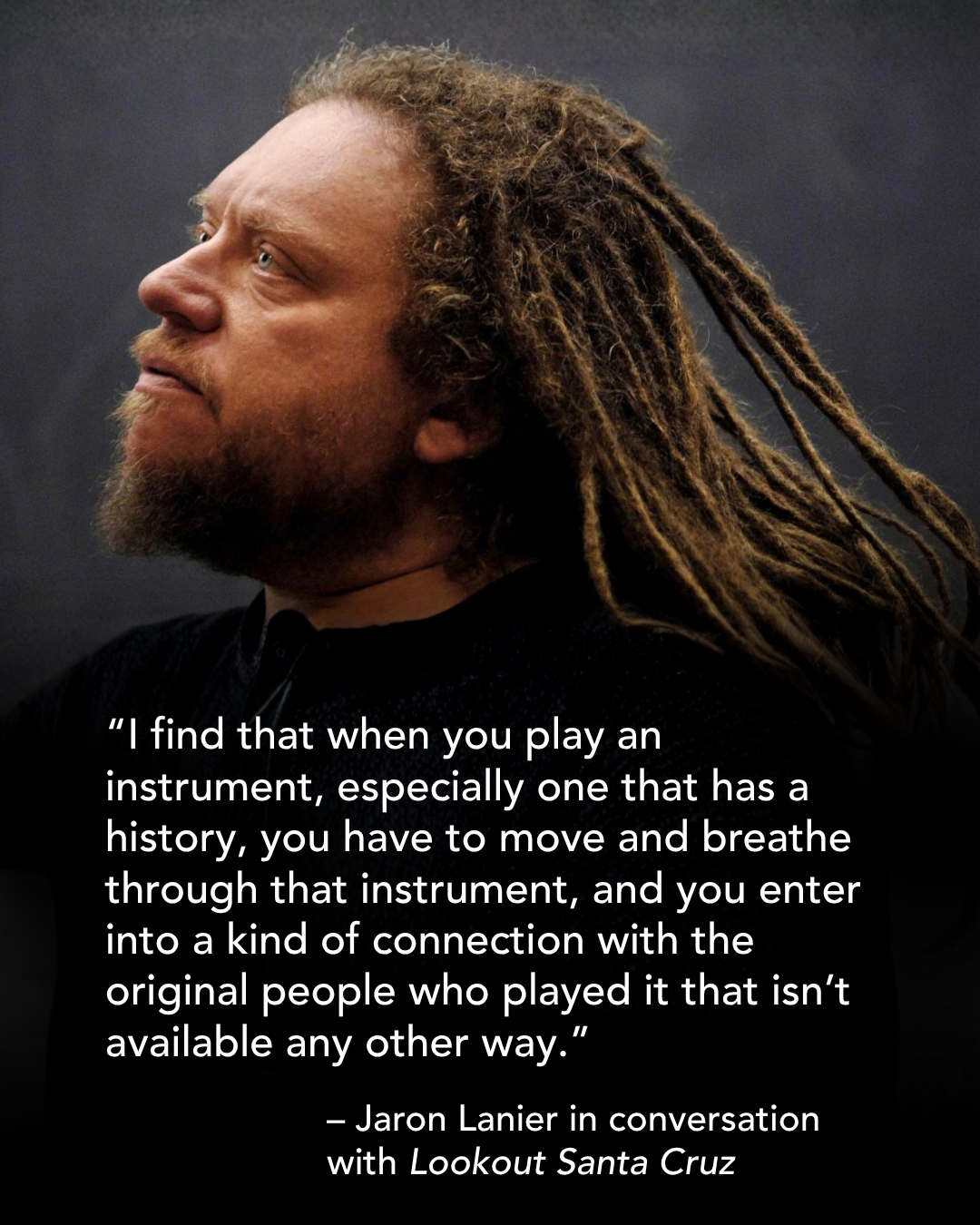
The next piece had been announced in advance in the season program book as a world premiere of local composer Jaron Lanier’s “Music for Piano and Orchestra,” but this had been changed to his Khaenoncerto for Khaen and Orchestra, which had been commission for the year 2000 celebration of the 1000th anniversary of the founding of the city of Wrocław in Poland. As well as being a composer, Lanier is a noted computer scientist, technologist, and futurist.

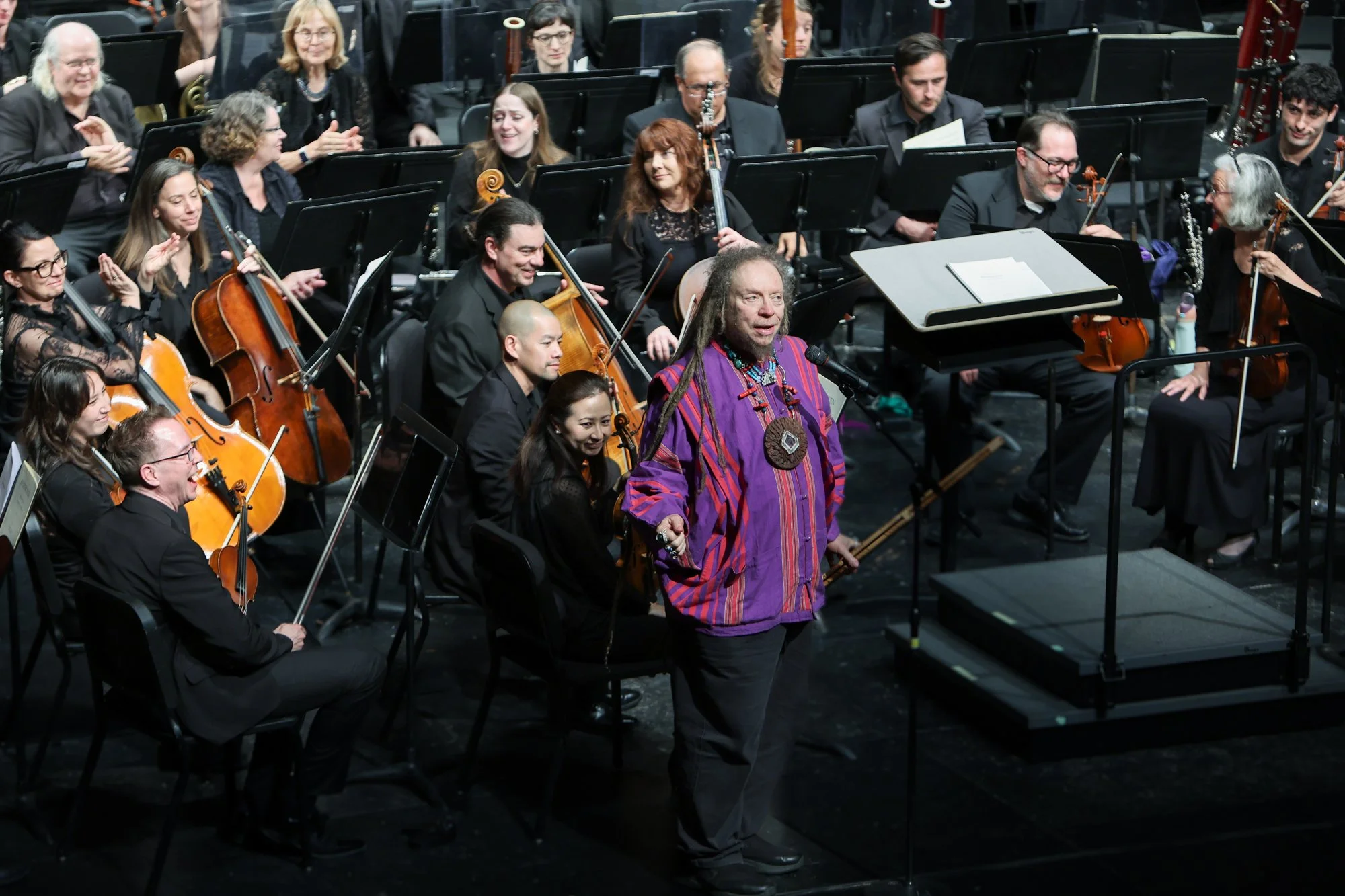
First though, there was a short, last-minute insertion into the program. The story of this addition was told by the composer. Audiences appreciate hearing living composers say a little about their music, and Jaron Lanier is a particularly delightful speaker. He explained that he is, unfortunately, very prone to losing scores of his compositions! The September 1984 issue of Scientific American featured his computer programming work and had a piece of his music on the its front cover. Lanier had lost score to the piece. However, he and Daniel Stewart realized during rehearsals before the weekend’s concerts that all they had to do was look at the 1984 Scientific American issue to recover the music!

Daniel Stewart had then quickly entered the music from the magazine cover into music-notation software, so that the strings were able to give us the world premiere of The Scientific American canon! (I do have to fault the orchestra though for not reading directly off the Scientific American cover!)

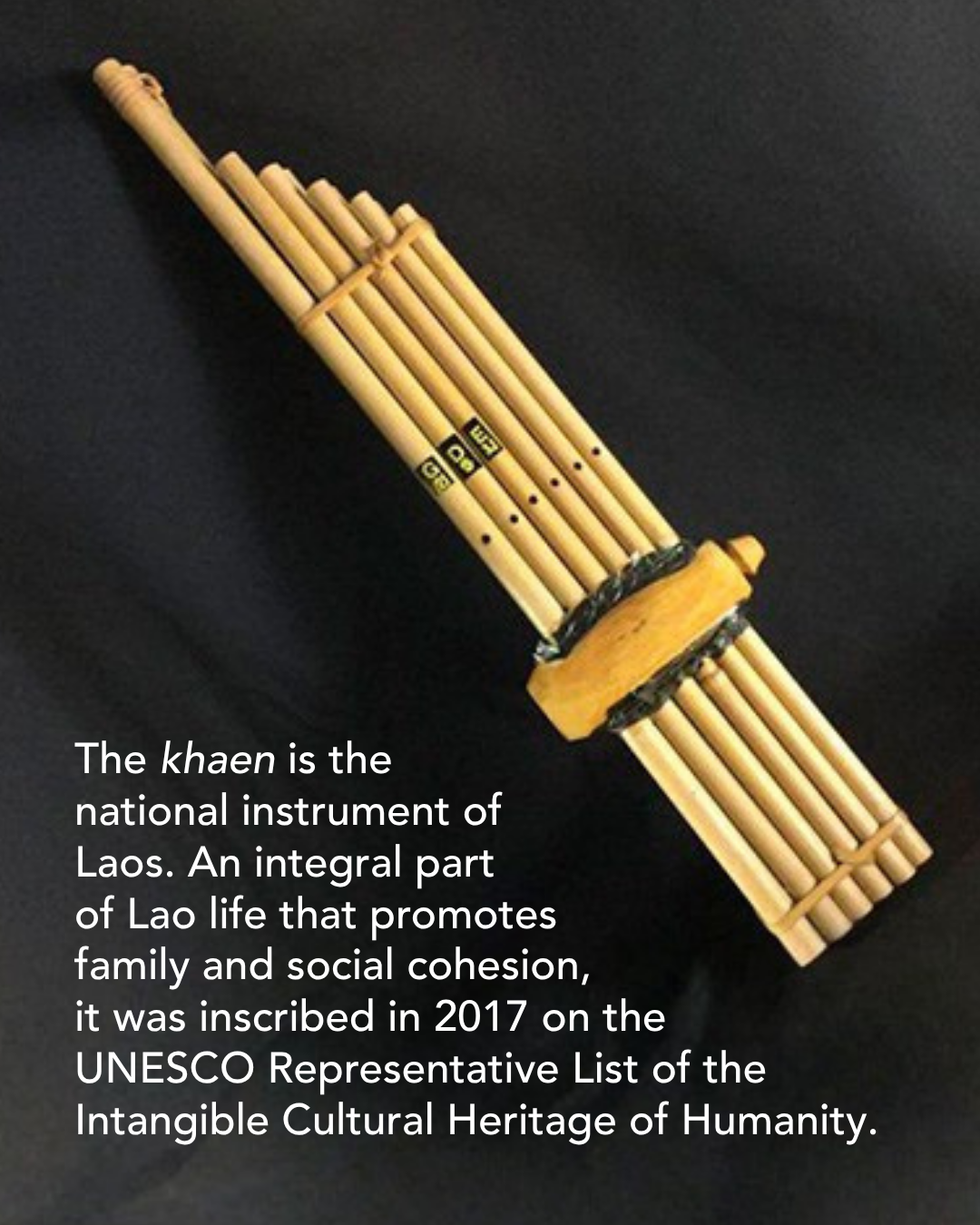
The scheduled piece by Lanier was his Khaenoncerto for Khaen and Orchestra. The khaen is the national instrument of Laos. This unusual instrument consists of many parallel bamboo resonator tubes looking a little like pan pipes sticking up into the air. The pipes are sounded with reeds on the side that are somewhat similar to those of a harmonica (mouth organ). “In case you’re wondering,” said Lanier on Saturday, “yes, I did lose the score to this piece too!” This produced peals of laughter. In the absence of a printed magazine cover in this case, Daniel Stewart had transcribed the piece from a recording of the performance in Poland.

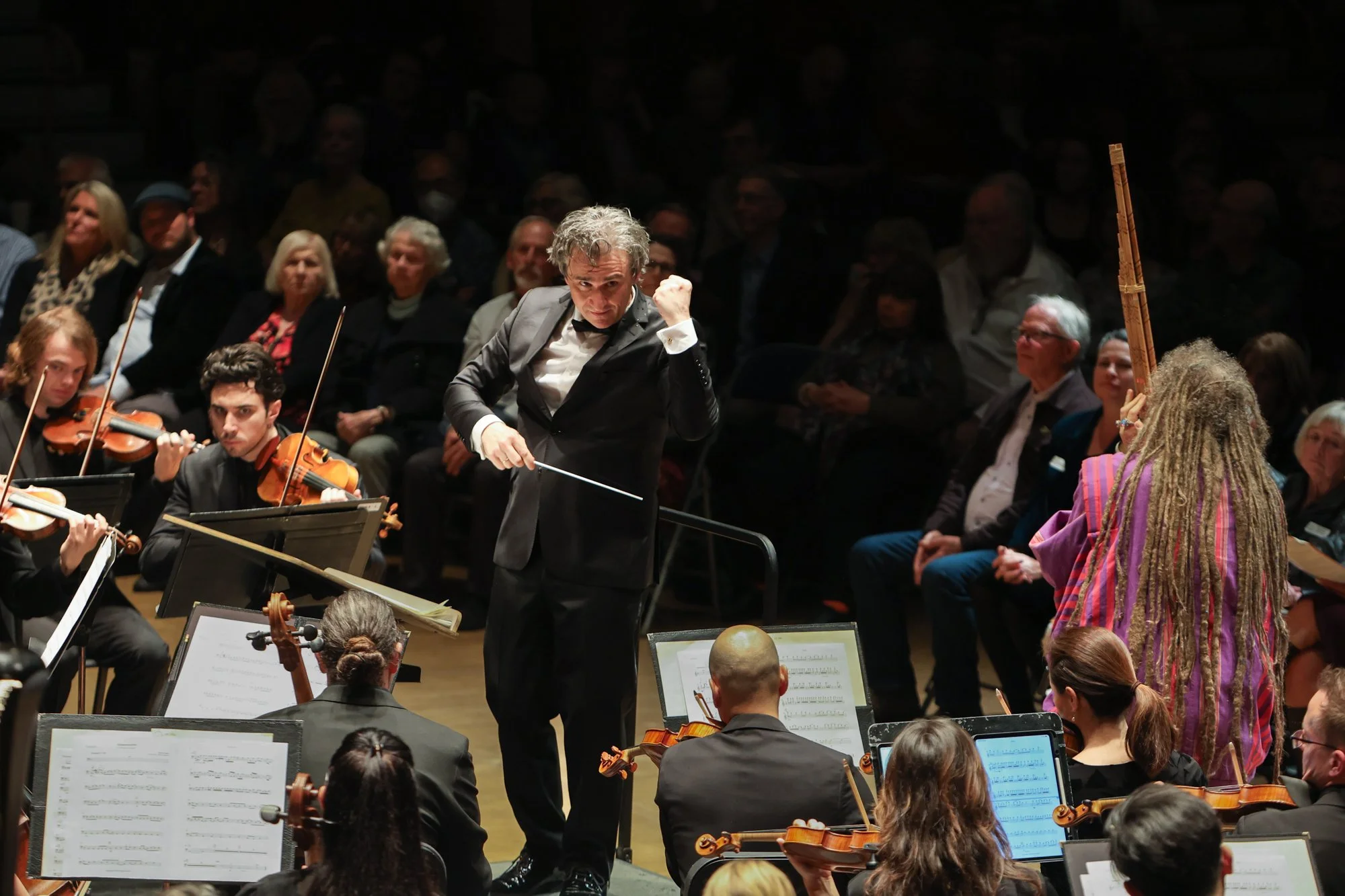
The scheduled Khaenoncerto that followed began with a solo cadenza for Lanier on the khaen. Then the orchestra began a canon, starting with the violas alone, then adding the cellos (a very beautiful combination), and so on. At the climax, when everyone in the orchestra is playing, the (amplified) khaen enters. It blended well with the orchestra, and its rich harmonic spectrum added a bell-like sheen to the ensemble.

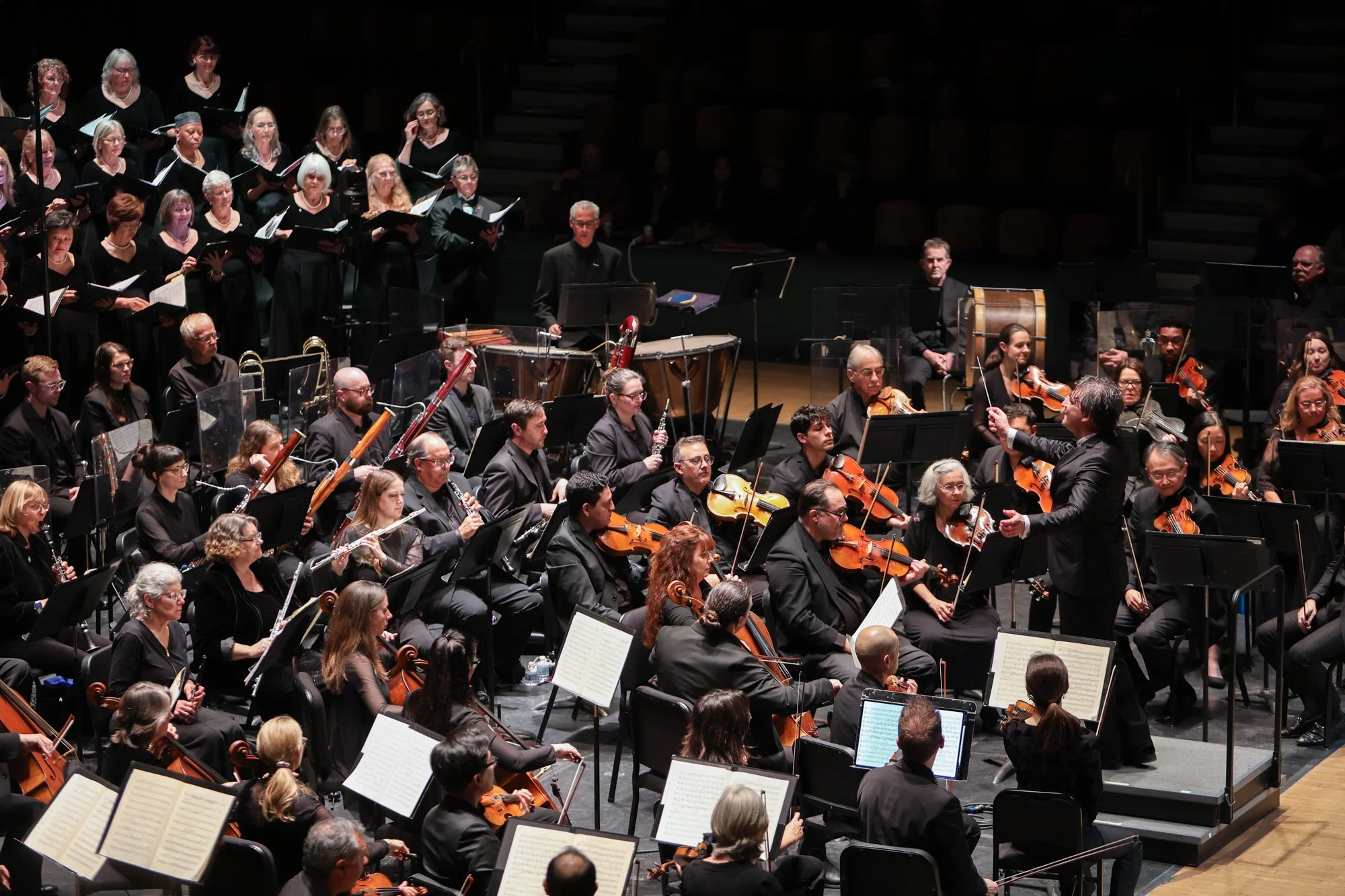
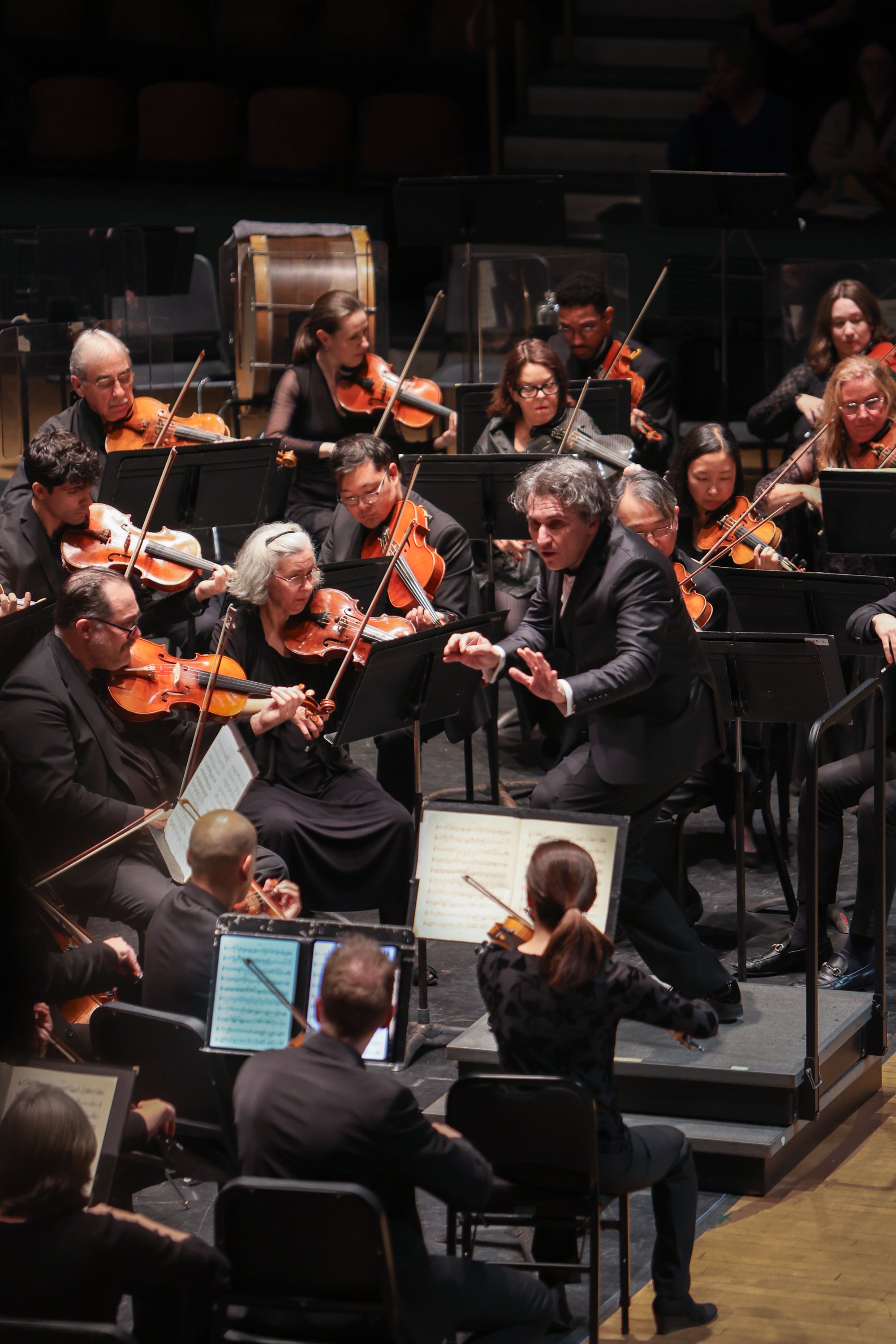
After the intermission, Maestro Stewart took the podium again. He waited until everyone was silent and then commenced the hushed, mysterious, primeval start to the first movement to Beethoven’s Symphony No. 9. The performance was as good as any I have heard and had all of Stewart’s famous attention to detail.

The great climax of the opening movement of Beethoven’s Symphony No. 9 is the start of the recapitulation (the return to the opening motifs after the so-called “development section” in the middle). To me it conjures up the maelstrom at the heart of a collision between two galaxies. A special shout-out to the orchestra’s timpanist, John Weeks, is needed here because it is his dramatic, minute-long drum roll that makes this moment. The audience burst into applause at the end of the movement.

A scherzo, the symphony’s least popular movement, follows. This is Beethoven’s longest scherzo. Like most conductors, Stewart omitted the longer repeats. I think we often make the mistake of thinking of Beethoven as always being serious, but the symphonic movement he is associated with introducing is the scherzo. Scherzo is the Italian word for joke. One shouldn’t miss Beethoven’s humor. I was delighted to hear an audience member near me laugh at the end of the scherzo just before applause broke out. That meant the orchestra had successfully conveyed the humor.

After the noise and drum bashing of the scherzo, we get the tranquility of the lyrical, yearning, and meditative slow movement — a movement that a famous astronomer I knew requested to be played as he was dying. It consists of alternate variations on two themes: the first, a serene slow theme played by the first violins and clarinets, and the second, a more flowing theme beautifully played by the violas and second violins.

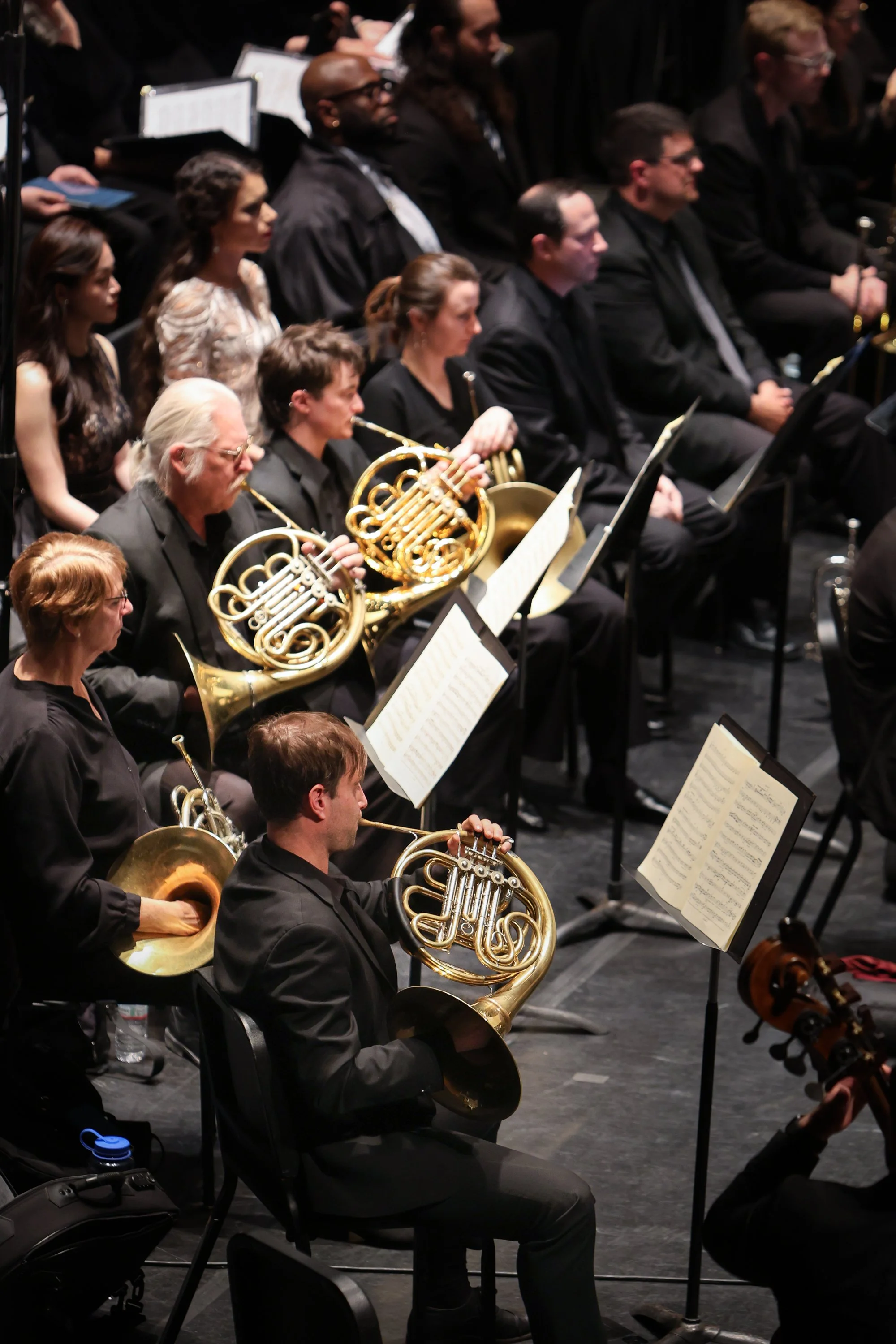
It is amazing music, especially since it was written by a man who could only hear it by attaching a metal rod to the soundboard of his piano and clenching the rod in his teeth! (This is called bone-conduction hearing.) The high point of the movement was Philip Browne’s playing of the challenging, wide-ranging fourth horn solo.

The finale starts with cacophony — what Wagner called “the horror chord.” To enhance the drama, Maestro Stewart attacked this without taking a break at the end of the slow movement. After only waiting a second or two and receiving an affirming nod from John Weeks, who needed to rapidly change the timpani tuning, Stewart called on the woodwinds, brass, and timpani to explode with the dissonant chord that starts the finale with a jolt. The cellos and basses follow with an extensive recitative where they review and reject the music of the previous movements.

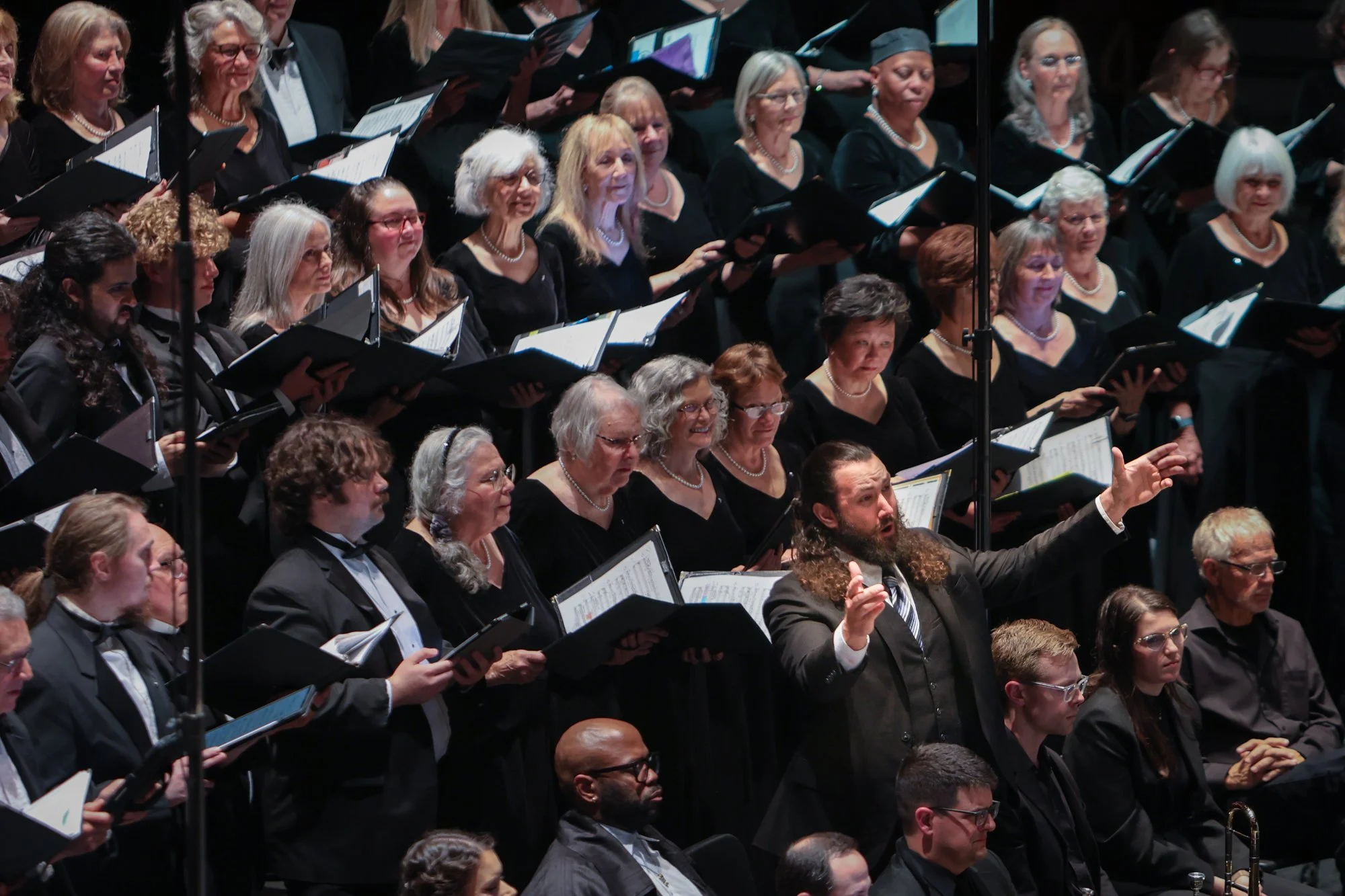
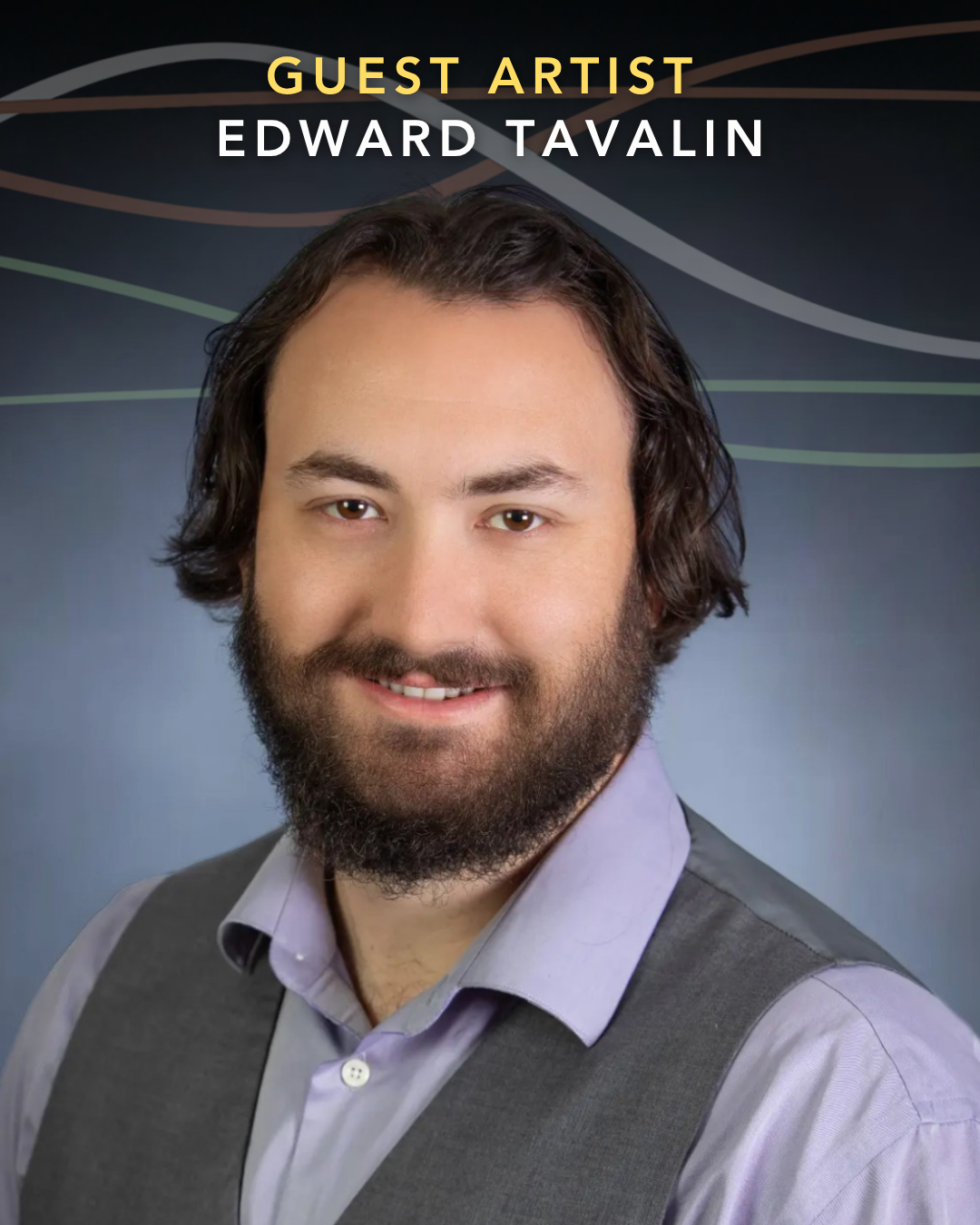
After this introduction, Stewart inserted a very effective short pause before the cellos and basses start Beethoven’s most famous tune, best known in the English-speaking world as the hymn “Joyful, joyful, we adore Thee.” Beethoven’s tune grows through one of the finest crescendos in all of music. The “horror chord” returns, but instead of the instrumental recitative we get a vocal recitative sung by local rising-star baritone Edward Tavalin, who did such an outstanding job as the commendatore from Mozart’s Don Giovanni in the orchestra’s Amadeus last month. Tavalin not only sang the recitative but also illustrated the text with hand gestures.

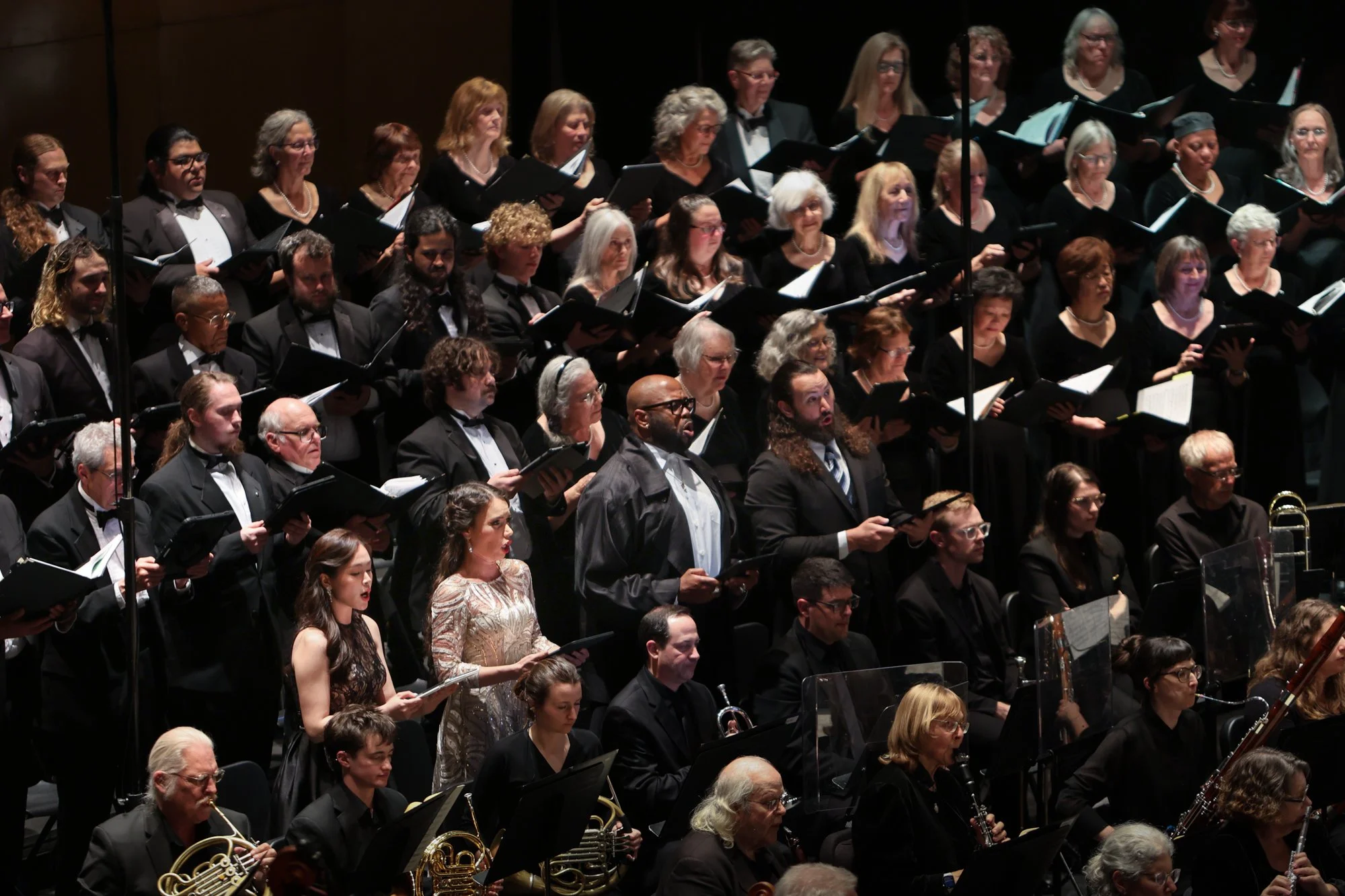
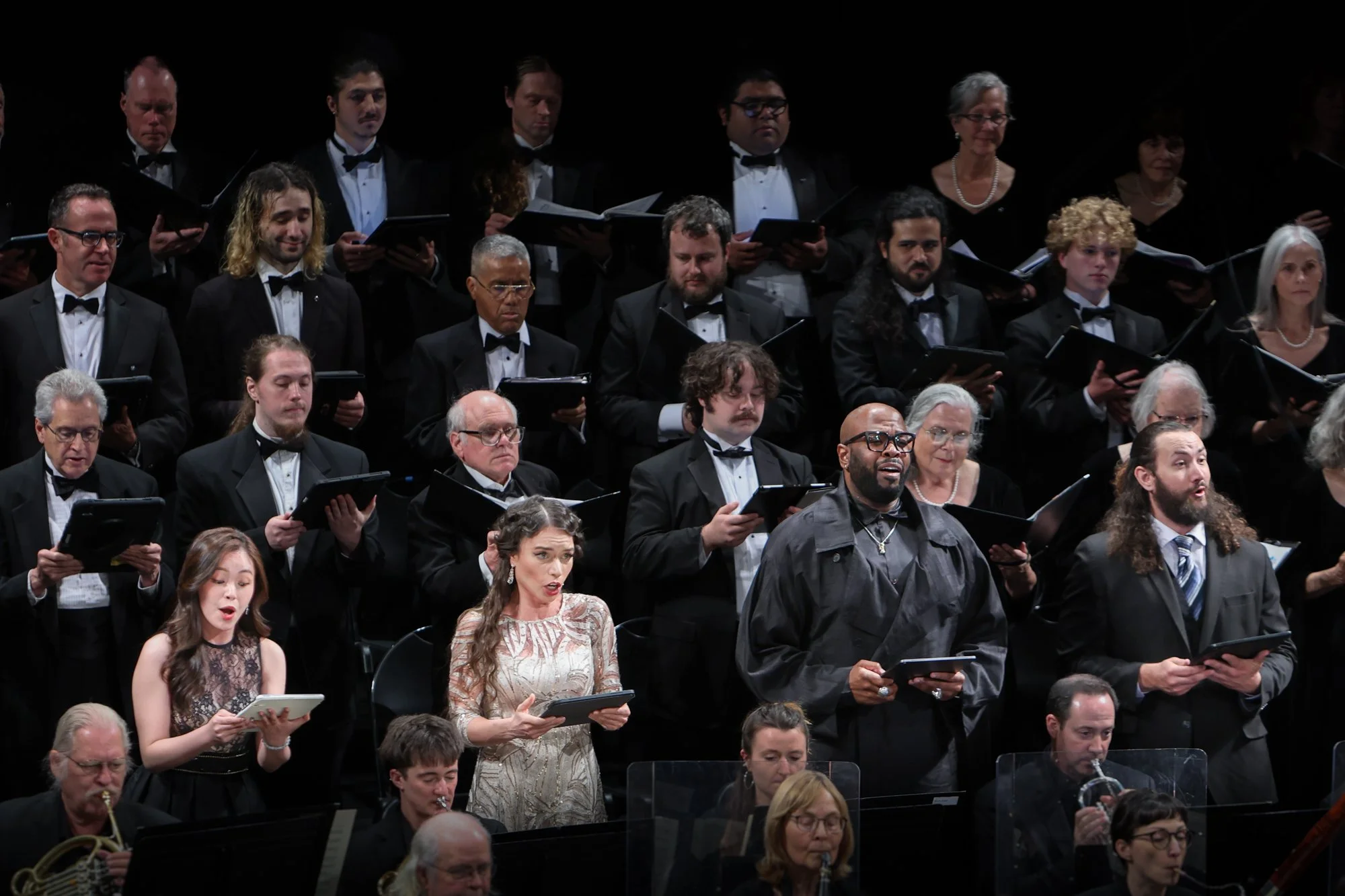
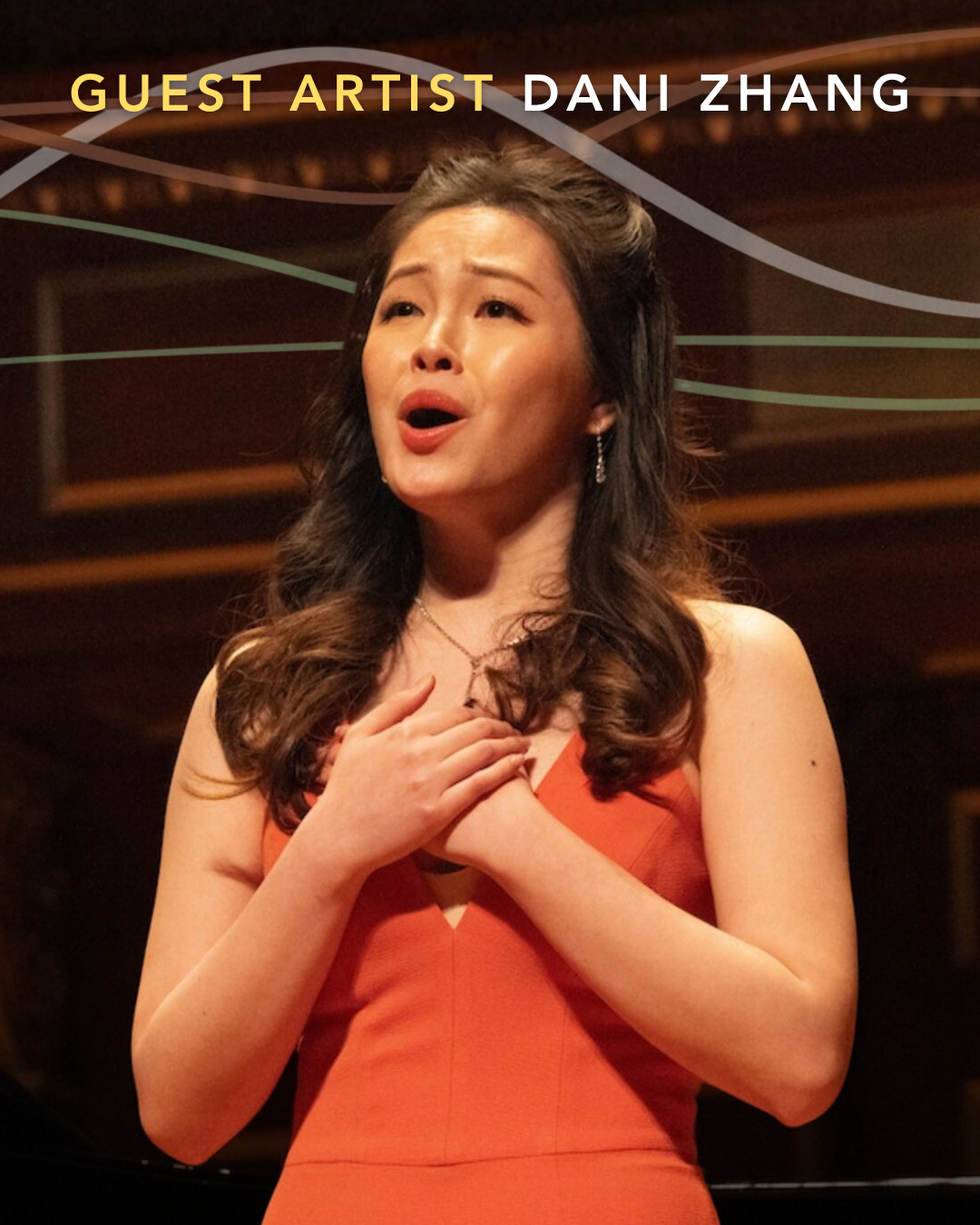
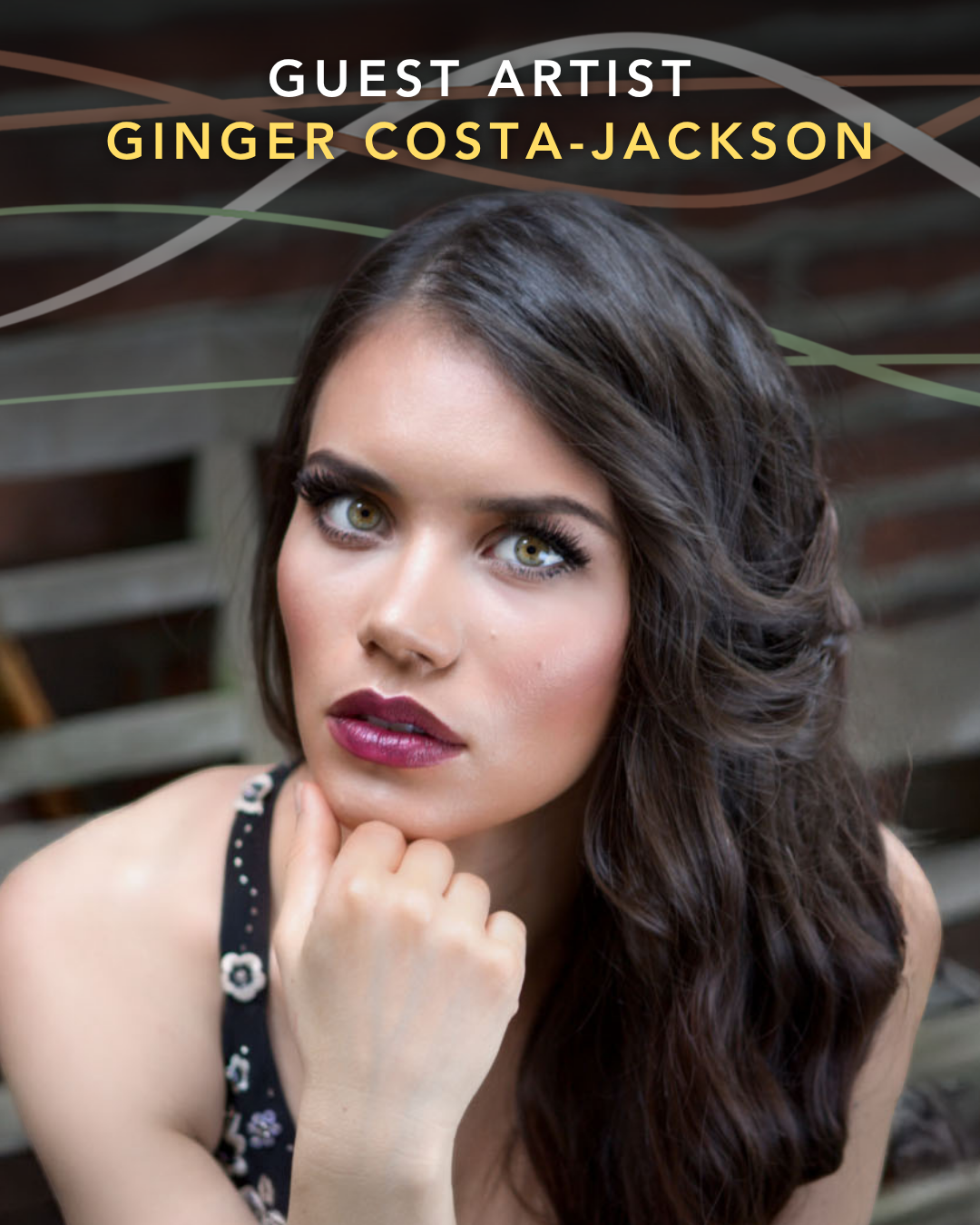
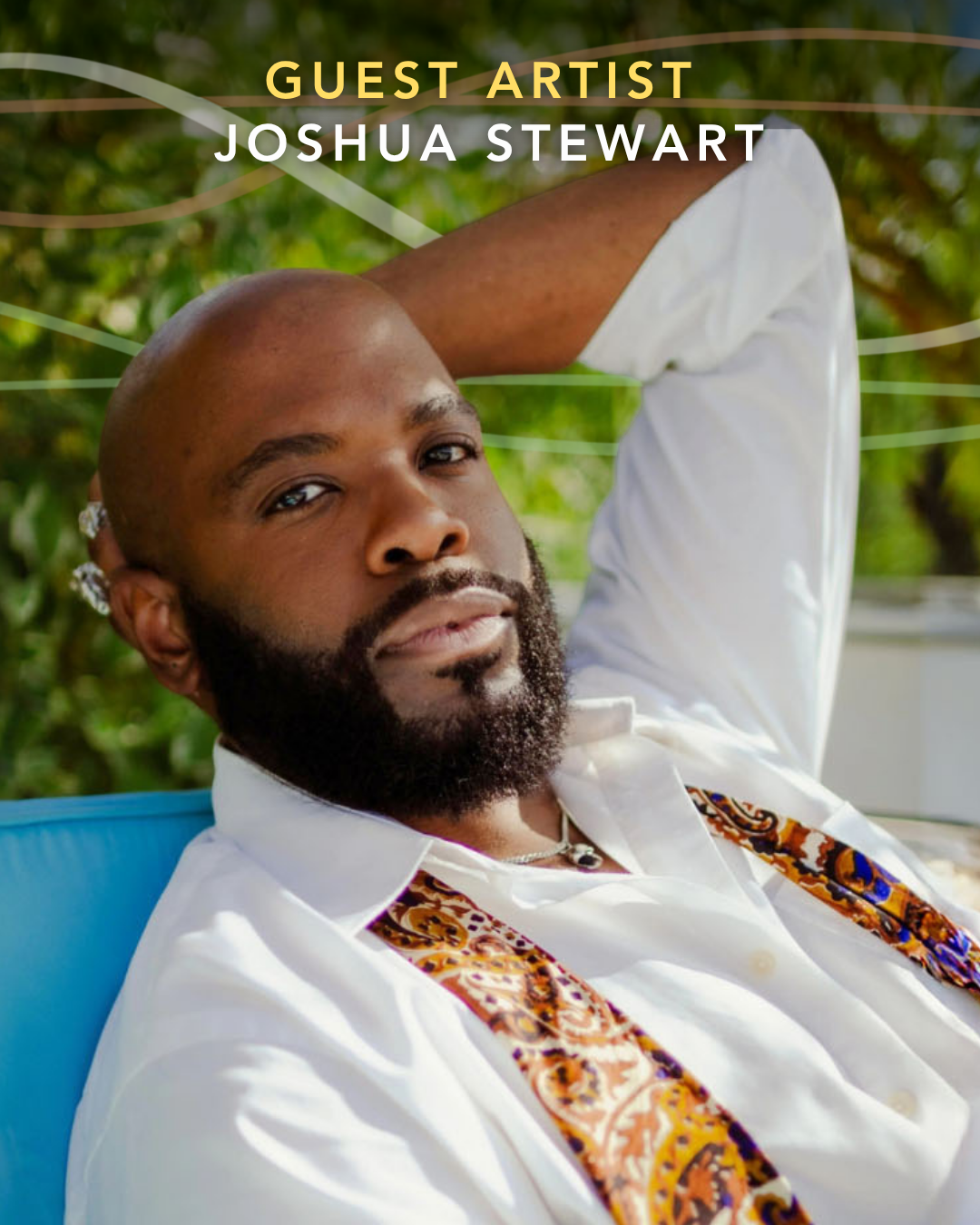
The chorus joined in to start singing Schiller’s “Ode to Joy.” They alternated with the vocal quartet consisting of Tavalin joined by soprano Dani Zhang, mezzo-soprano Ginger Costa-Jackson, and tenor Joshua Stewart (who sang in last year’s Mozart Requiem). This tutti section ends with a surprise, held, high, fortissimo modulation as Schiller’s text described angels standing before God.

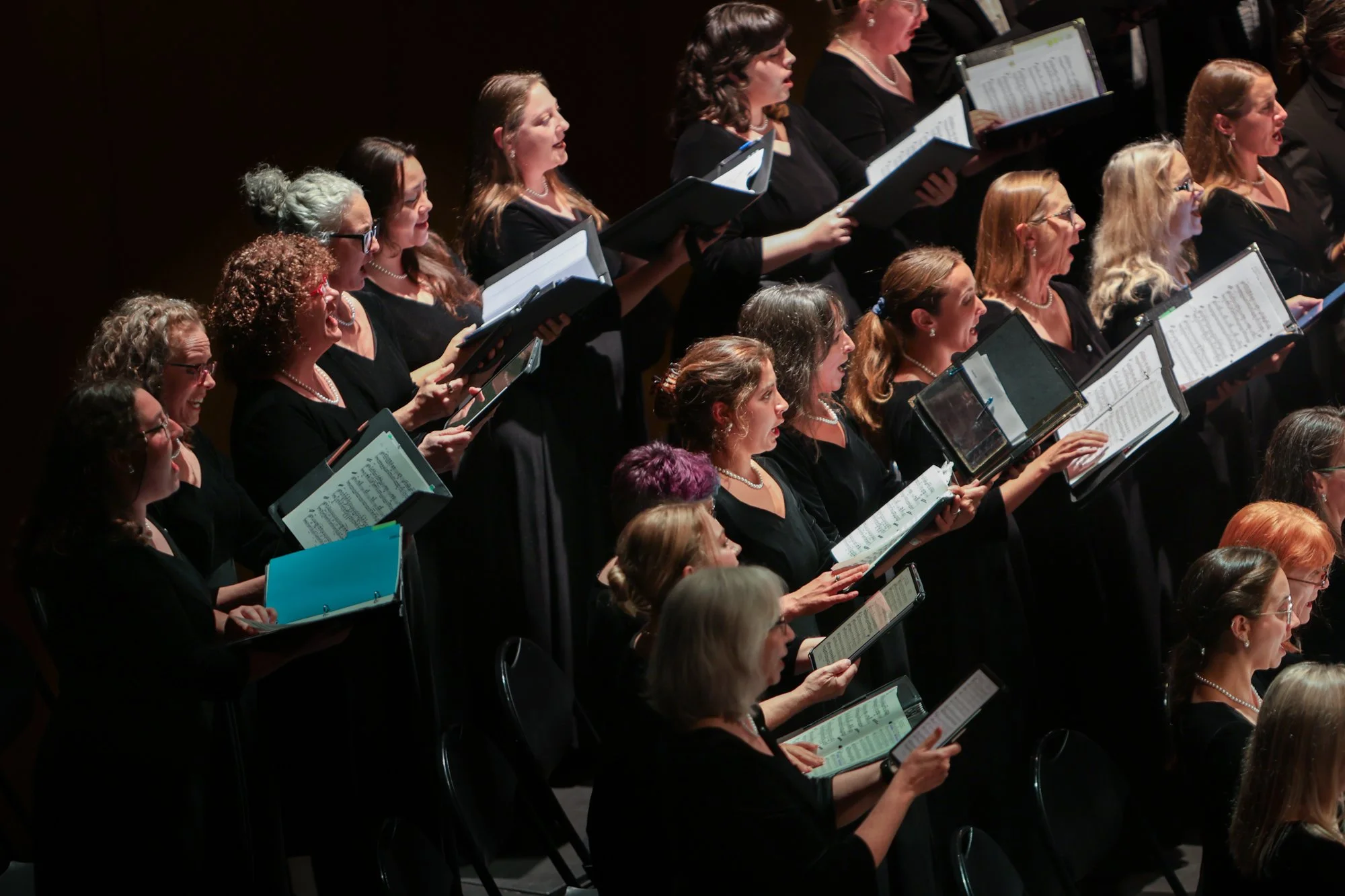
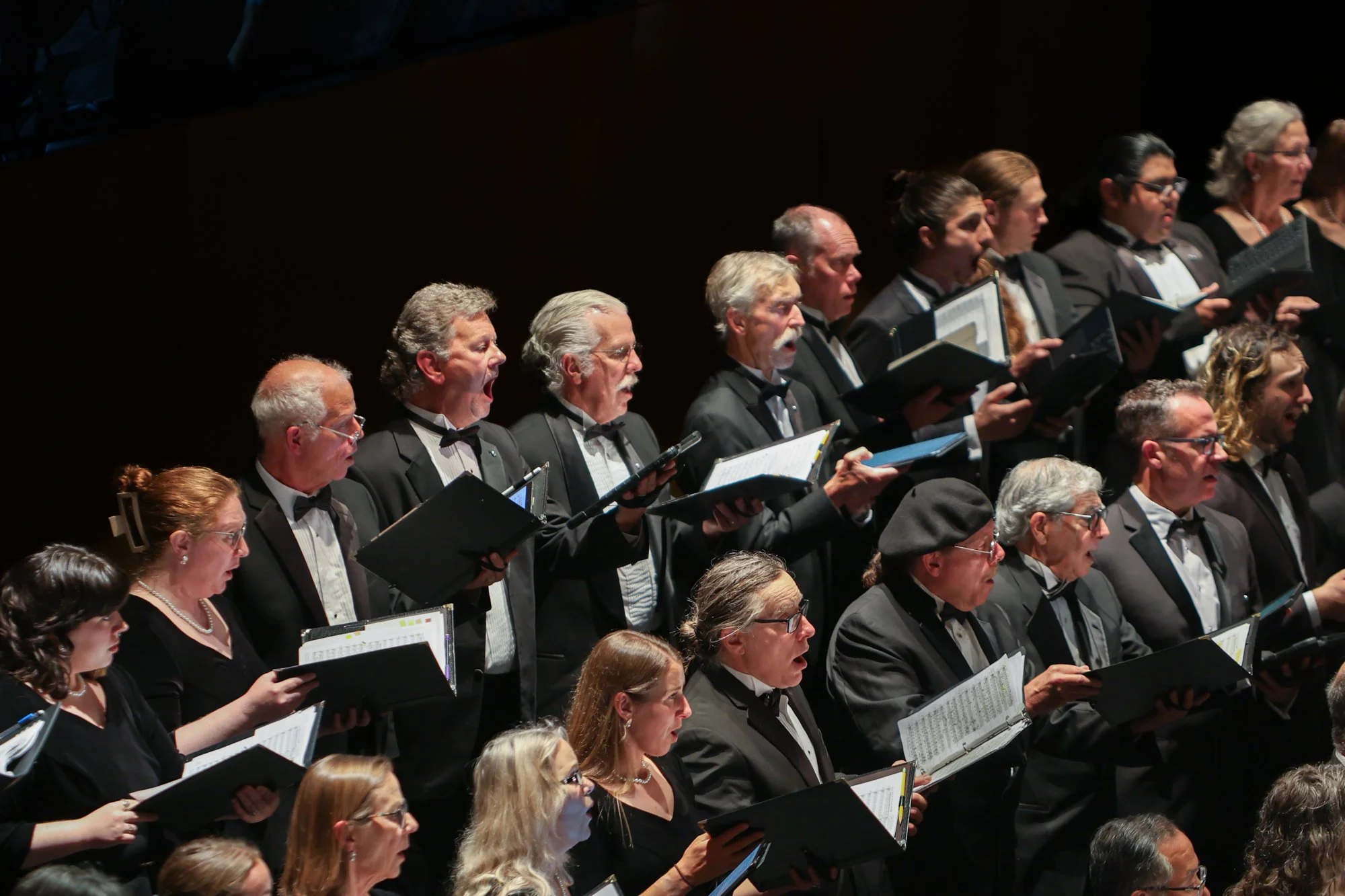
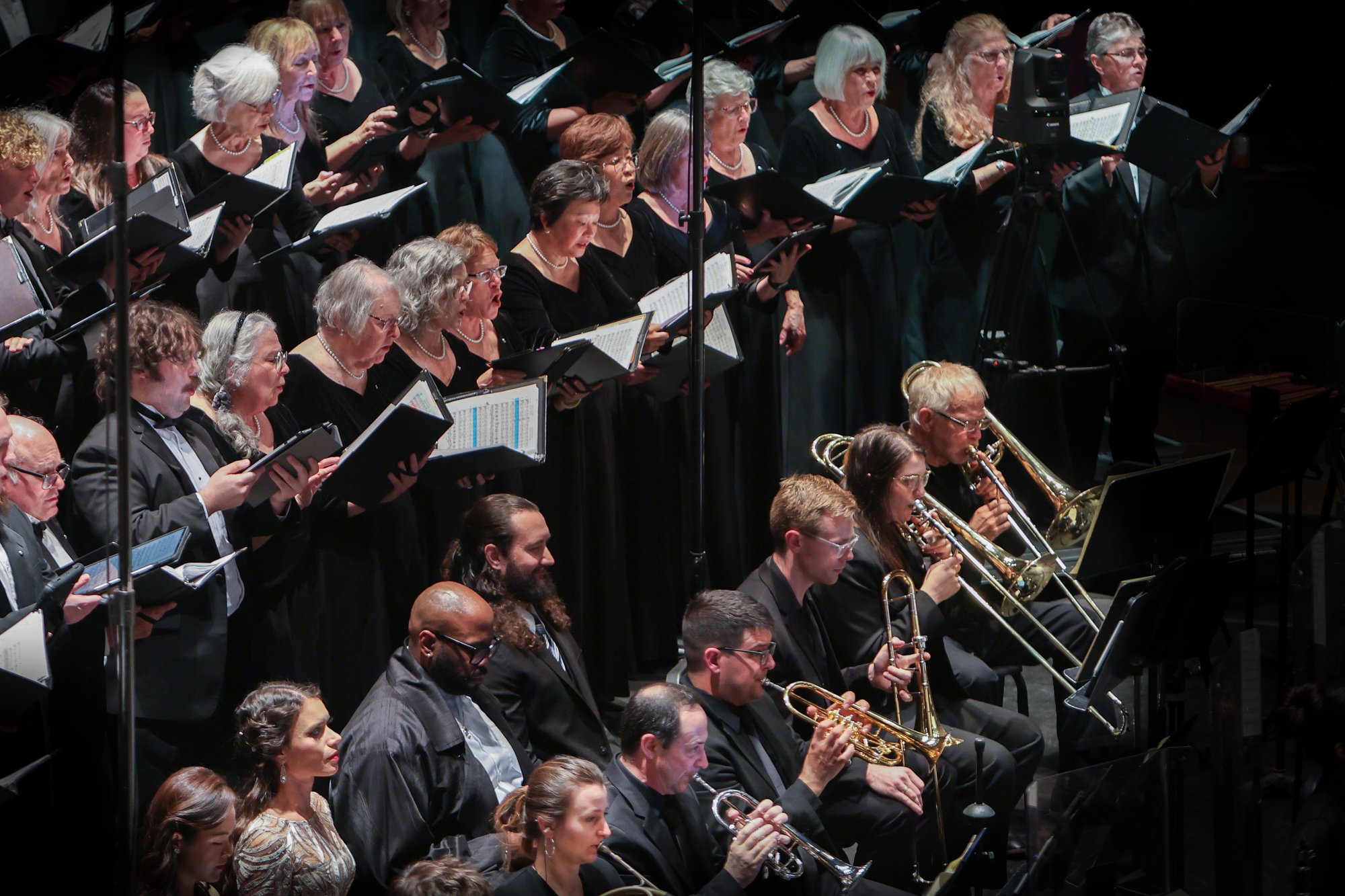
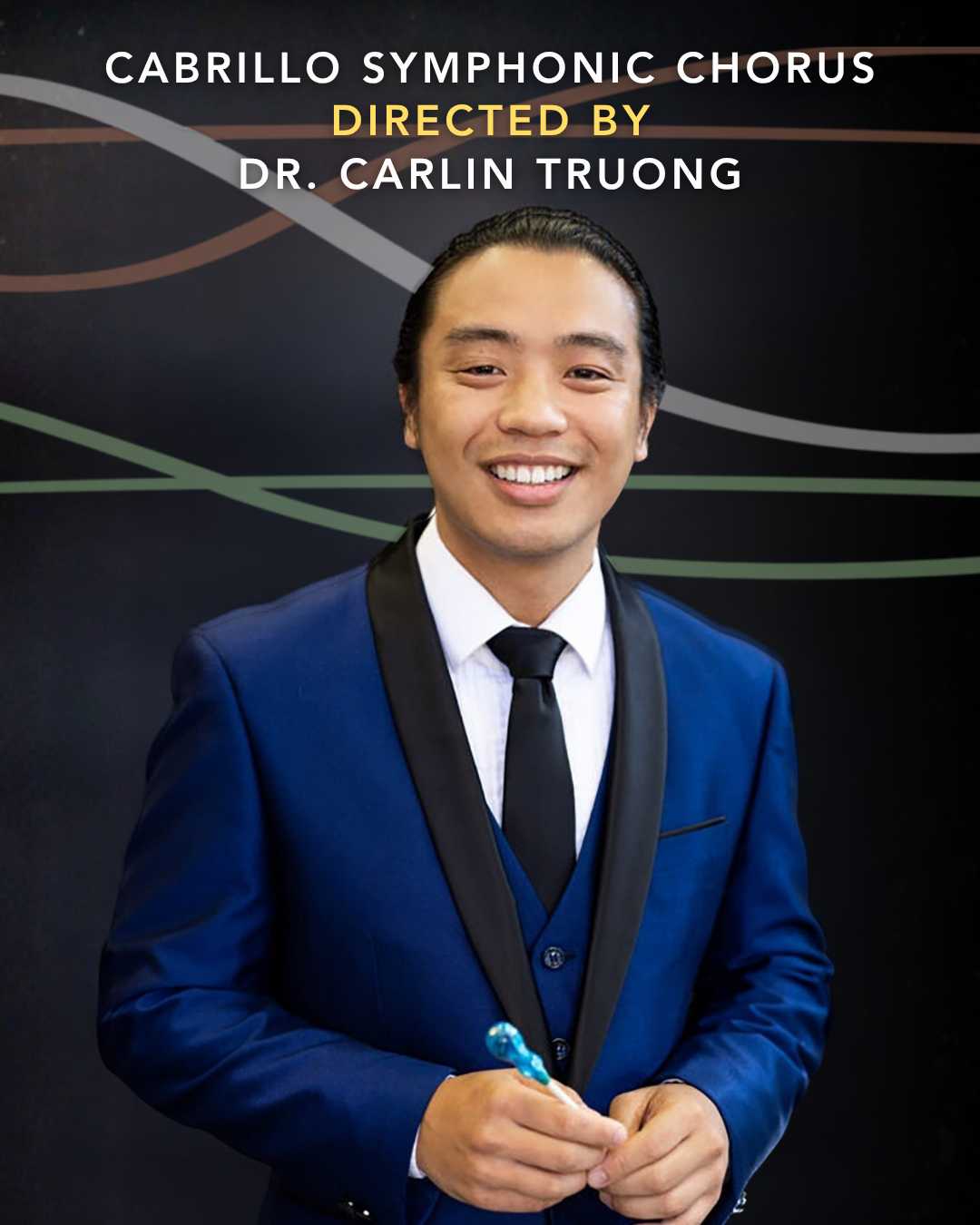
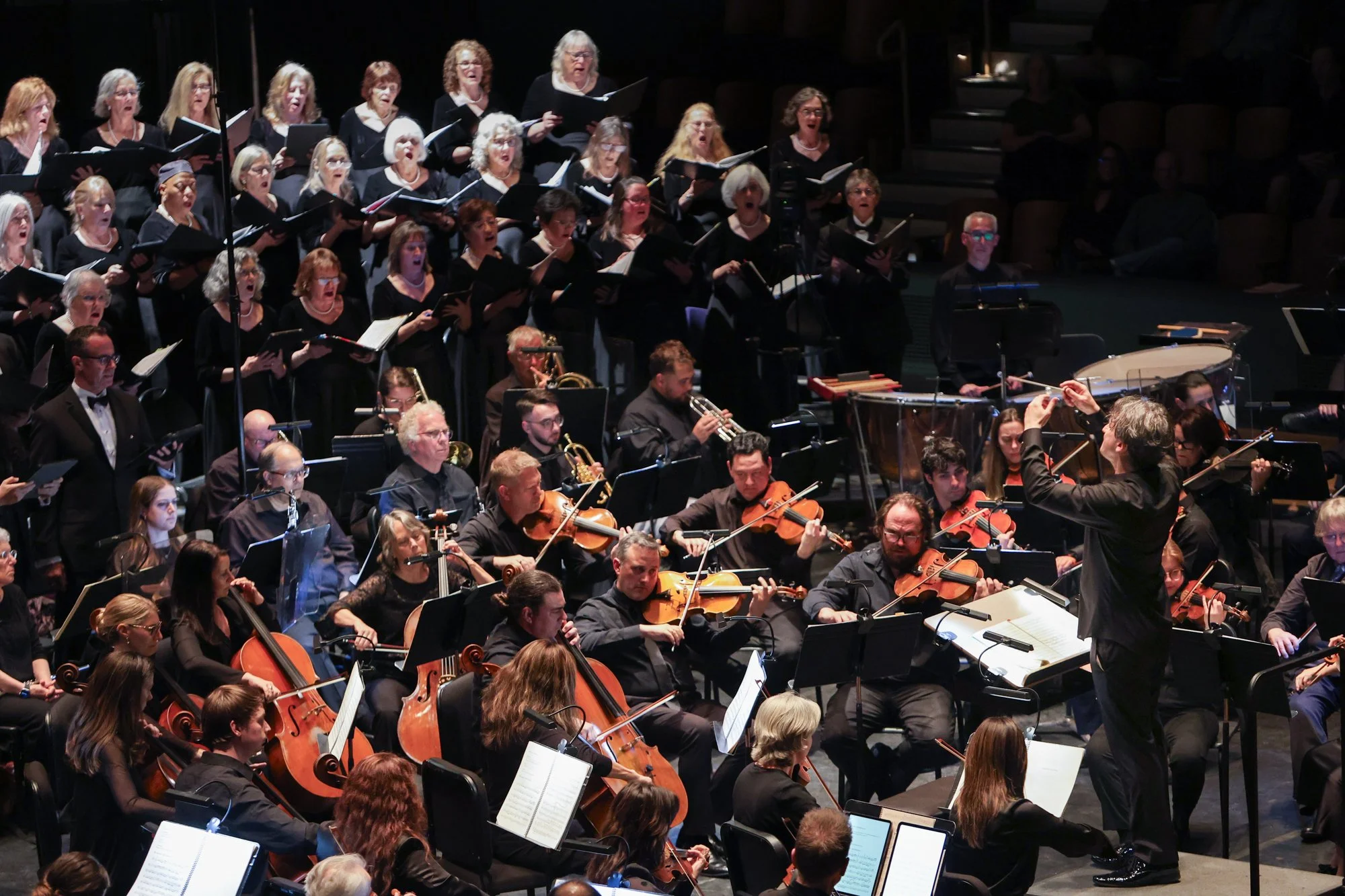
The Cabrillo Chorus and especially director Carlin Truong deserve highest praise for how well they handled the very demanding choral parts that take singers to the tops of their ranges far too often for comfort. Notably, the sopranos did not “squawk” on their high A’s and B’s. There was no obnoxious vibrato sticking out. Good tone quality was maintained in fortissimos. Truong had prepared everything very well.

If I have to pick out just a couple of outstanding choral parts, I would first choose the entry where the full chorus first sings the tune to Schiller’s opening lines. Even though I was expecting it, the massive effect of all eighty voices coming in fortissimo gave me quite a jolt.

Secondly, I would choose the high held notes set to the text which is translated in the program as:

Brothers, above the starry canopy
There must dwell a loving Father
Seek Him above the starry canopy!
Above the stars He must dwell.

Singers maintained pitch well on these long, sustained notes at their ranges through dynamics varying from fortissimo to pianissimo.

A number of instrumental choices that enhanced the performance of the symphony are worth mentioning. First, trombonist Teddy Van Winkle switched to an alto trombone for the Beethoven Symphony No. 9. For the powerful trombone accompaniment to the male voices at the words “Be embraced, millions,” tenor trombone Kaitlin Lamber joined bass trombone Doug Thorley. One could not tell by ear that there were two trombones, but the doubling added power to the declamation. For the march-like section in the finale, contrabassoonist Kris King played the bottom B-flats, the lowest notes of any orchestral instrument, instead of the decidedly less impressive B-flats an octave higher indicated in some editions.

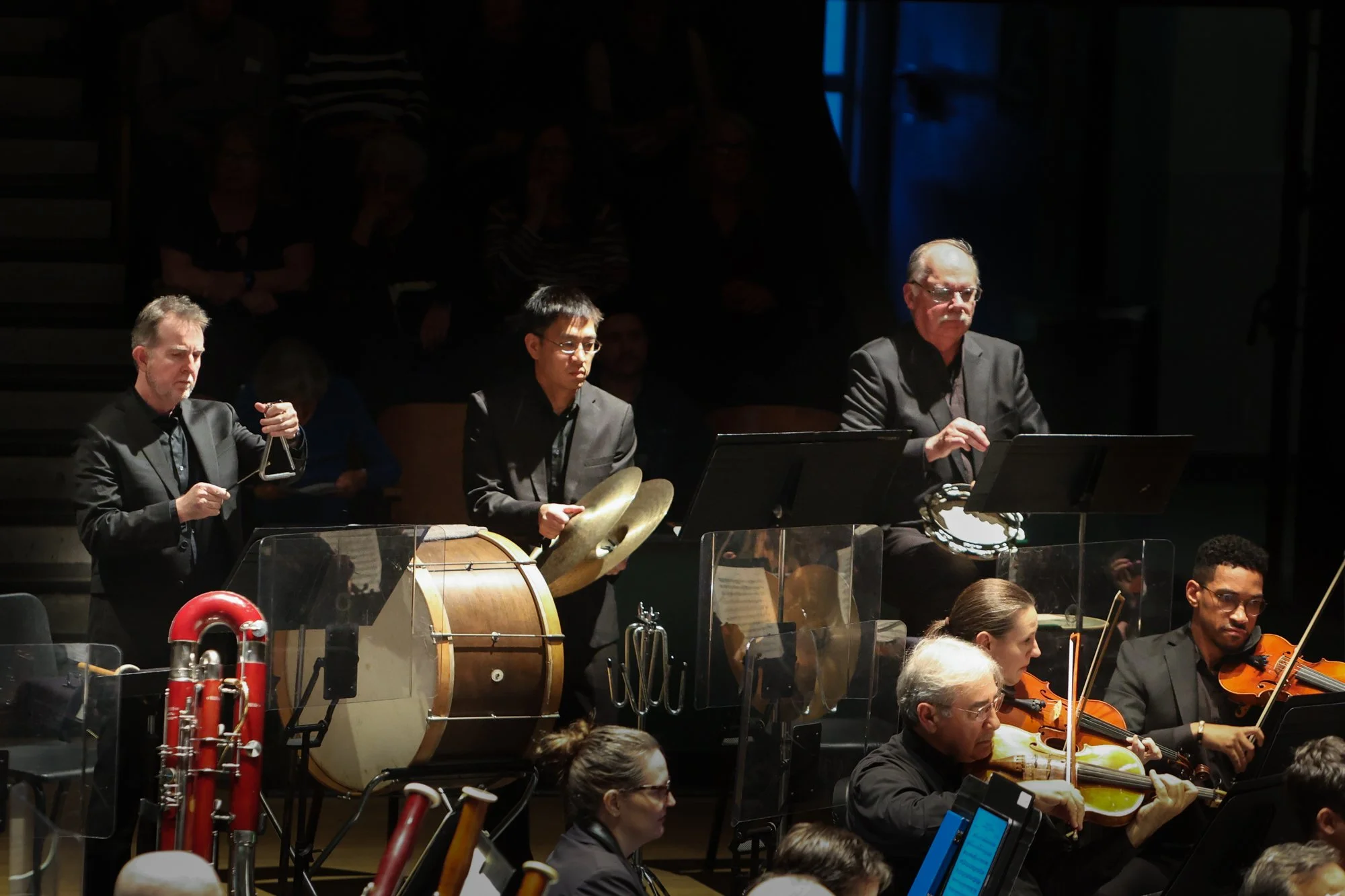
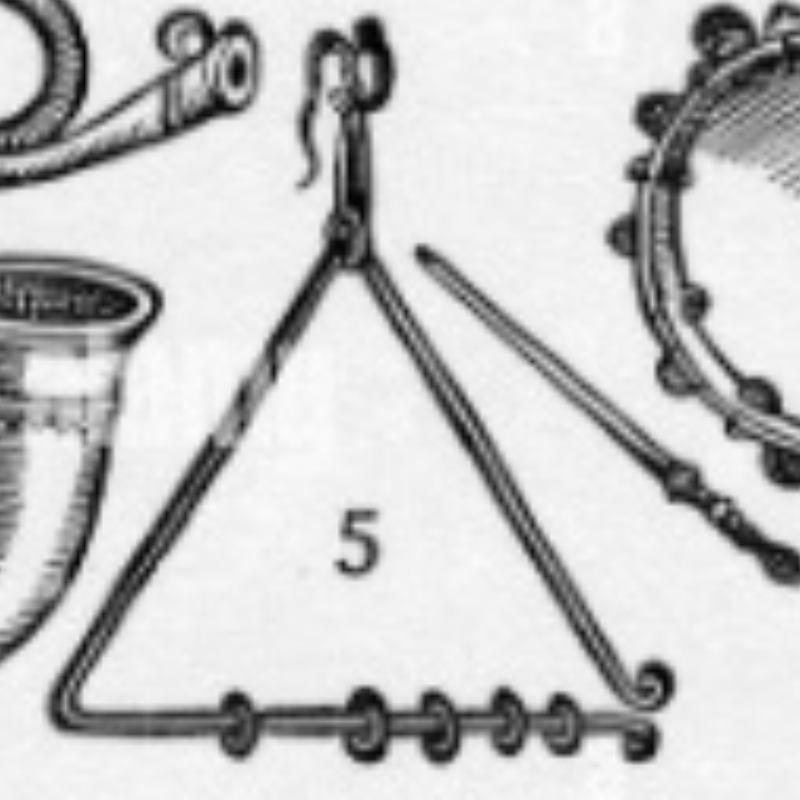
Finally, a couple of very small authentic details. For the “Turkish music” in the finale, the percussion section did not use their largest bass drum, but a smaller one more in keeping with practice in Beethoven’s day. Also, Norman Peck had small metal rings on his triangle. Having such rings jingling on a triangle goes back to medieval times and was a practice that continued beyond Beethoven’s day.

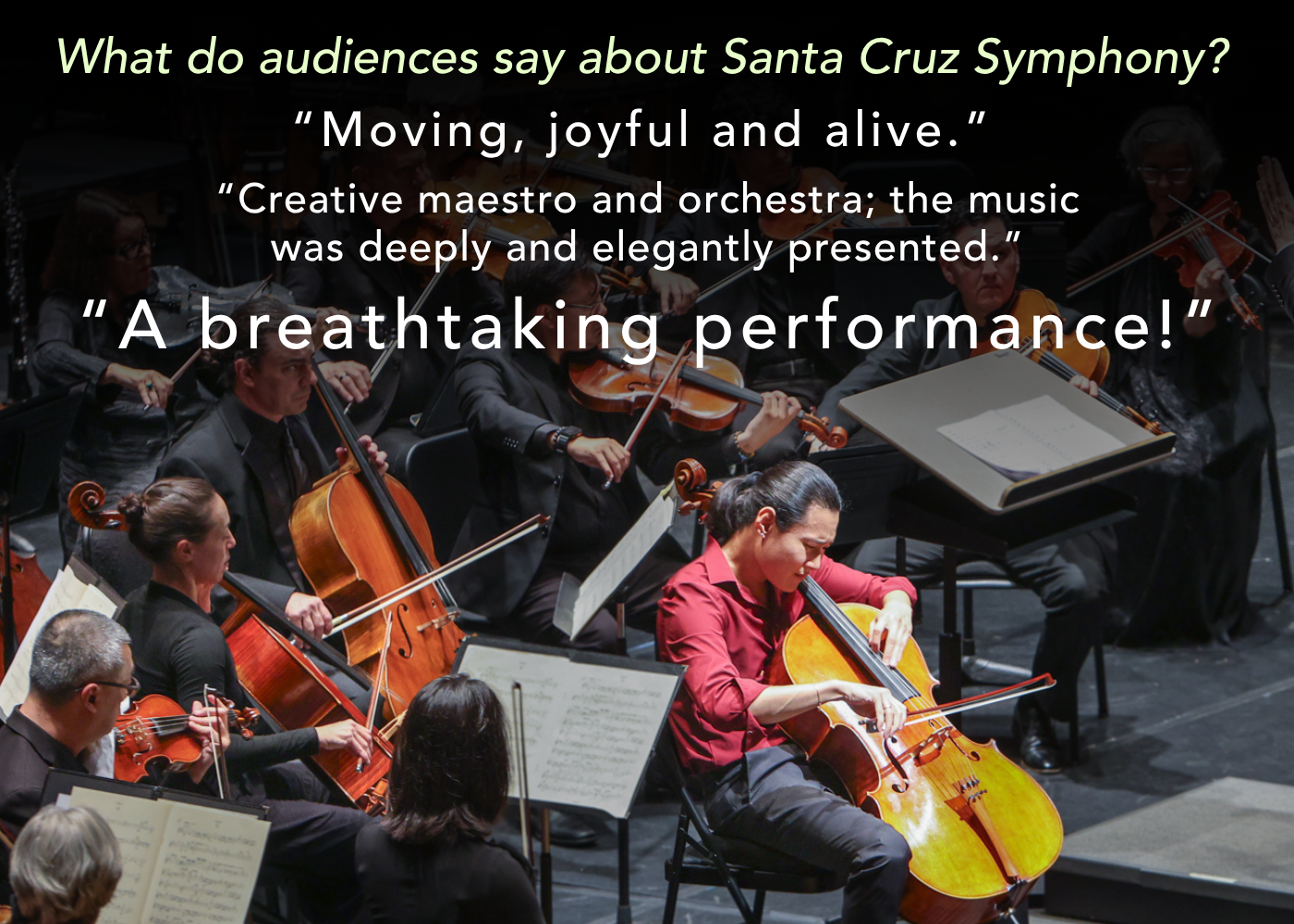
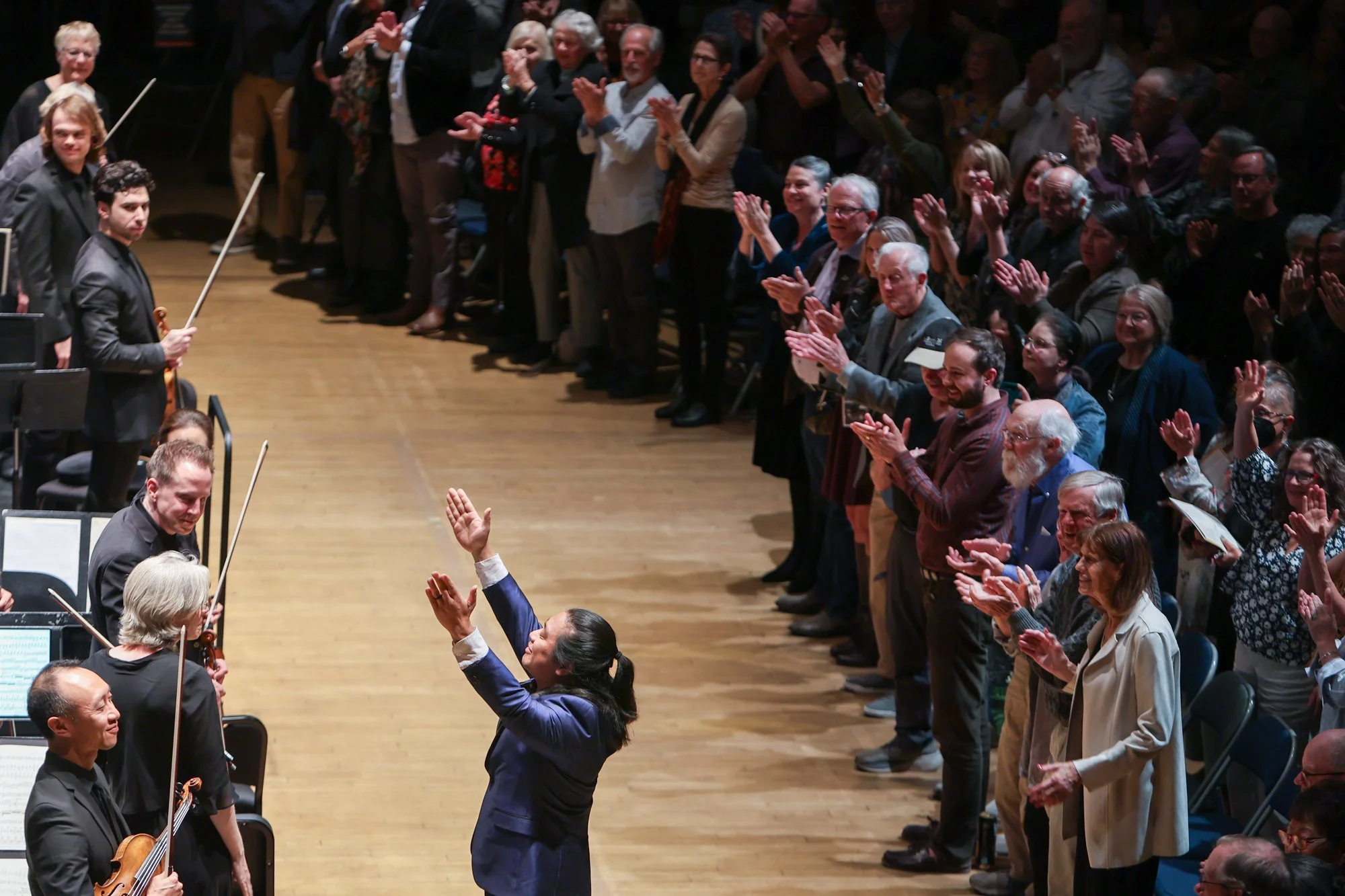
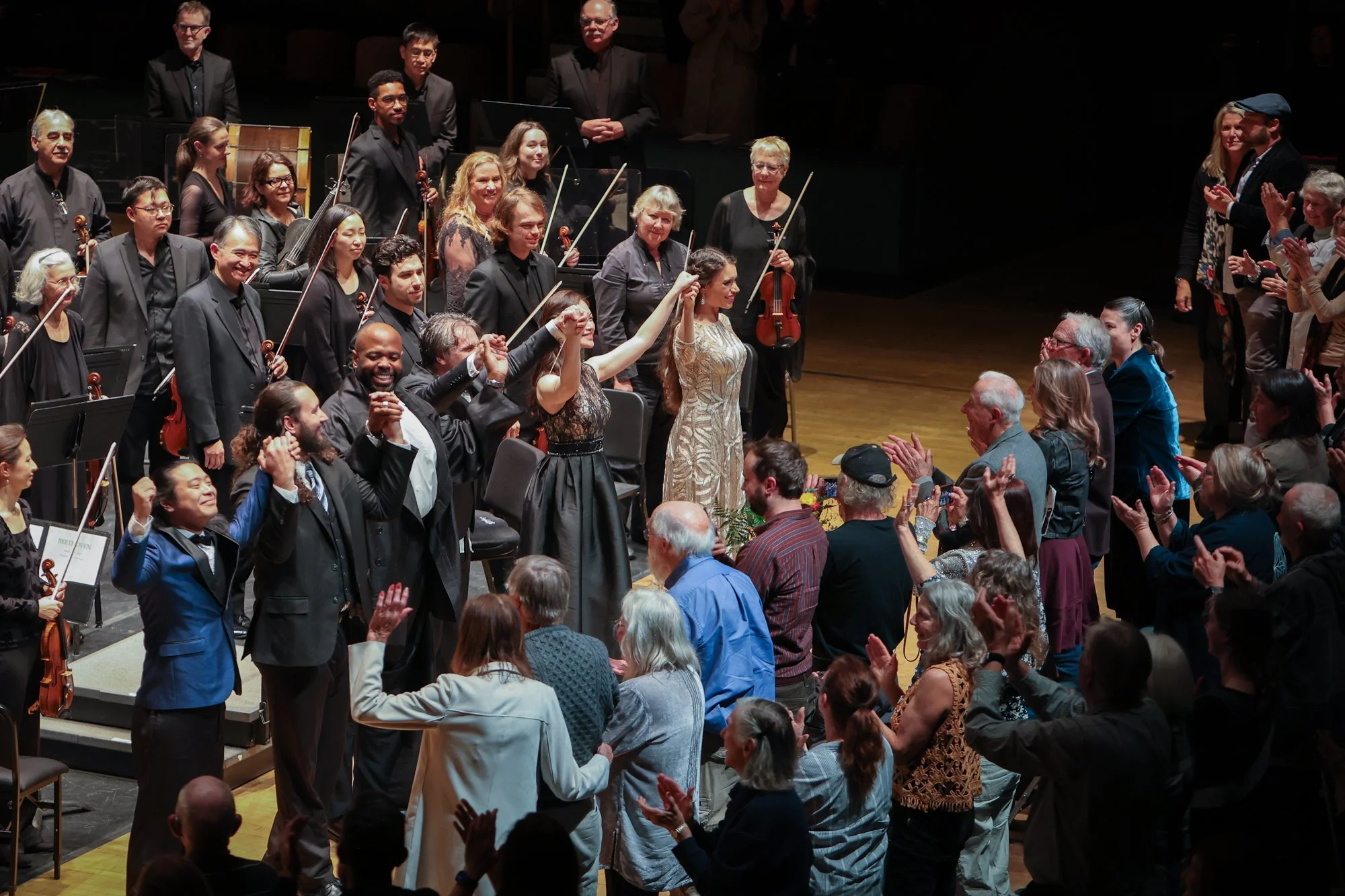
At the conclusion of both concerts, there was immediate shouting, thunderous clapping, and repeated whistling. Everyone who could stand was up on their feet. A long-time player in the orchestra remarked that it was the longest-lasting applause he could remember. Eventually, a few players began to pack their instruments, but the applause just went on and on.

Many people in the audience, the choir, and the orchestra said how moving the performance had been for them. What one regular audience member remarked to me was typical of what I heard. She said that experiencing Beethoven’s Symphony No. 9 was “uplifting” and “something we need in these times.”

Martin Gaskell

Photos by Rebecca Barnes

Thank you for voting us Best Classical Music Group again!

Are we incredibly grateful? Yes, we are! Thanks to your votes, Santa Cruz Symphony has been honored by Good Times as the Best Classical Group in Santa Cruz County for the fourth year in a row!

This achievement shows the dedication, talent, and passion of our incredible musicians, our visionary Maestro Daniel Stewart, our dedicated Board of Directors and Symphony League, our brilliant office team, and YOU — our cherished audience and supporters.

For more than 68 years, Santa Cruz Symphony has been a beacon of musical excellence in our community, enchanting audiences with timeless classics and innovative performances.

From captivating recitals to enriching classroom education initiatives, from engaging family concerts to delightful Pops concerts, we love to inspire, entertain, and educate audiences of all ages.

This accolade reflects the unwavering commitment and collaborative spirit that permeate every aspect of Santa Cruz Symphony. A tremendous THANK YOU to everyone who has contributed to this incredible journey of musical excellence. Here's to many more years of harmony, innovation, and inspiration!

May 2/3: Beethoven Symphony No. 9

Joyful music that resonates through time

Beethoven's groundbreaking Symphony No. 9 in D Minor is widely considered to be one of the supreme achievements in the history of music. Since its first performance in May 1824, this symphony's political, religious, artistic, and cultural ramifications have resonated across the globe like no other single musical work.

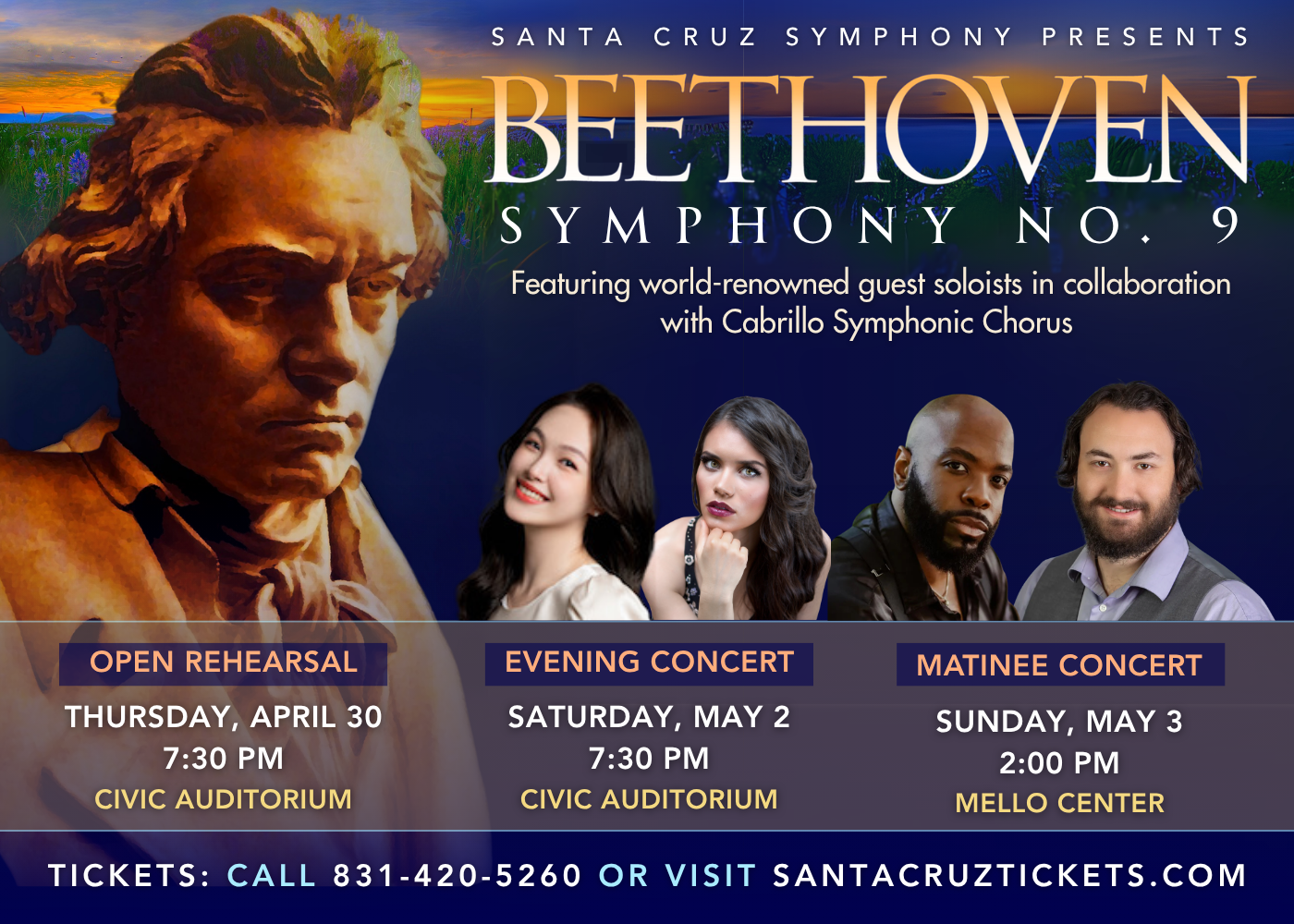
On May 2 and 3, Santa Cruz Symphony joins forces with Cabrillo Symphonic Chorus and four stellar vocalists: Dani Zhang (Soprano), Ginger Costa-Jackson (Mezzo-soprano), Joshua Stewart (Tenor), and Edward Tavalin (Baritone) to bring you this masterwork.

Our program also features Antonín Dvořák's exuberant Carnival Overture and Jaron Lanier's return to the Symphony stage as both a composer and performer to present Khaenoncerto, his original composition for the khaen arranged for the orchestra by Maestro Daniel Stewart.

Prepare to be transported, both spiritually and emotionally, in this powerful conclusion to our 2025-26 classical concert series. We invite you to share this unforgettable performance with us!


ABOUT THE FIRST HALF

The concert opens with Antonín Dvořák's Carnival Overture, depicting humanity’s power to enjoy merriment and delight in happiness. In short, it’s a celebration of life. Written in the sonata form, it includes a creative and dreamy intermezzo. This is one of only three overtures he wrote, the other two being In Nature’s Realm and Othello.

Next, Jaron Lanier returns to the Symphony stage with Khaenoncerto, an original composition for the khaen arranged for the orchestra by Maestro Daniel Stewart. The khaen is a traditional multi-piped instrument from Laos. Premiered at the WRO 2000 Media Art Biennale in Warsaw, this music exemplifies the composer's blend of technology, unconventional musical instruments, and immersive virtual environments. The piece was designed to interact with virtual reality (VR) worlds, reflecting the Lanier's role as a pioneer of VR.

Jaron Lanier has amassed a collection of about 2000 instruments, most of which he plays. An international figure in tech, he has been an active composer and performer in the world of new classical music since the late seventies.

He moved to Santa Cruz shortly after the pandemic and has gained a new prominence in the area as a musician. In October he led a program at the Kuumbwa Jazz Center titled “Music & the Future of Humanity” with musician friends Harper Simon, Tim Jackson, Zack Olsen and others.

Besides his musical talents, Lanier is an inventor of virtual reality, a computer scientist, and a futurist. He has been named among the Top 100 Intellectuals, 100 Most Influential People, Top 50 World Thinkers, and one of the Top 25 Influencers in technological history.


ABOUT THE SECOND HALF

After intermission, the Symphony collaborates with Cabrillo Symphonic Chorus and world-renowned soloists in Beethoven's groundbreaking Symphony No. 9 in D Minor, one of the supreme achievements in the history of music.

Soprano Dani Jingdan Zhang made her debut with Opera Hong Kong as Norina in Donizetti’s Don Pasquale, followed by an acclaimed performance as Musetta in Puccini’s La Bohème at the Hong Kong Cultural Centre Grand Theatre. She went on to sing many other operatic roles and has since been recognized in both international and national competitions and featured in numerous television and radio productions. 

As an emerging artist, Dani performed at the Beijing Great Wall Cultural Festival and the Shenzhen Cultural Center, showcasing a wide range of Chinese and international repertoire. She received her Bachelor’s (Honours) and Master’s degrees with distinction from the Hong Kong Academy for Performing Arts, and has participated in masterclasses led by renowned artists.


Italian-American mezzo-soprano Ginger Costa-Jackson, winner of the Loren L. Zachary National Vocal Competition and a Samling Scholar, is internationally celebrated for her radiant lyric mezzo, magnetic stage presence, and charismatic portrayals of opera’s most iconic roles.

A sought-after Carmen, she has appeared in ten countries, with acclaimed performances at English National Opera, San Francisco Opera, Tokyo’s New National Theatre, Staatsoper Hamburg, and Florida Grand Opera. She made an early mark at the Metropolitan Opera and has since performed leading roles with the Paris Opera, Royal Opera House, Gran Teatre del Liceu, La Monnaie, and Teatro Massimo. Her signature roles include Carmen, Rosina, Dorabella, Angelina, Charlotte, and Cherubino.


A Symphony favorite since his stellar performance in the 2025 Mozart’s Requiem concerts, Joshua Stewart’s blend of classical mastery and jazz flair transforms what a modern tenor can be. His extraordinary talent has cemented his place as one of the premier tenors of his generation.

“Stewart stood out from the very first for his impressive clarion vocality,” according to Broadway World, and The Stage called him “magnetic and majestic.”

Stewart has graced the stages of operas and orchestras around the world, performing for world leaders such as King Carl XVI Gustaf of Sweden and Presidents George H. W. Bush, William J. Clinton, and Barack Obama. He enjoys a successful career singing both standard and rarely-heard works.


Baritone Edward Tavalin is a local Santa Cruz singer originally from Ben Lomond, California. He was recently a featured soloist in the Amadeus concert in March 2026, and was previously part of the chorus with Santa Cruz Symphony in their 2014 Mozart's Requiem and 2015 Carmina Burana.

Edward has since performed both leading and supporting opera roles including Enrico (Lucia di Lammermoor), Marcello & Schaunard (La Bohème), The Pirate King (Pirates of Penzance), and Angelotti (Tosca), among others, at several regional companies around the United States. 


Cabrillo Symphonic Chorus has earned a stellar reputation at home in the Monterey Bay and around the world by performing in the finest concert halls in the USA and Europe—including years of transcendent performances with Santa Cruz Symphony. The group consistently evokes a sense of beauty and wonder with the lushness and fluidity of their technique.

In the fall of 2025, Dr. Carlin Truong took up the baton and started a new chapter in Cabrillo Symphonic Chorus history. An educator and conductor whose mission is to make music education more accessible to all, he is known for curating innovative, expressive concerts that engage people on both sides of the stage.


OPEN REHEARSAL

Thursday, April 30 at 7:30 PM
Civic Auditorium in Santa Cruz

EVENING CONCERT

Saturday, May 2
6:30 PM
Pre-concert talk
7:30 PM Concert
Civic Auditorium in Santa Cruz

MATINEE CONCERT

Sunday, May 3
1:00 PM
Pre-concert talk
2:00 PM Concert
Henry J. Mello Center in Watsonville


Concert Sponsors: Dr. Deborah Bronstein & Dr. Evans Whitaker; Mark Chambers-Bray in Memory of Roy Chambers-Bray; Carolyn & Robert Levering

Concert Co-Sponsors: Dr. Frederick & Kate Chen; Allen & Shirley Ginzburg; John & Jodilynn Larse; Julie Mazurek; Lester & Martha Miller; Mary Ann Orr

Artist Co-Sponsor: Dr. Matthew Wetstein & Dr. Cindy Ostberg

Hooray, Civic handrails are here!

We have exciting news! Installation of the new handrails at the Santa Cruz Civic Auditorium has officially been completed.

Patrons were thrilled to find handrails waiting for them at our Amadeus concert. This long-wished-for improvement will make moving through the Civic more safe, comfortable and accessible for everyone attending our concerts.

We want to thank the City of Santa Cruz staff, Mayor Fred Keely, and the City Council for finding and allocating scarce funds to enhance the concert experience at the Civic Auditorium.

Thank you for your continued support, your patience, and your enthusiasm for both our music and the improvements that make our venues more welcoming. We look forward to seeing you at the Civic Auditorium, the Mello Center, and Samper Hall soon.

Man Without a Home: Joshua Stewart and Courtney Bryan on April 12

A portrait of a man in continual motion

Joshua Stewart captivated Symphony audiences at our Mozart's Requiem concerts last year. The powerful, multifaceted tenor is back on Sunday, April 12 to present Man Without A Home, a deeply personal recital inspired by the culture and legacy of the African diaspora. Stewart will be joined by award-winning pianist and composer Courtney Bryan.

Rather than presenting a single narrative, Man Without a Home allows many musical voices to articulate what it means to search for belonging in spaces not originally designed to hold you. Works by Mozart, Saint-Georges, Leoncavallo, and Chaplin sit alongside spiritual and popular song, revealing how beauty, irony, and suffering often coexist.

Together, these works form a musical portrait of a man not without origin, but in continual motion—finding home not as a fixed place, but as an act of singing, listening, and being fully present.


JOSHUA STEWART

A leading proponent of contemporary opera, tenor Joshua Stewart has made a name for himself in the world of opera without losing touch with his jazz roots. "He stood out from the very first for his impressive clarion vocality," according to Broadway World; The Stage called him "magnetic and majestic."

Stewart has graced the stages of operas and orchestras around the world. Displaying compelling artistry and versatility, he has performed for world leaders such as King Carl XVI Gustaf of Sweden and Presidents George H. W. Bush, William J. Clinton, and Barack Obama.

Born and raised in New Orleans, Joshua attended the prestigious New Orleans Center for Creative Arts (NOCCA) and released his first solo album at age 12. A graduate of the Curtis Institute of Music in Philadelphia and a former member of Munich’s Bavarian State Opera Studio, Stewart has appeared in productions of directors Christoph Loy, Richard Jones, Olivier Py, and conductors Kent Nagano, Dan Ettinger, and Maurizio Benini. His extraordinary talent has cemented his place as one of the premier tenors of his generation.


COURTNEY BRYAN

New Orleans native Courtney Bryan is “a pianist and composer of panoramic interests” (New York Times). A Steinway Artist and 2023 MacArthur Fellow, she currently serves as composer-in-residence with the New Haven Symphony Orchestra.

Bryan’s compositions have been performed by Opera Philadelphia, the Louisiana Philharmonic Orchestra, Jacksonville Symphony, London Sinfonietta, LA Phil, Orchestra of St. Luke’s, and Chicago Sinfonietta in a wide range of renowned venues, including Carnegie Hall, Lincoln Center, The Metropolitan Museum of Art, Walt Disney Concert Hall, and Blue Note Jazz Club.

Recent accolades include the Herb Alpert Award in the Arts (2018), Samuel Barber Rome Prize in Music Composition (2019–2020), United States Artists Fellowship (2020), the Civitella Ranieri Foundation Fellowship (2020–2021), and the Camargo Foundation Fellowship (2025). She is the Albert and Linda Mintz Professor of Music at Newcomb College in the School of Liberal Arts at Tulane University and co-founder of the Jazz Generations Initiative, funded by the Mellon Foundation and sponsored by Jazz Foundation of America.


🎟️ Tickets are going quickly. 🎟️
reserve yours today!

Our Musician Series performances are held in a smaller, more intimate venue, bringing the musicians up close with the audience. Tickets for this season’s recitals have sold out quickly, leaving some people disappointed. An early purchase is encouraged!

Call Cabrillo Box Office at 831-479-6154 or click the button below to buy tickets online.

Man Without a Home
Joshua Stewart and Courtney Bryan

Sunday, April 12 at 2:00 PM
Samper Hall at Cabrillo College


Make recitals like this possible

Man Without a Home is generously sponsored by Mary Ann Orr and Burt Rees and co-sponsored by Wendy Gormly-Kester & Kevin Kester. Bringing artists like Joshua Stewart and Courtney Bryan to our community depends on more than ticket sales, which cover just 31% of the true cost of each performance.

A limited number of Co-Sponsorships for this season are still available, offering a meaningful way to support our work, with recognition and opportunities to connect more deeply with the artists and audience.

To learn more, contact Candice Stenstrom, Development Director, at (831) 462-0553 x12 or candice@santacruzsymphony.org.


🎼 Amadeus: A tale of genius and jealousy

Last spring the Symphony dazzled us with a powerful production of Mozart's Requiem. On March 28/29, Mozart is back again as we dive deeper into his life and work through a world premiere of Amadeus, a new adaptation of the award-winning play. This unique production was specially created by Maestro Stewart for the concert stage.

The story of the life and death of Wolfgang Amadeus Mozart has it all: artistic genius, professional jealousy, 18th-century court drama, and unforgettably beautiful music.

Santa Cruz Symphony will join with Cabrillo Symphonic Chorus and guest artists from Santa Cruz Shakespeare and beyond for a collaboration that will have you applauding for more!

Though most people know Amadeus as the most famous movie ever produced about classical music, the story of a toxic rivalry between Mozart and Antonio Salieri began as an 1830 play by Alexander Pushkin. Award-winning playwright Peter Shaffer was inspired to write his own version for Broadway in 1979, which garnered five Tony awards.

Shaffer then adapted his play for the Miloš Forman-directed film Amadeus, a huge commercial and critical hit that swept the Academy Awards in 1984. Like the plays that came before it, the film Amadeus interweaves fact and fiction to create a fantasia on the theme of Salieri and his love/hate relationship with Mozart.

While some have bemoaned the historical inaccuracies of the plays and film, many critics have become more accepting of the creative license taken by Shaffer and his collaborators. Since Amadeus came out, academia's tolerance has grown for movies that question the reputations of exalted geniuses like Mozart.

According to critic Simon Keefe, Amadeus gives us insight into how Mozart approached complex structures as a composer. It also encourages us to reflect on "the blurred line between fact and fiction, and between scholarly and popular perceptions of the man and his music."

Now it's Santa Cruz Symphony's turn to explore this compelling tale. Created by Maestro Stewart for the concert stage, our unique adaptation of Amadeus features the Symphony along with Santa Cruz Shakespeare's Artistic Director Charles Pasternak and actors Anjoli Aguilar, Will Block, and Shaun Carroll in a melding of live theater and symphonic music.

If you attended our Symphonic Shakespeare concerts last spring, you witnessed the enchantment of our collaboration with this incredible organization.

As one audience member told us after the concerts: "What a unique and superbly executed concept -- I had chills on multiple occasions and cried twice! I'm a lover of both music and theater, so this was a magical combination for me. Thank you!"

Our collaboration also includes Cabrillo Symphonic Chorus under the direction of Carlin Truong as they bring the beauty and resonance of their voices to Mozart's choral works.

Join us as we explore and celebrate the complex brilliance of one of the greatest composers of all time. Get your tickets now for this one-of-a-kind concert!


Meet the actors who bring the story to life

Charles Pasternak is known nationally as a dynamic, compelling actor and director. The Artistic Director of Santa Cruz Shakespeare, his roles with the company have included the title role in Hamlet; Oliver in As You Like It; the Gentleman Caller in The Glass Menagerie (which he also directed); and the adaptor and director of A Christmas Carol. In 2025, he directed Pericles, which played alongside A Midsummer Night's Dream, Into the Woods, and "Master Harold"...and the Boys, and A Christmas Carol.

Charles was the Founding Artistic Director of The Porters of Hellsgate in Los Angeles, CA for over fifteen years. Selected regional credits include American Players Theatre, Shakespeare Center LA, three seasons at Shakespeare Festival, St. Louis and four seasons with Shakespeare Santa Cruz.

“Like a Shakespearean Fred Astaire, he’s so good at his craft that he makes his partners look good.”PlayShakespeare


Will Block is thrilled to be making his debut with Santa Cruz Symphony, and to be returning to Santa Cruz Shakespeare, where he appeared as Algy in The Importance of Being Earnest and Tom in The Glass Menagerie in 2024. He will return again to appear as Claudio in Much Ado About Nothing this summer.

Will is an actor, director, producer, and educator known for his work in This is Us, Nick McDow Musleh's Love's Labours Lost, and the original web series The Game. Other credits include Hamlet in Hamlet (ETC Santa Barbara) and roles with the Kingsman Shakespeare Festival, Sierra Rep, La Mirada, Sacramento Theatre Company, and as Flute in Mendelssohn's A Midsummer Night's Dream with the LA Phil. He is the Artistic Director of the Porters of Hellsgate Theatre Company in Los Angeles.

“Block is a powerhouse!" — Good Times


Anjoli Aguilar (she/her) is happy to be performing with Santa Cruz Symphony and Santa Cruz Shakespeare.

A San Francisco-based actor who received her BA in Theater from SFSU, her recent credits include Miranda/Ariel in The Tempest with Pacific Repertory Theater, Malcolm in MacBeth with We Players, and a five-clown retelling of The Odyssey performed for the Society of Classical Studies. Catch Anjoli this summer playing Ophelia in Hamlet with SPARC Theatre in Livermore! 

"Aguilar in particular is compelling as Miranda/Ariel through her acrobatic skills and grace." —from a Monterey County Now review of The Tempest


Shaun Carroll was a staff member of the Jewel Theatre Company in Santa Cruz. There he appeared onstage in Me & My Girl, The Odd Couple, All My Sons, Sylvia, Fallen Angels, and Woman in Mind.

Previously, he has appeared around the greater Bay Area with Sierra Rep, TheatreWorks, Lake Tahoe and San Francisco Shakespeare Festivals, Willows Theatre Company, and CapStage, among others. A craftsman as well as an actor, Shaun also designs props for various companies around the Bay Area.

"A lively evening of theater, thanks in large measure to Carroll!" Sentinel review of Me and My Girl


Saturday, March 28 ~ 7:30 PM
Civic Auditorium in Santa Cruz

Sunday, March 29 ~ 2:00 PM
Mello Center in Watsonville


We are grateful to our Amadeus sponsors:

Concert Sponsors: Owen Brown & Mary Akin, Bob Edmund, Phil & Linda Segal in memory of Helen Jones, Todd & Corinne Wipke

Concert Co-Sponsors: Lee & Emily Duffus

Artist Sponsor: Redtree Partners LLP

Artist Co-Sponsors: Jeannette & Patricia Moretti; Janis O’Driscoll

🇫🇷 Who was the better composer—Debussy or Ravel?

French composers Claude Debussy and Maurice Ravel, both creating in the Impressionist style, were often viewed as competitors. Critics regarded Ravel as a lesser imitator of the older Debussy. But is that true?

On Sunday, March 15, piano virtuoso Dr. Gwendolyn Mok will perform selected compositions side-by-side, each on a similar topic. This will allow you to make your own judgments. How are the composers similar? How are they different? Does Ravel really try to imitate Debussy, or does he have his own distinct style?

The Moonlight and Mirrors recital will feature Debussy’s Moonlight Sonata and Ravel’s Miroirs, among other pieces. Dr. Mok will use the piano and visual aids to help you understand and appreciate how the two composers differed and how they were similar even while composing in the same Impressionist style.

Sunday, March 15 at 2:00 PM
Samper Hall at Cabrillo College


🎟️ For best results, purchase tickets now! 🎟️

Our Musician Series performances are held in a smaller, more intimate venue, bringing the musicians up close with the audience. Tickets for this season’s recitals have sold out quickly, leaving some people disappointed. An early purchase is encouraged! Call Cabrillo Box Office at 831-479-6154 or click the button below to buy tickets online.


Dr. Gwendolyn Mok has been recognized as one of the top interpreters of Maurice Ravel. Gramophone recently described her rendition of Le Tombeau de Couperin as one of the best four performances from the last century of recordings.

Dr. Mok has taught and performed the complete works of Ravel around the world. Her recent podcasts about his piano concertos have been viewed over 180,000 times, and her lessons on Ravel are featured on Tonebase, a popular teaching platform.

A frequent collaborator, Dr. Mok has appeared as soloist with many Bay Area organizations including the San Francisco Chamber Orchestra, Symphony Silicon Valley, and Livermore-Amadore Symphony Orchestra. She has been a regular guest in the San Francisco Chamber Series in Davies Hall, the Chamber Music Sundaes series, and the Berkeley Chamber Performances. She is often featured with the Ives Collective and the Alexander String Quartet, and has appeared as a featured artist in the San Francisco International Piano Festival. Dr. Mok maintains a busy teaching and performing schedule. Learn more here.


We are grateful to our recital sponsors:

Recital Sponsors: Catharine and James Gill
Recital Co-sponsors: Michael and Colleen Harrison