
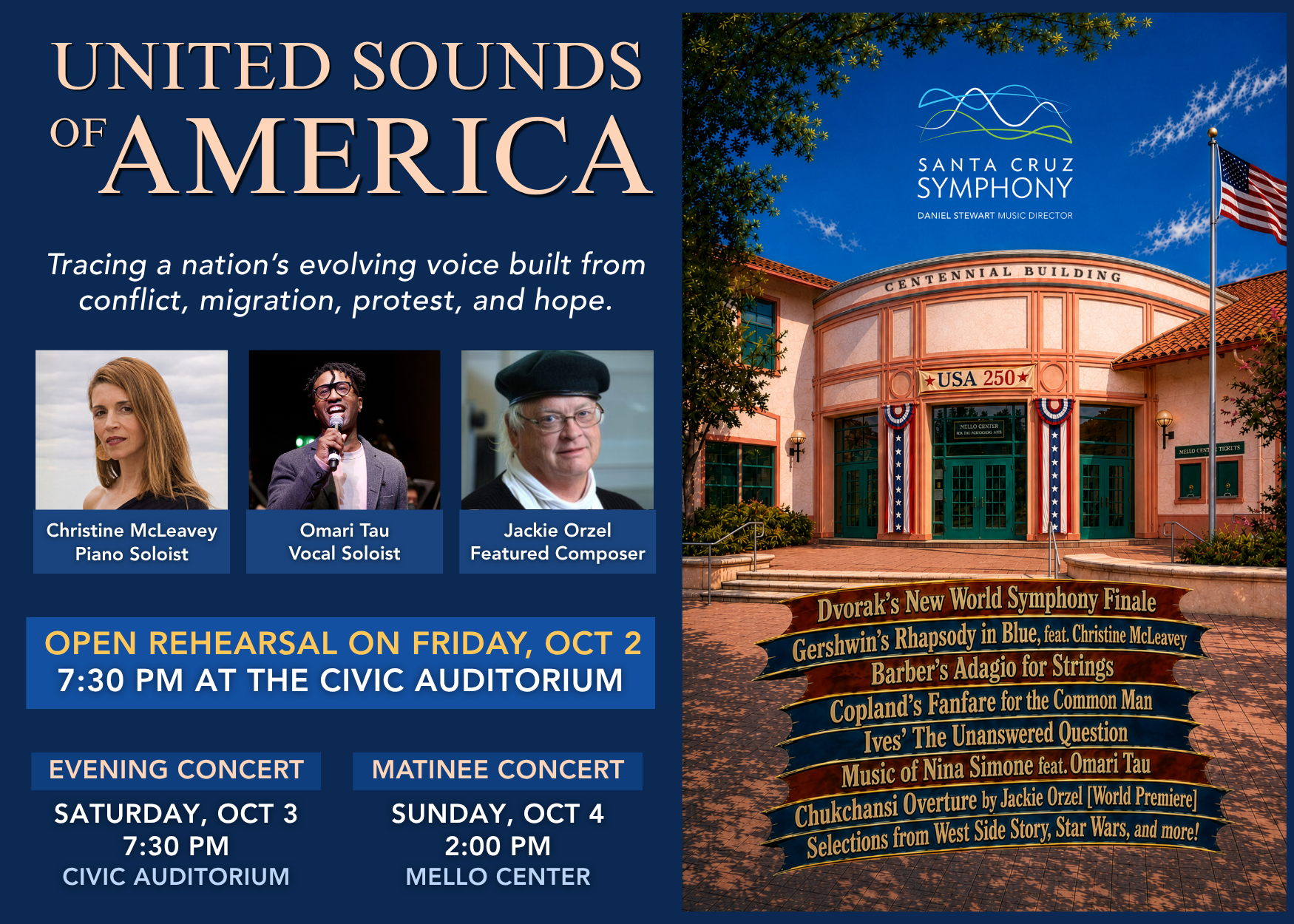
For the opening weekend of the Santa Cruz Symphony’s 69th season the orchestra joined the ongoing celebrations of the 250th birthday of our country, as Maestro Daniel Stewart had the orchestra showcase a diverse cross section of American music.
THE STAR-SPANGLED BANNER
The concert opened with “The Star-Spangled Banner.” This was not only an appropriate way to begin a semi-quincentennial concert, but it also fit in perfectly with the essentially chronological program order as the tune was composed by John Stafford Smith for a short-lived London gentleman’s club a few years before the US Declaration of Independence.
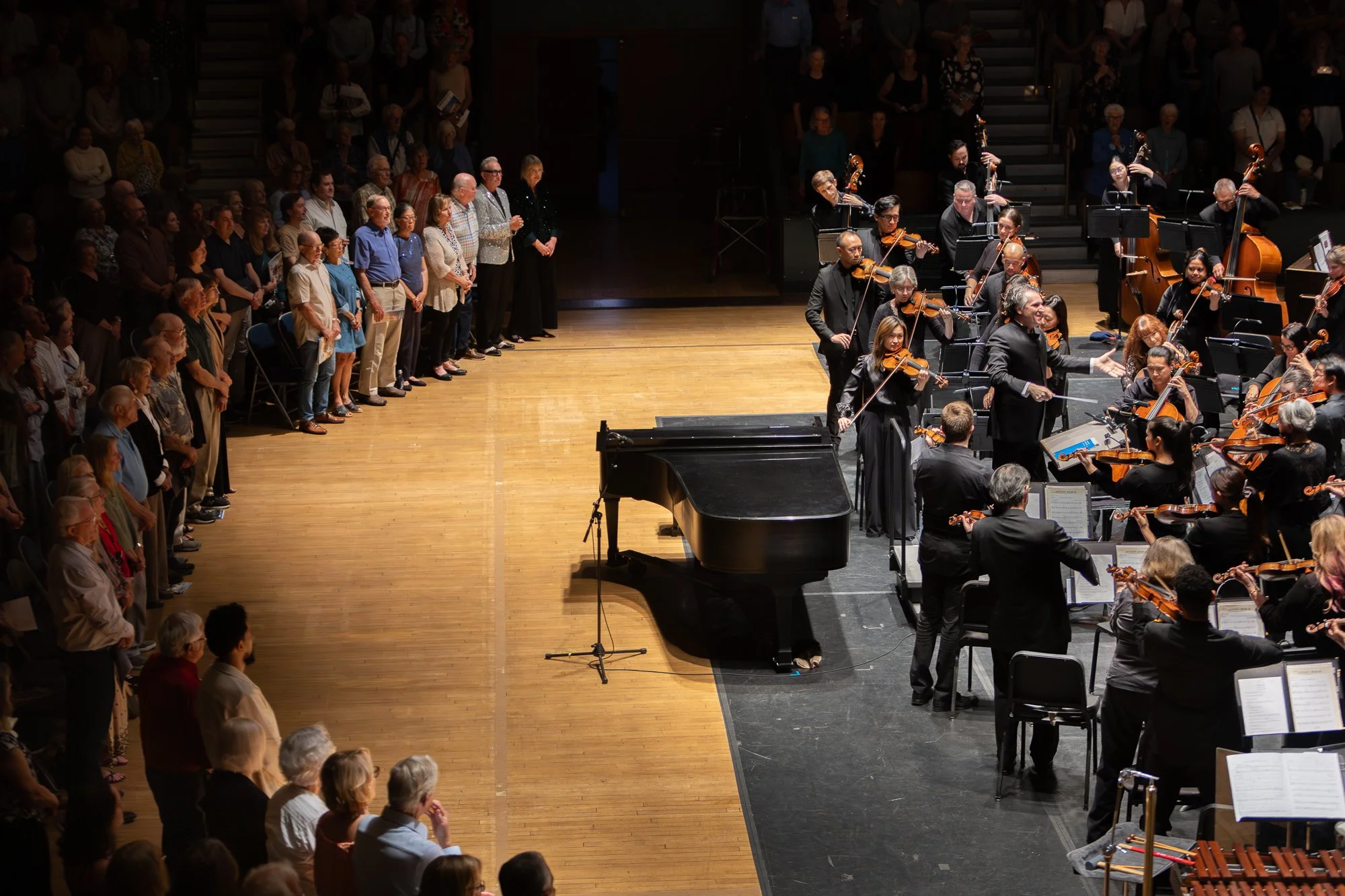
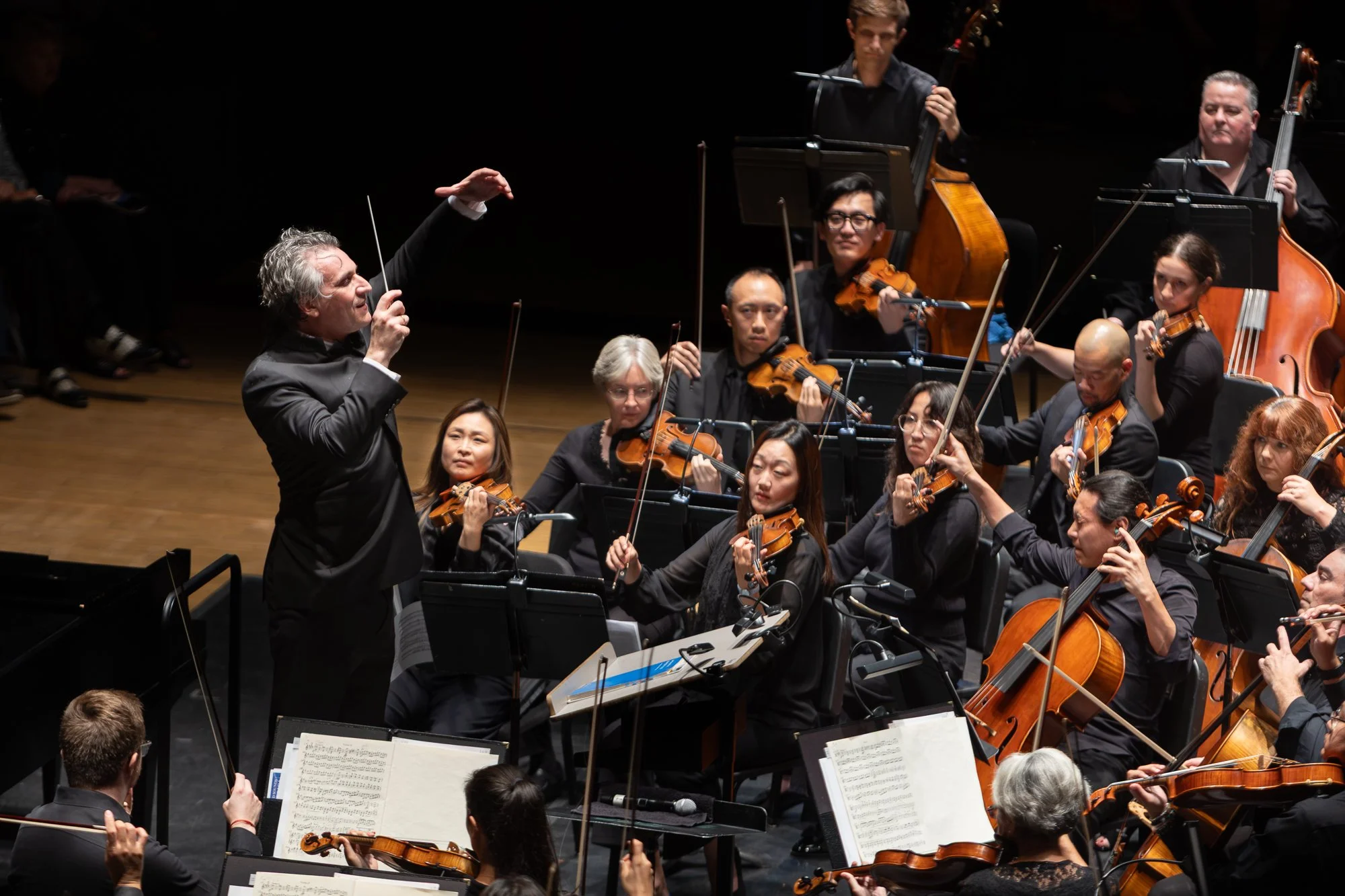
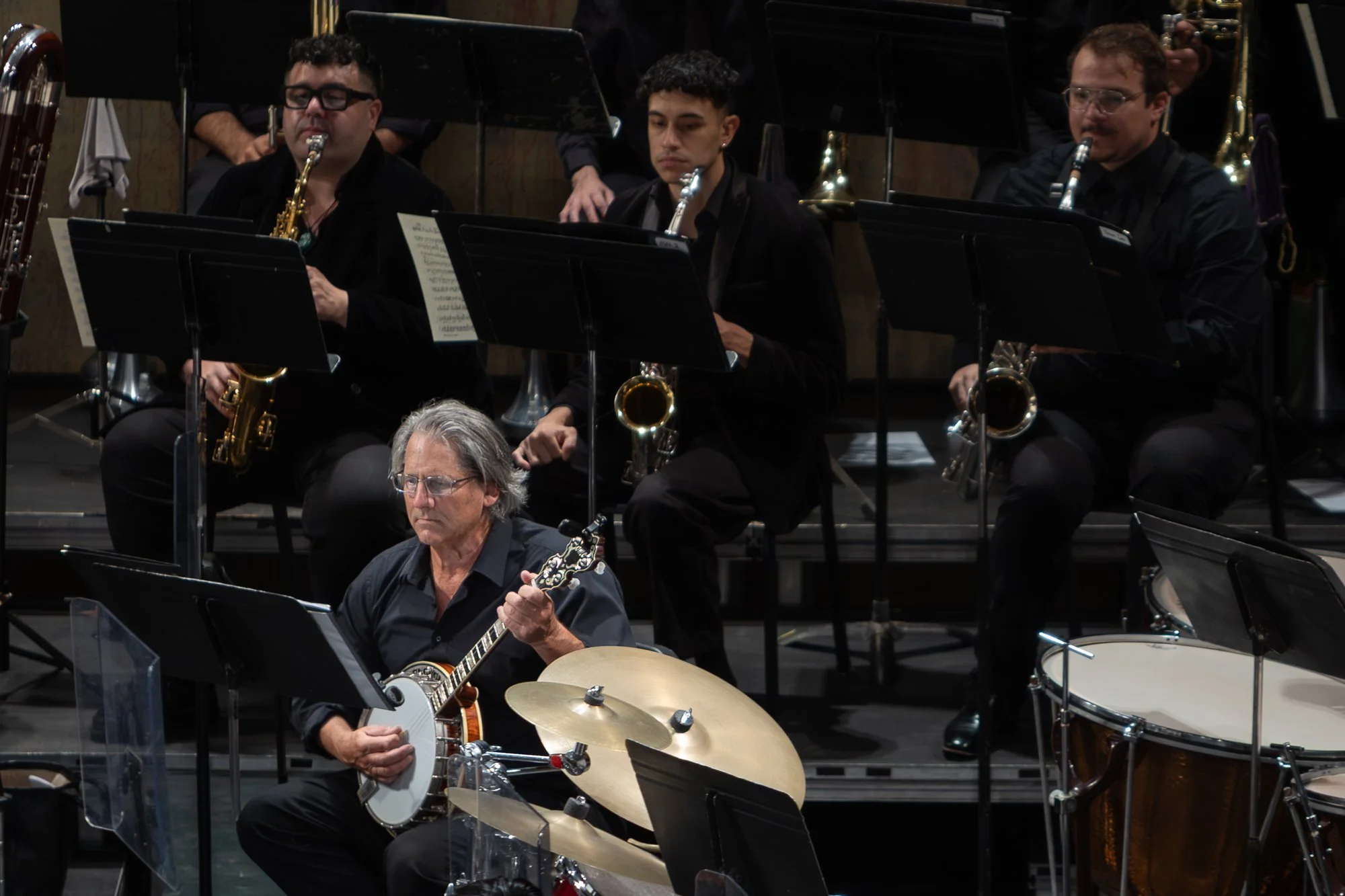
Stewart had all the instruments playing during the concerts be up on stage. This included Principal Banjo John Imholz, who played in the Gershwin Rhapsody in Blue. According to my extensive research (actually, I just Googled it) the Santa Cruz Symphony became the first major symphony orchestra to include a banjo in “The Star-Spangled Banner”!
It is of course impossible in a single concert to do justice to the full diversity of US music over the past 250 years. A list of what various audience members missed on the program would be long. For example, there was no Early American shape-note music and there were no Sousa marches — not even “The Stars and Stripes Forever” (but don’t worry, I’m pretty sure that, as always there is going to be the traditional performance conducted by a distinguished guest conductor at the June 12th concert!) What the program did do was showcase and illustrate the wonderful diversity of US music.
FINALE FROM NEW WORLD SYMPHONY
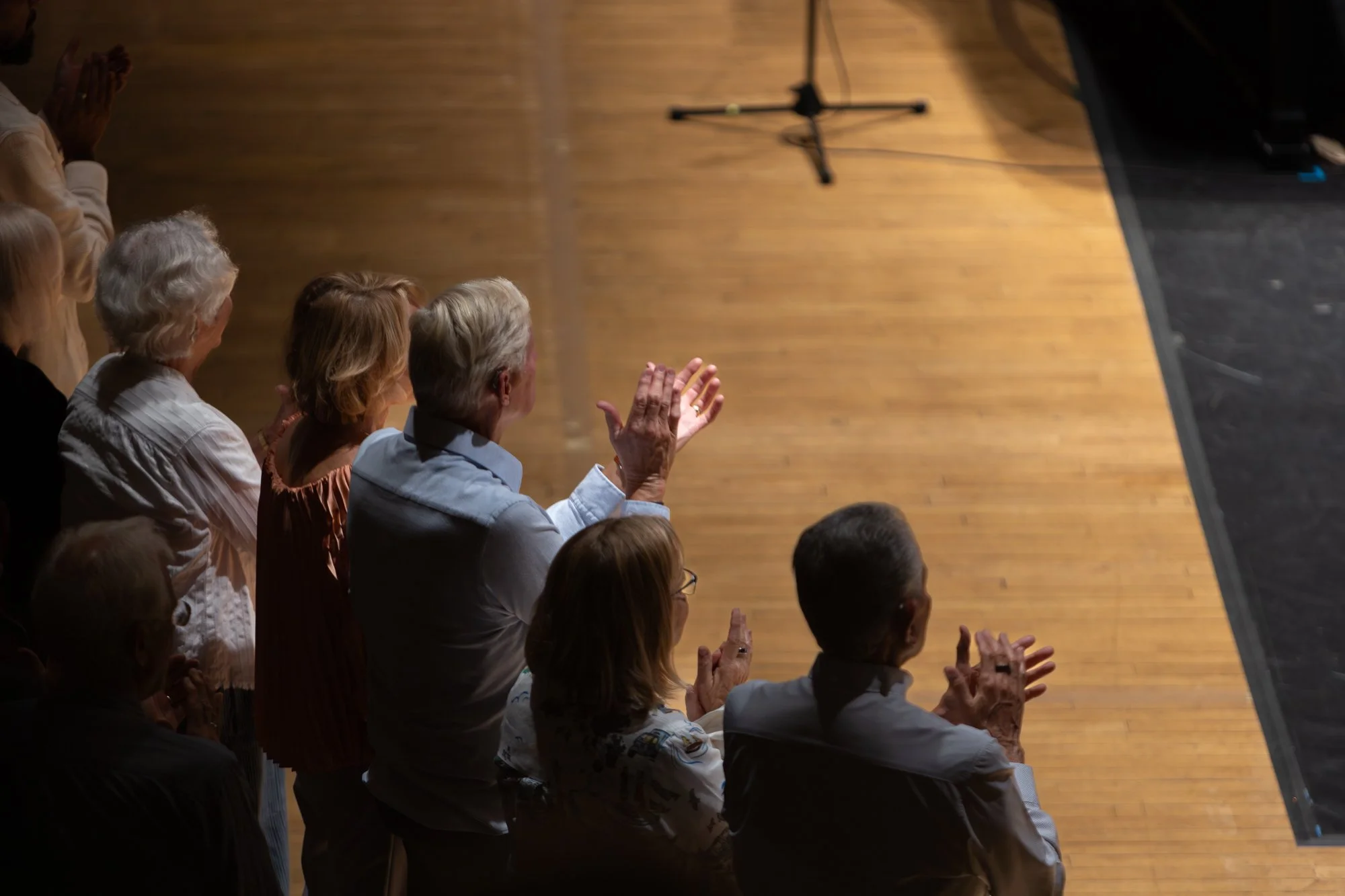
After the audience sat down, the orchestra began the only other work in the program by a non-US composer, Antonín Dvořák, who became the director of the National Conservatory in 1892. The orchestra gave a rousing performance of the powerful finale to the famous New World Symphony, a work which, as Maestro Stewart said, epitomizes the potential Dvořák saw in the US. This met with enthusiastic applause.
THE UNANSWERED QUESTION
The first US composition on the program was Charles Ives’s most famous work, The Unanswered Question. It was so far ahead of its time that it is hard to believe that Dvořák had only been dead for four years when Ives wrote it in 1908! It could have been written many decades later.
At the start of the piece there was a complete blackout save for the musicians’ standlights. In the darkness, pianissimo (ppp) muted strings started a beautiful, widely-spaced G major chord. Then, out of the dark come five discordant off-stage trumpet notes played by principal trumpeter Michael Marmarou. According to program notes Ives wrote, these non-tonal notes represent “the perennial question of existence.” Each note clashes with the serene G major of the strings. The intervals are effectively unsingable.
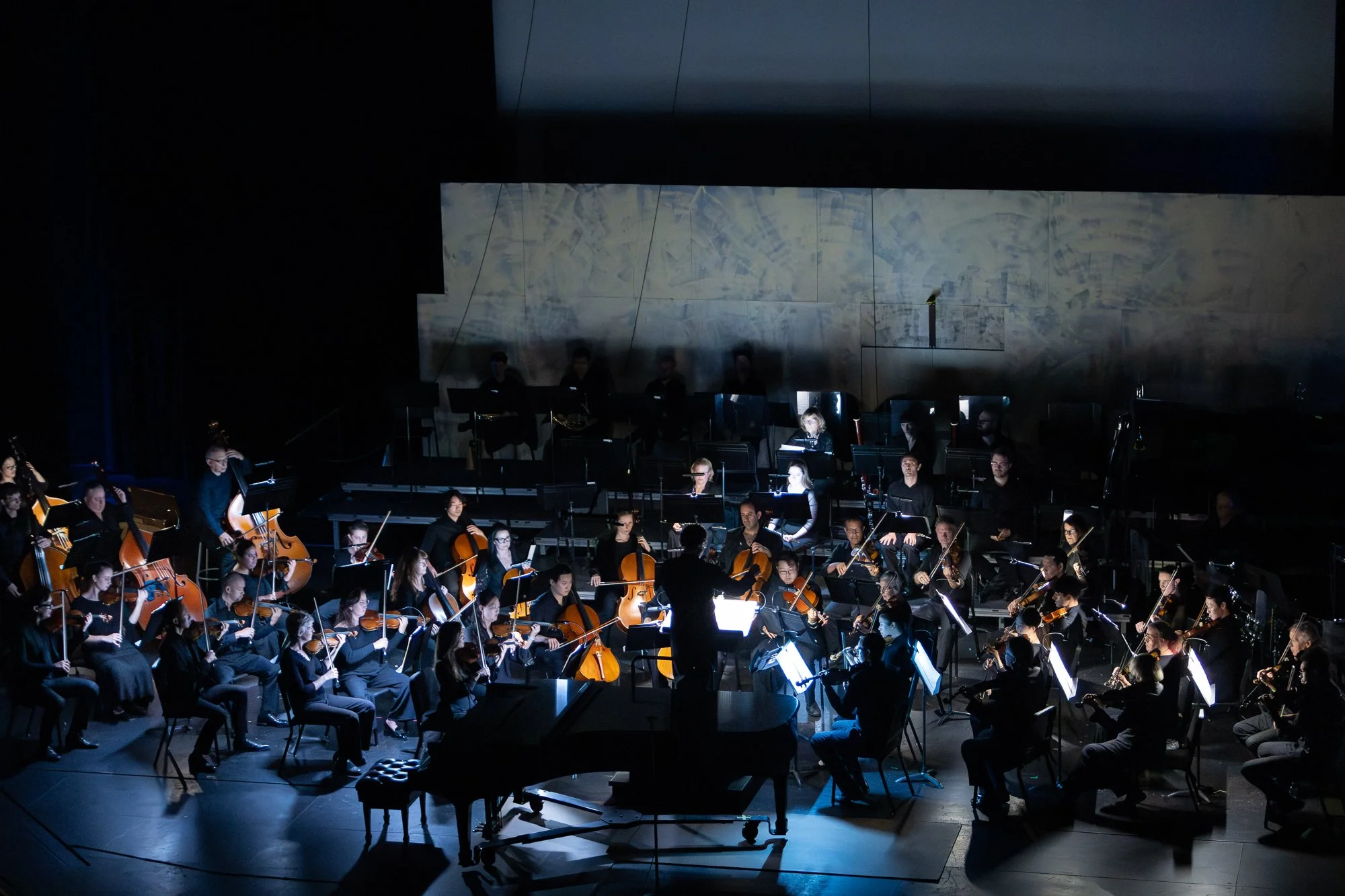
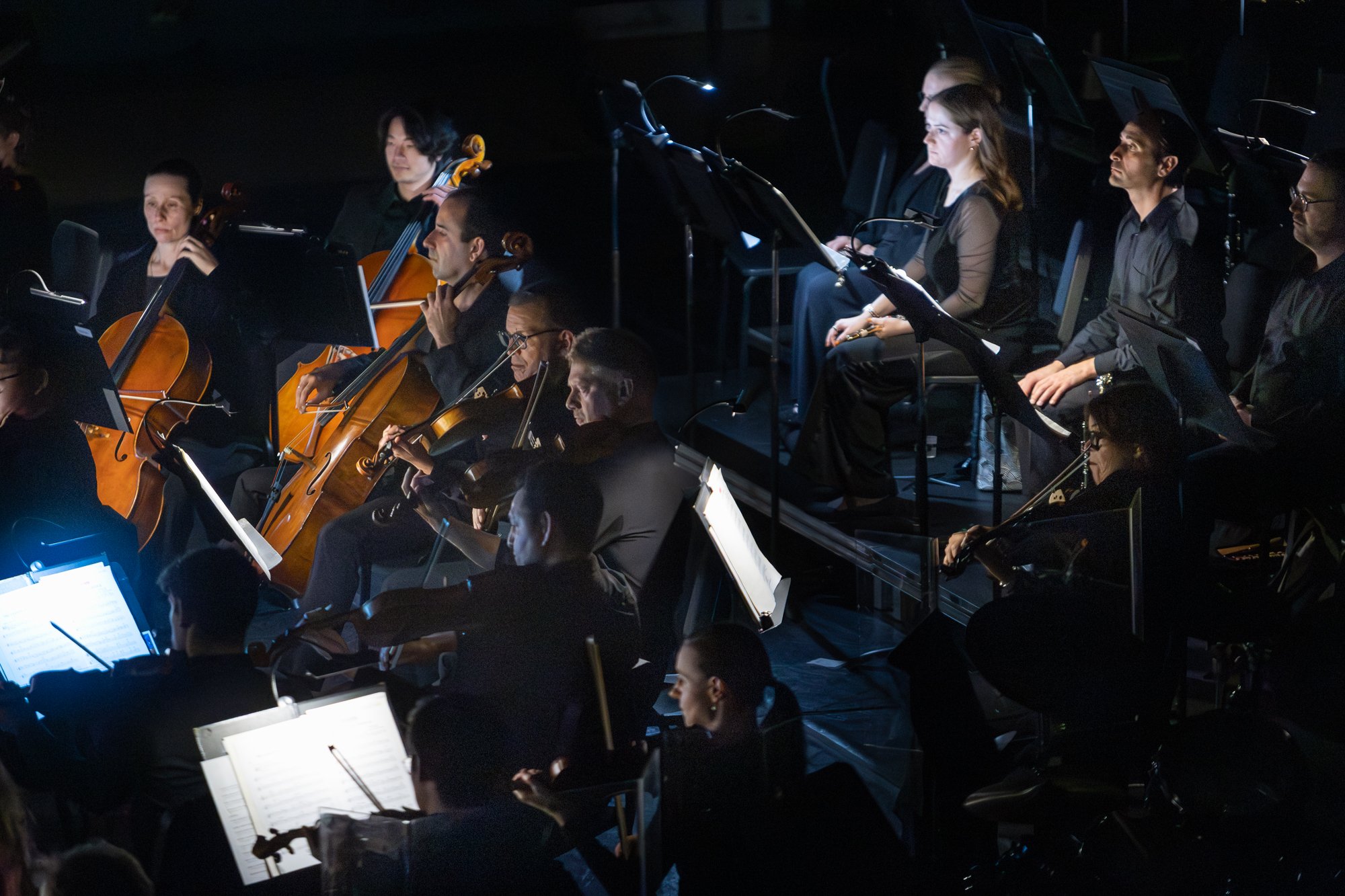
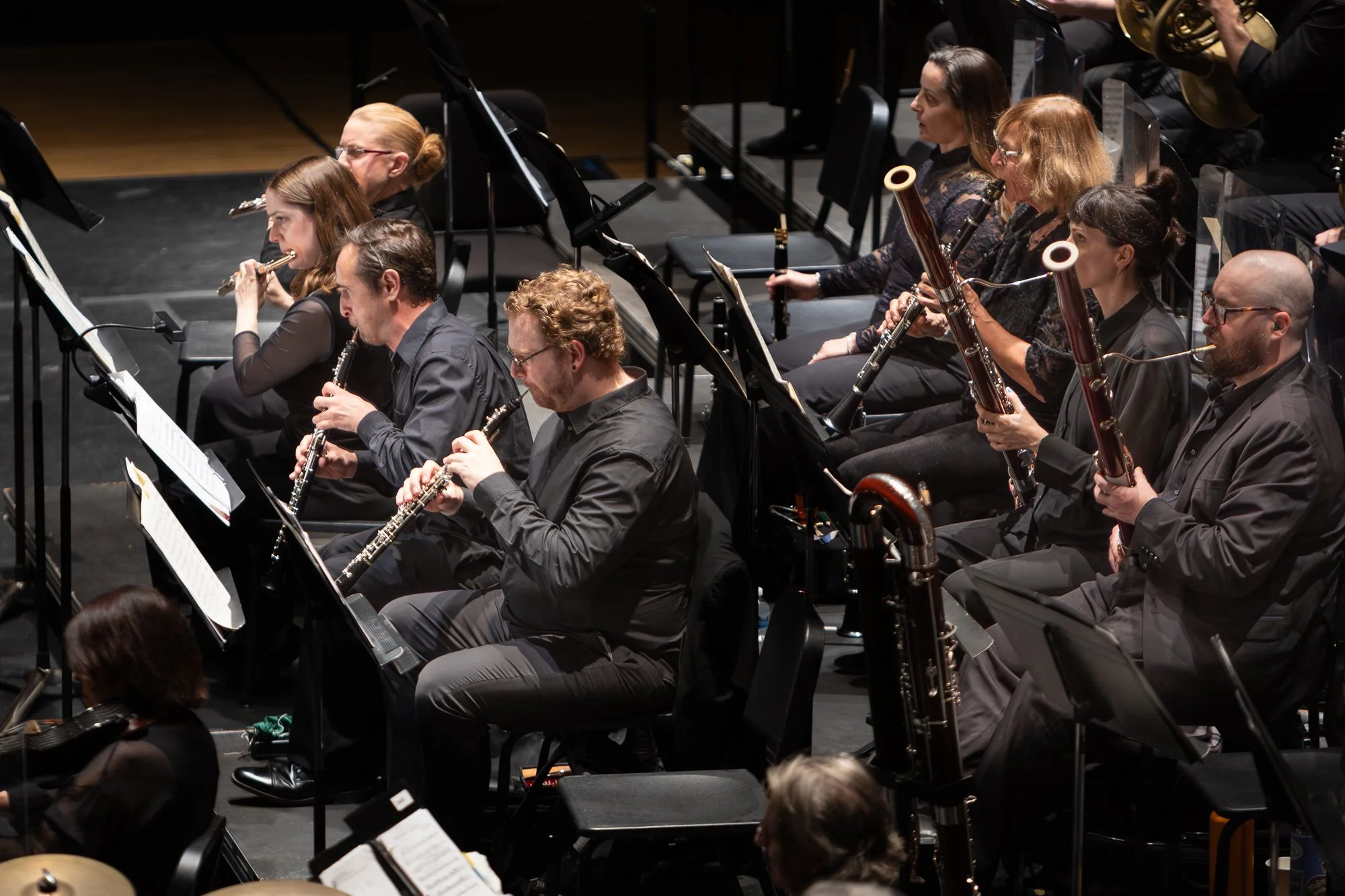
In the Civic, Marmarou started off in the corridor behind the entrance tunnel to the audience’s left. Answers to the trumpet’s question are provided by four upper woodwinds: flutes Sarah Benton and Kris Palmer, principal oboe Robert Scott, and principal clarinet Karen Sremac. The trumpet re-asks its question, this time from the back of the main entrance tunnel at the back of the auditorium. The woodwinds respond again.
This pattern is repeated another four times as Marmarou moved counter-clockwise to the right corridor behind the right performers’ entrance tunnel, to behind the timpani on the right side of the orchestra, to off-stage in the center, and to behind the basses and keyboard to the left of the orchestra.
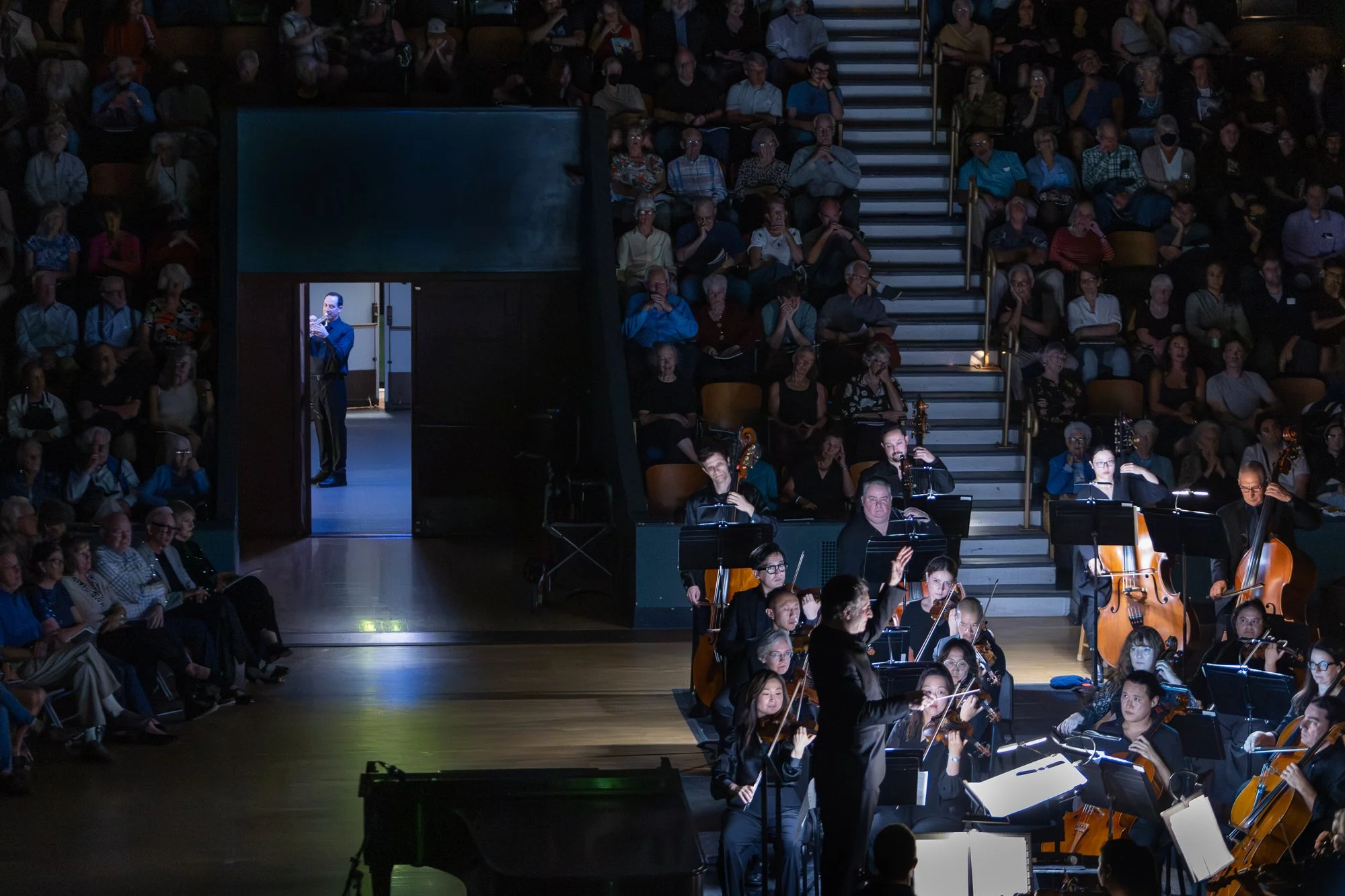
Each time, the woodwinds’ dissonant and atonal attempted answer got more and more frantic until, after their sixth answer, they give up and leave the strings to their calm ppp G major. The trumpet asks its question for a seventh time, now back in its starting position. The final note which in the previous askings had been chosen to be either a C or a B to clash with the strings is now chosen to be a B to be in harmony with the strings.
Unfortunately, the layout of the Mello Center for the Sunday matinee concerts is always problematic for off-stage instruments and the solo trumpet had to be played mostly from just one position in the rear. Despite this, the performance of the Ives in both venues, during which Michael Marmarou remained unseen, was a magical experience of the sort that one can only get in a live performance.
RHAPSODY IN BLUE
Dvořák famously proclaimed that African American spirituals were “the real foundation of any serious and original school of composition to be developed in the United States.” (He also insisted that the conservatory be "thrown open free of charge" to Black students.) We didn’t get any spirituals in the weekend’s concerts, but we did get other fruits of the African diaspora in America. The greatest of these is jazz. It is music that blends African, Caribbean, and European musical traditions into a uniquely US-born art form. It has been widely described as the greatest American contribution to music and, indeed to the arts in general.
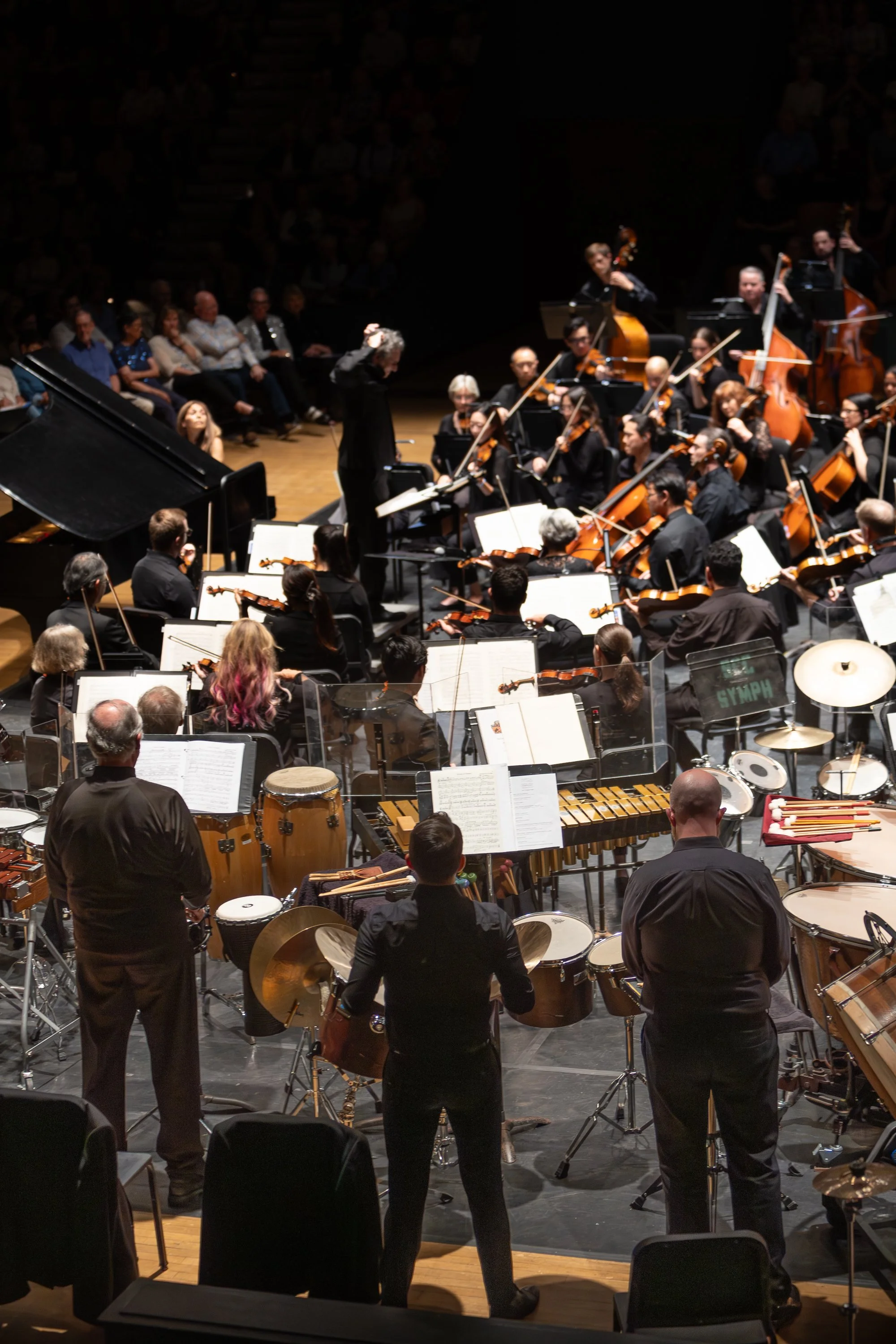
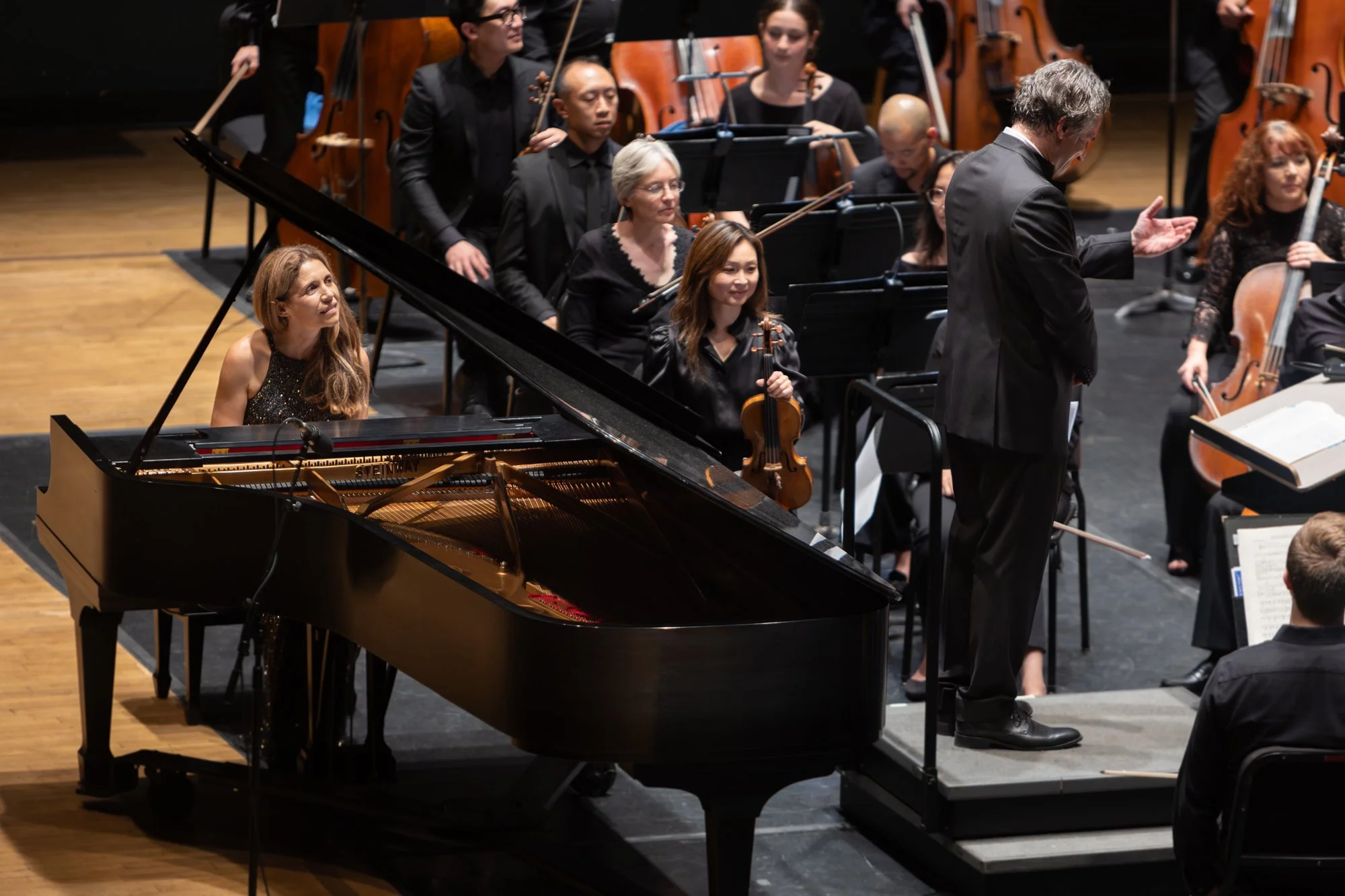
Piano soloist Christine McLeavey joined the orchestra to round out the first half of the concerts with the major work on the program: George Gershwin’s 1924 Rhapsody in Blue, a seamless integration of jazz idioms into symphonic music. It is the most popular work for piano and orchestra in any genre. There are more recordings than each of the big romantic piano concertos, such as Tchaikovsky’s 1st and Rachmaninoff’s 2nd and 3rd. (We’re being treated to the monumental “Rach 3” in the January 16/17 concerts).
I loved McLeavey’s performance. Unlike some performances, her playing did not feel rushed or mechanical; there was a comfortableness and freedom with the rhythms and her tempi felt right. Importantly, her interpretation helped me get a new appreciation of the lyrical and light-hearted sides to the work; it’s a fun piece. McLeavey didn’t just convey this with her playing, but also with her facial expressions. Audience members who were fortunate to have had a good view (there was no projection this weekend) commented that it was obvious that she was thoroughly enjoying playing. I suspected that this might have been what Gershwin himself did while playing.
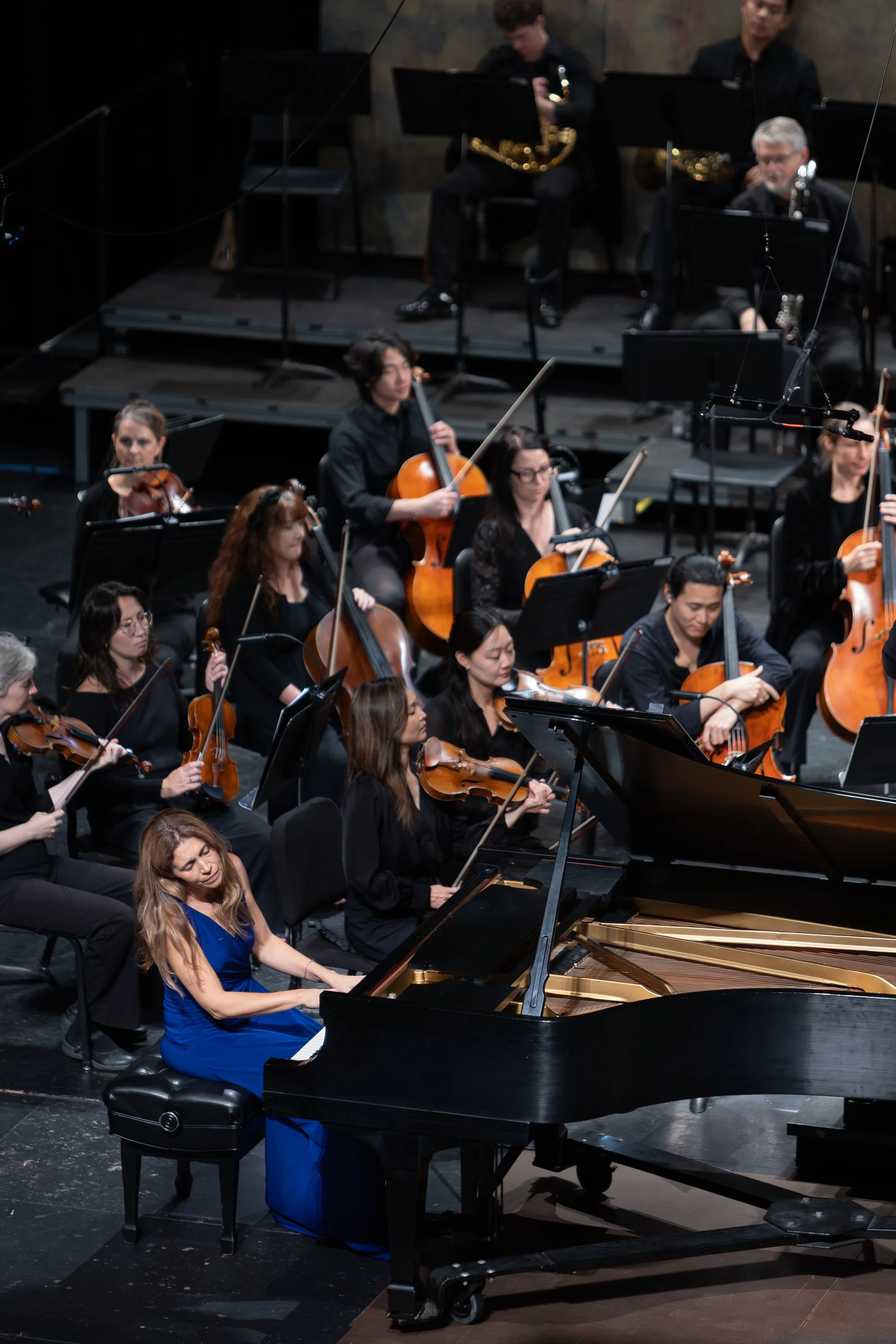
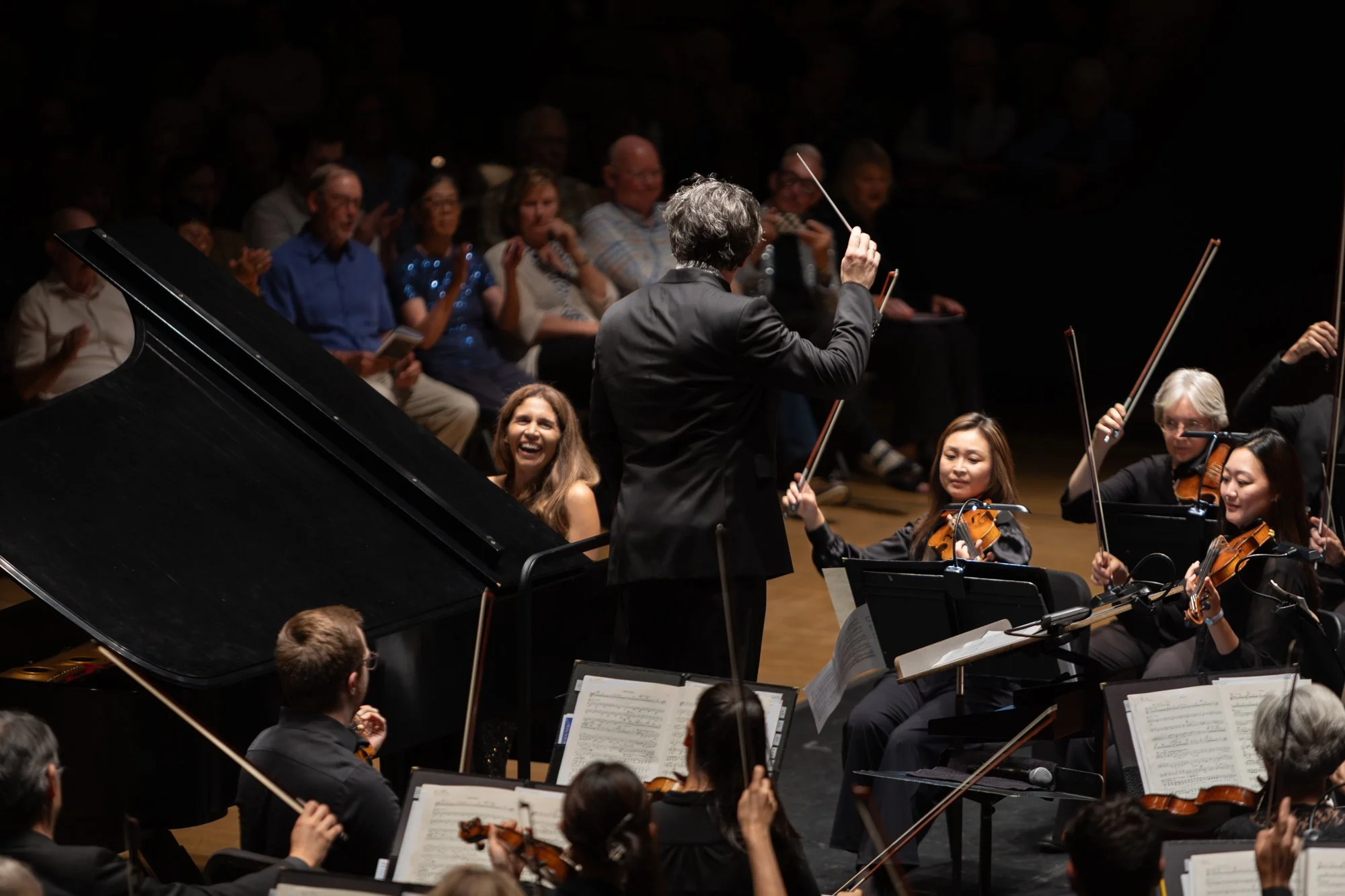
After the concerts this led me to look up videos of Gershwin himself playing. Sure enough, there he was smiling away and having fun! Last weekend, the orchestra was also having fun. The humorous use of the wah-wah mute by Principal Trombone Sam Schlosser in the trombone solo responding to the muted trumpet solo drew laughter from the audience.
JUBA DANCE FROM SYMPHONY NO. 1
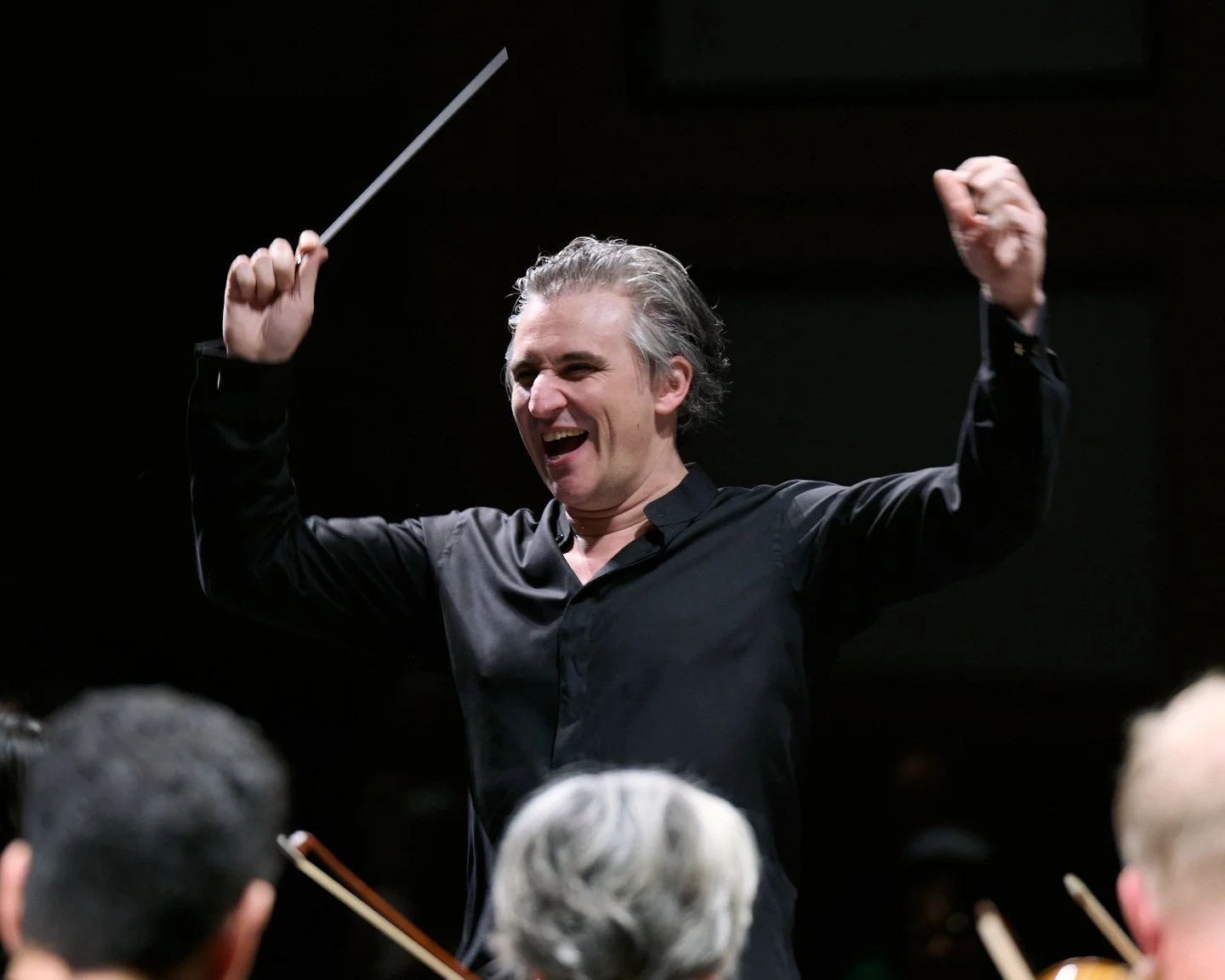
After the intermission the program continued with more African American musical influence: the Juba Dance from Florence Price’s 1933 Symphony No. 1, the first work by a female African American composer to have been performed by a major orchestra (the Chicago Symphony) in 1933. The juba, one of the influences on jazz, was a style of dance performed by enslaved people in the American South in the 19th century. As Daniel Stewart said before the orchestra played it, Price’s Juba is one of the world’s most joyous pieces of music.
ADAGIO FOR STRINGS
The program continued with one of the greatest pieces of all time: the 1938 Samuel Barber Adagio for Strings. Although it has been played at state funerals and such, there is no evidence that Barber intended it to be funereal. The tempo any piece is played at has a huge impact on its emotional effect. For the Adagio, Barber specifies a performance time of between 7 and 8 minutes, but it has become common for conductors to take 9 minutes or more. Some go even further and conduct the piece with a glacial slowness and draw out the caesuras (commas) between phrases to give them an agonizing intensity. This stretches out the Adagio to over 10 minutes.
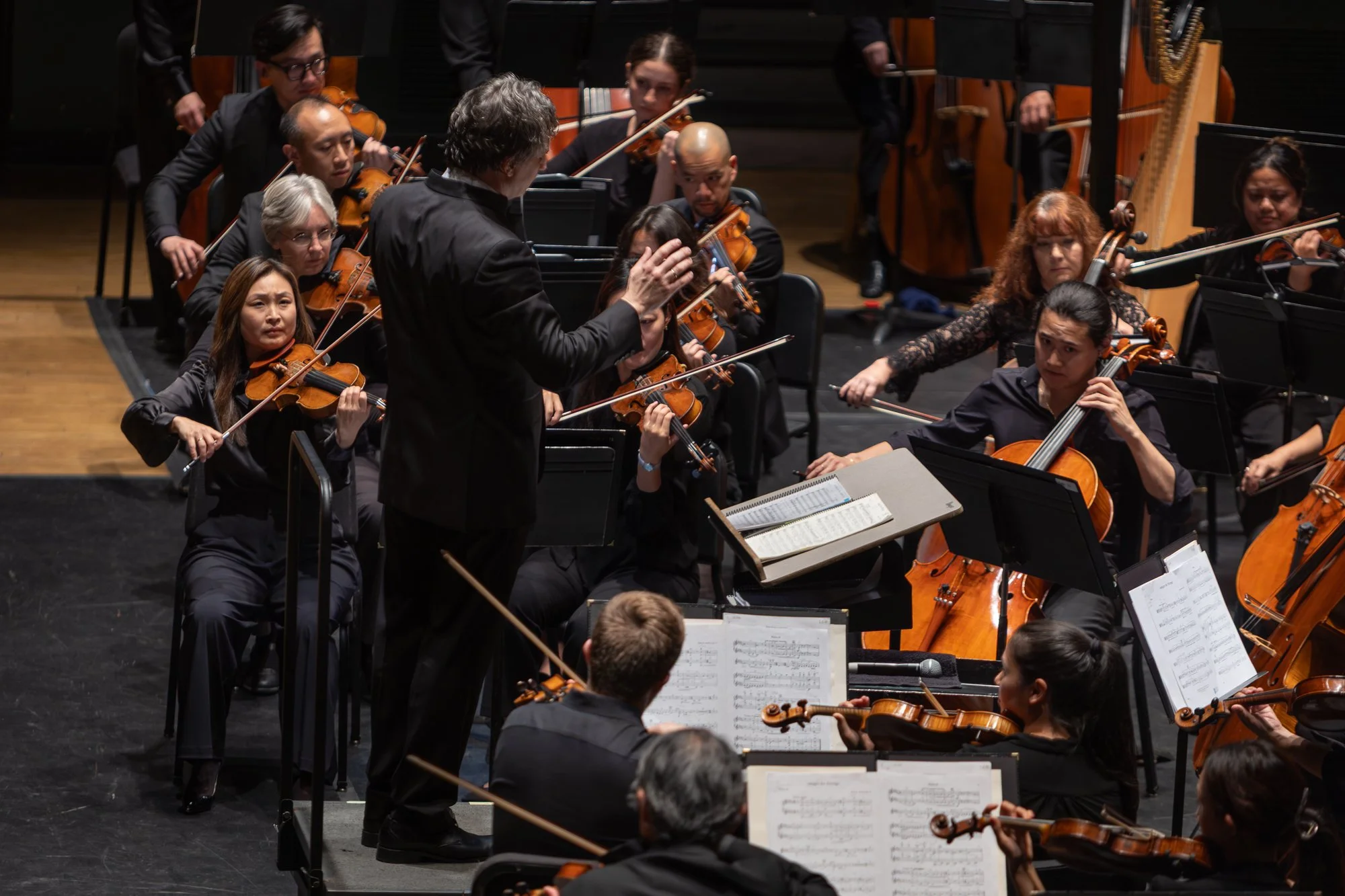
I clocked Daniel Stewart’s interpretations at 7 mins 45 seconds at both concerts — well within Barber’s desired tempo range. This maintained the momentum and made the structure of the long phrases much clearer. Importantly, keeping to the composer’s tempo did not make the Adagio excessively funereal, which would have fit in poorly with the overall program of the concert.
FANFARE FOR THE COMMON MAN
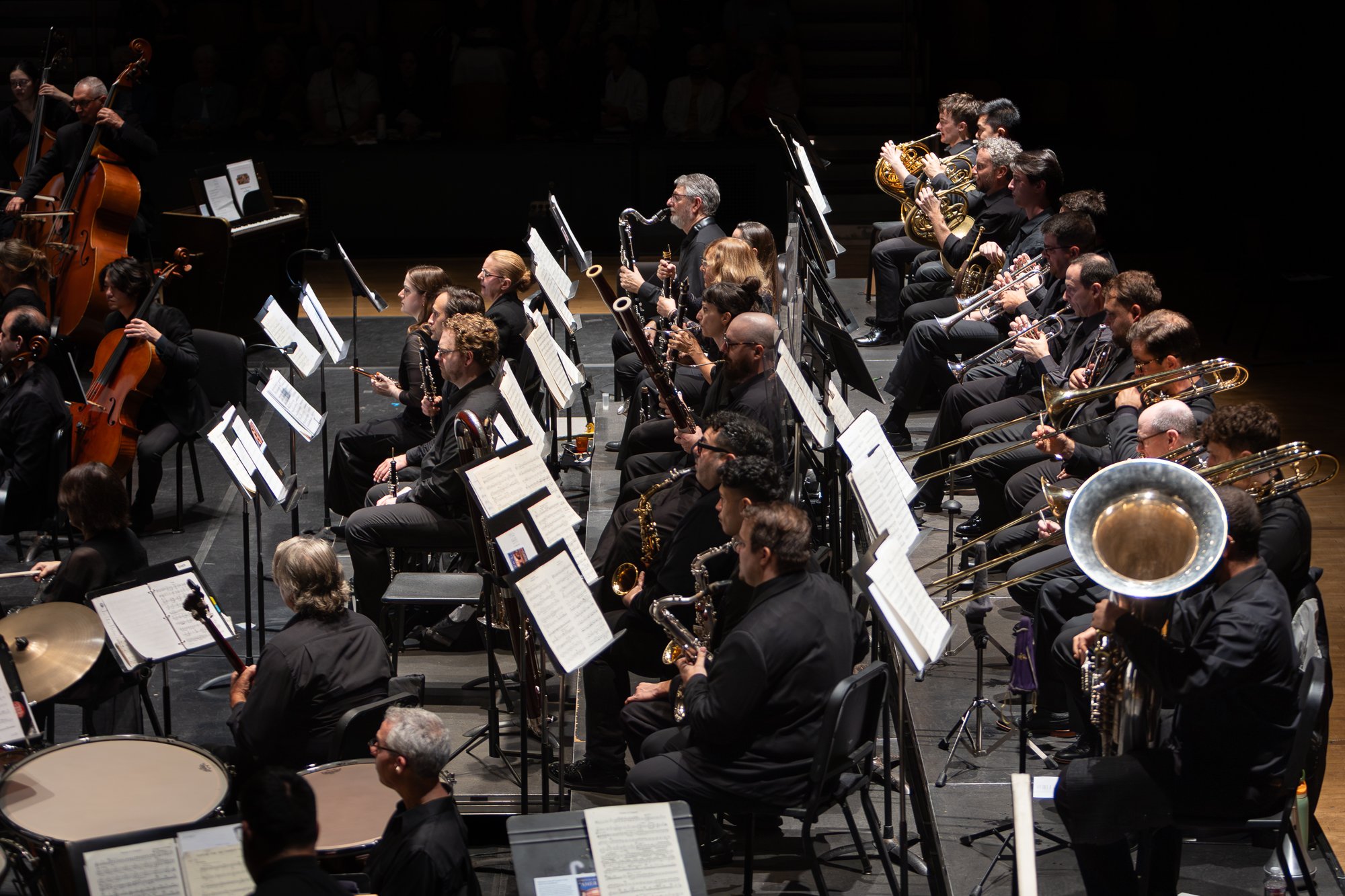
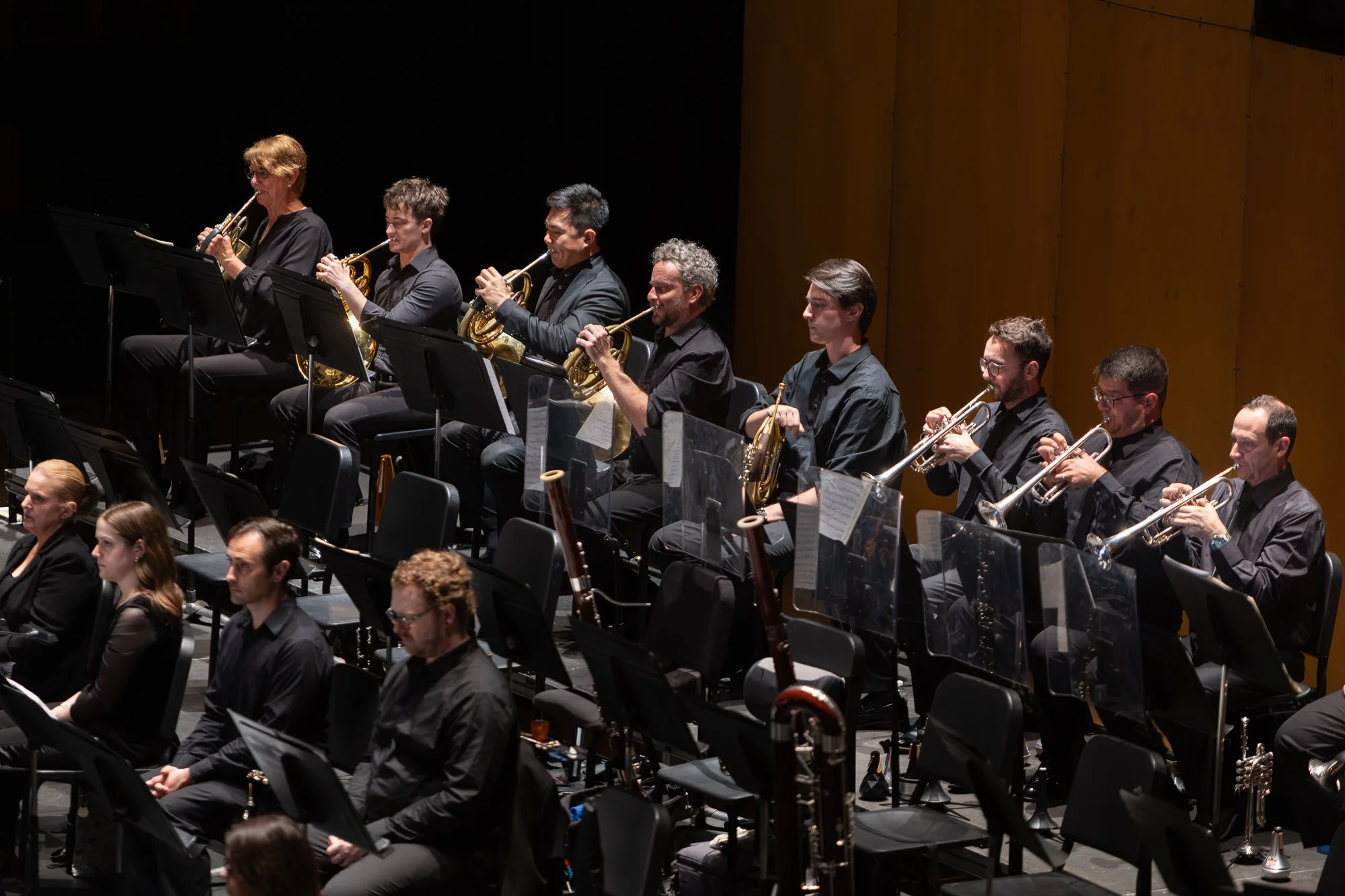
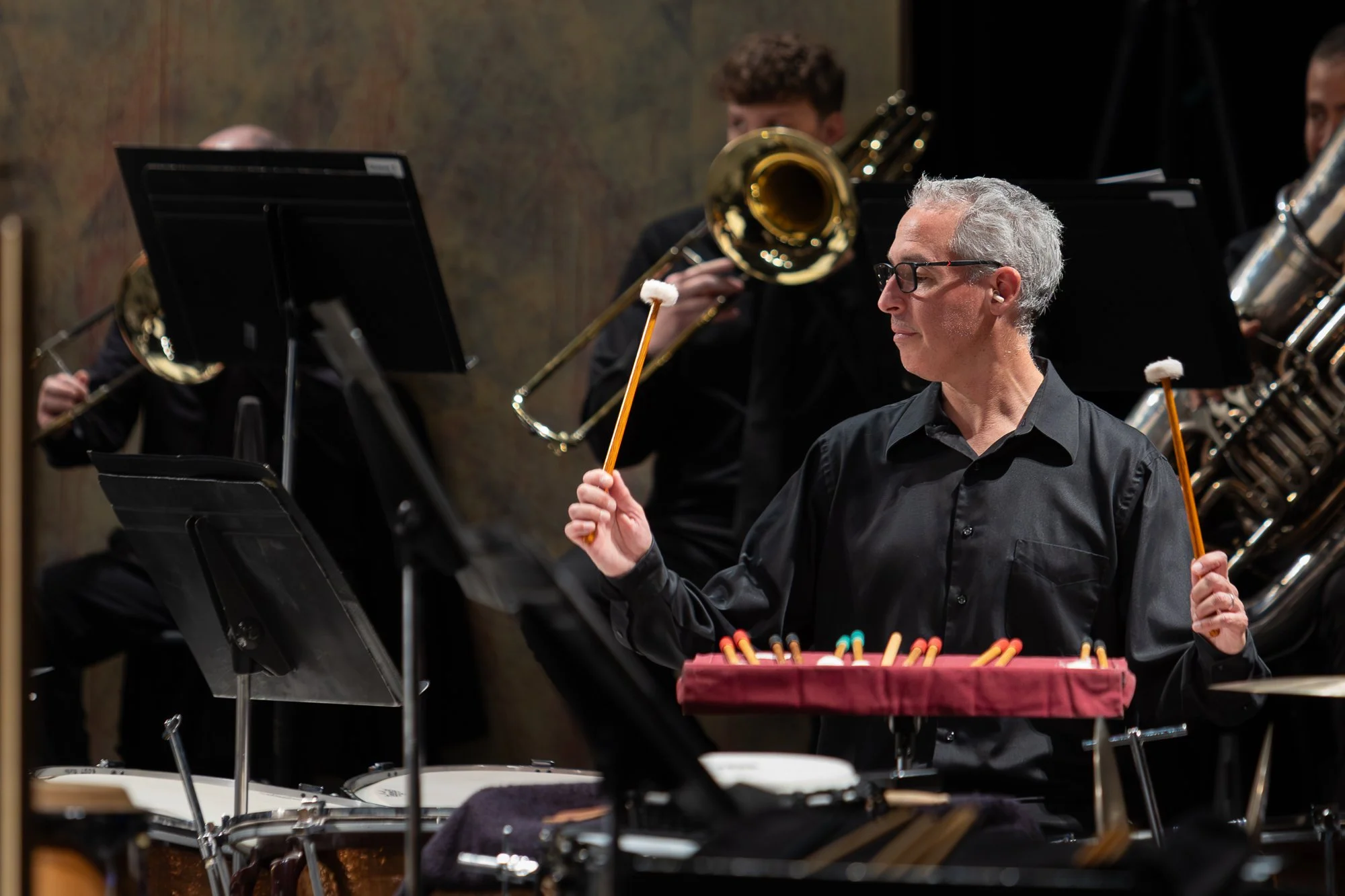
After the slow, elegiac strains of the Barber, a wake-up was needed. This was provided by a piece that is a “must” for a United States 250th birthday concert: Aaron Copland’s 1942 Fanfare for the Common Man for brass and percussion. Principal Timpanist John Weeks had a great time!
MUSIC FROM WEST SIDE STORY
The 1950s were represented by the opening and closing movements of Leonard Bernstein’s Symphonic Dances that he extracted from his greatest hit, the 1957 musical West Side Story. Time only permitted the orchestra to perform the first movement (Prologue) and last movement (Finale).
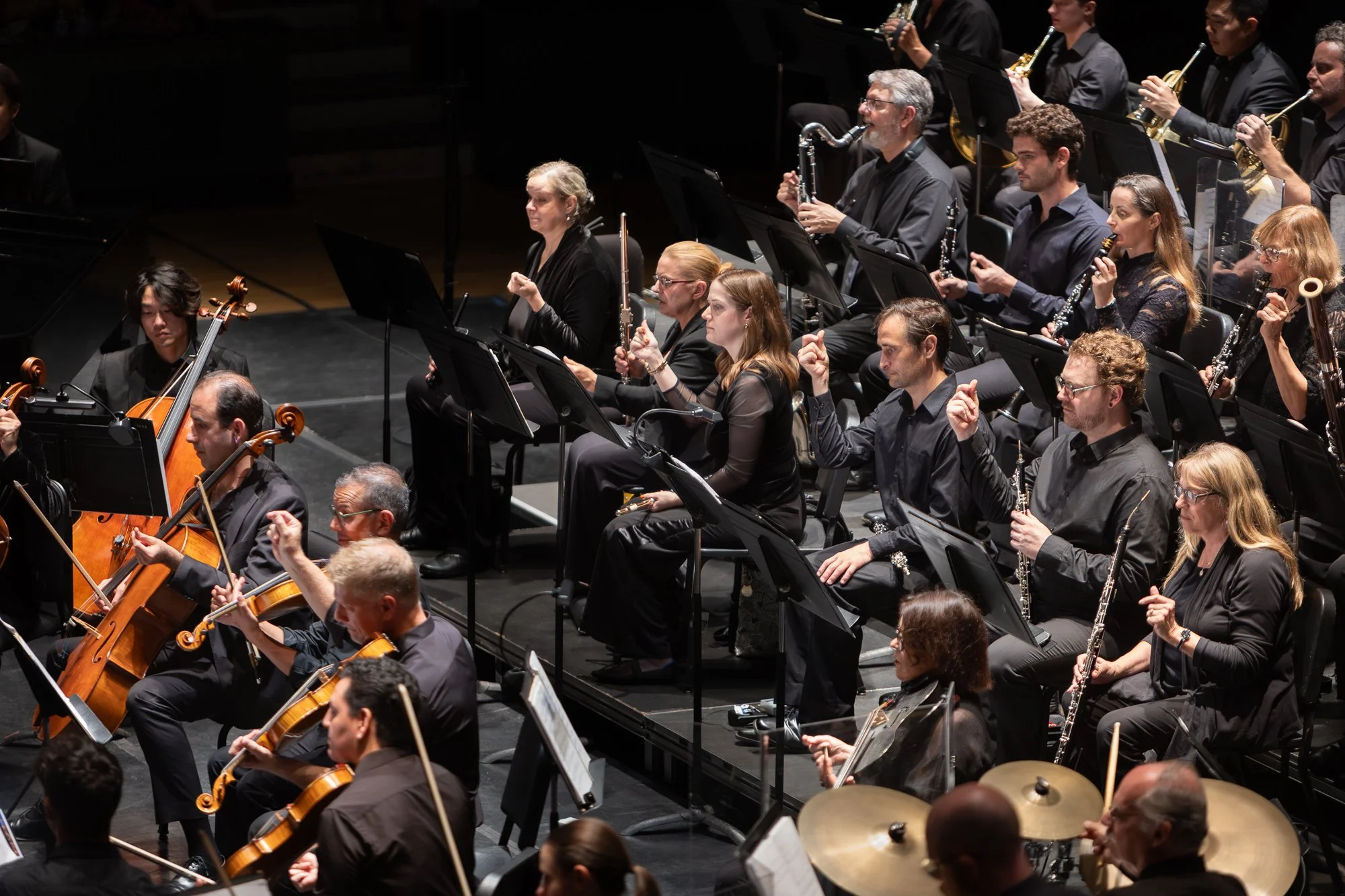
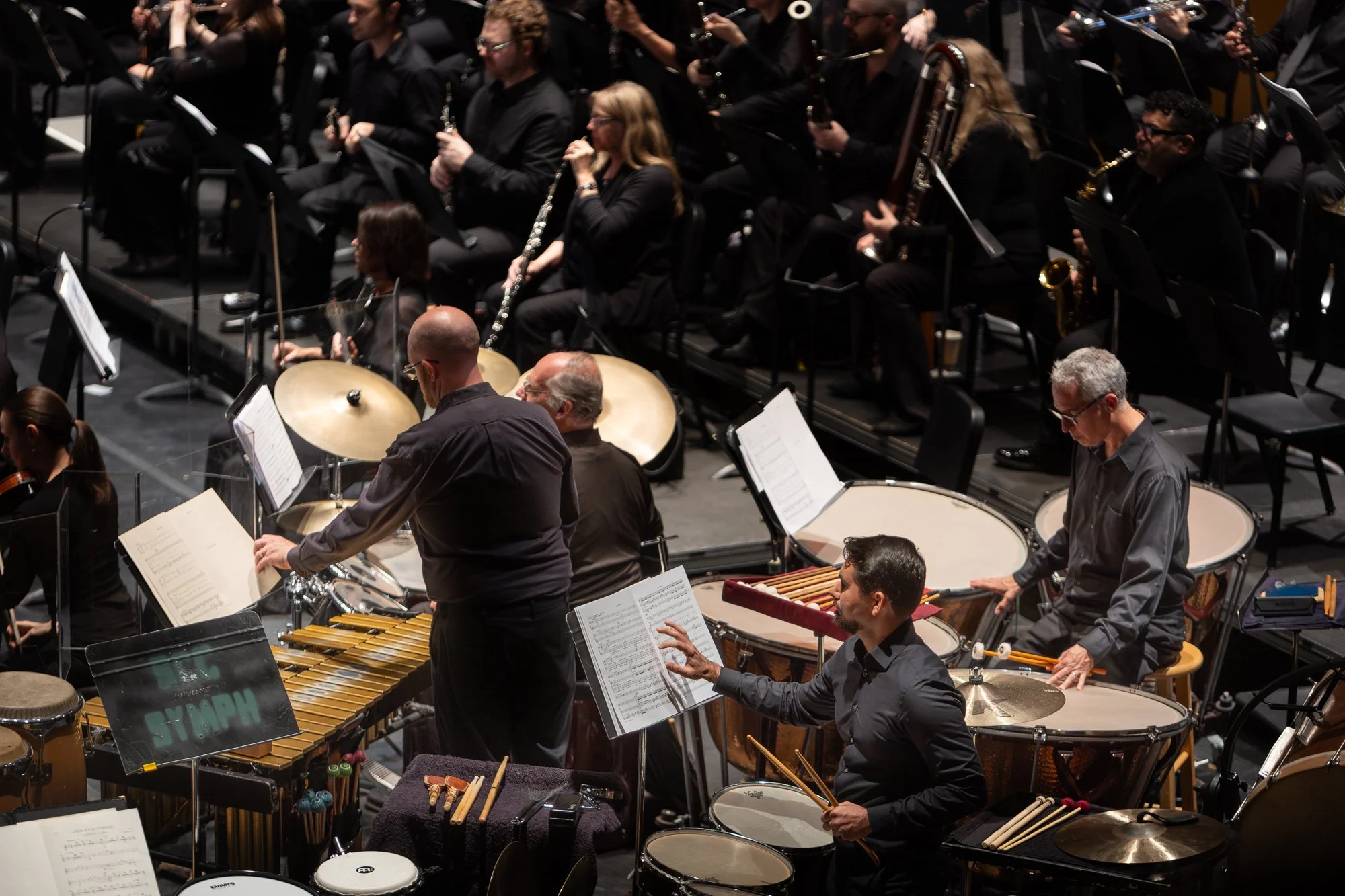
The Prologue uses aggressive syncopated jazz and Latin rhythms to depict the growing rivalry between two street gangs in New York. Members of the orchestra have to do synchronized finger snapping (a signature motif associated with the white American street gang in the musical.) I’m afraid I have to report that finger snapping does not seem to be an “extended technique” taught as part of the training of string players! (But in their defense, it is rather hard to snap your fingers with a violin bow in your hand!)
The orchestra’s percussion section got a good workout in this movement. The other movement the orchestra played is calmer and depicts the emotions of the end of the story.
COME YE
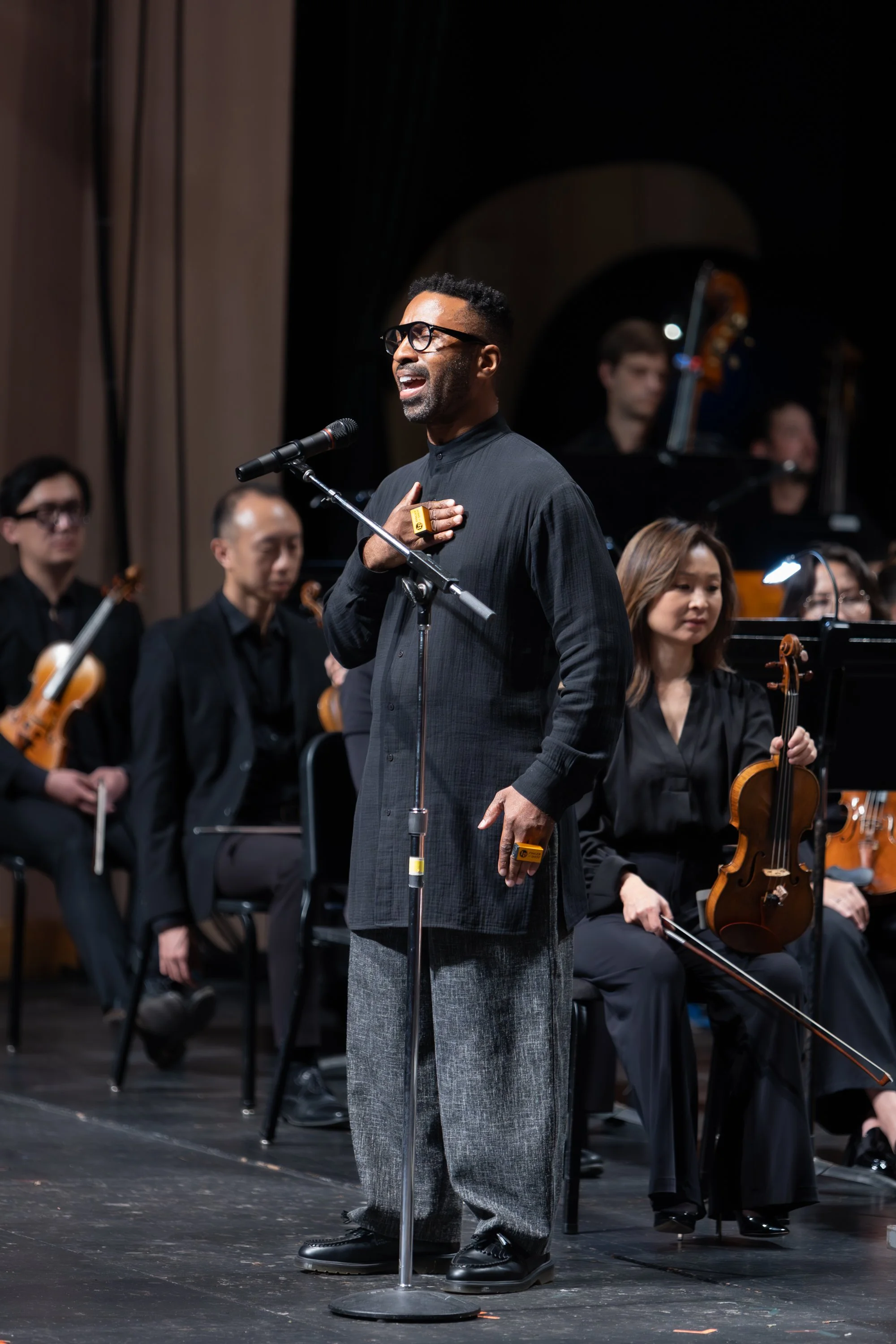
After West Side Story, vocal soloist Omari Tau was welcomed on the stage with warm applause. He is well known to local audiences through being the MC of the orchestra’s family concerts each year. The second half of the 1960s was the height of “the protest era” and there was much popular music associated with this. Stewart chose to represent this with an arrangement by Omari and himself of Nina Simone’s song Come Ye, a call to prayer for peace and for a better world, words that are as relevant today as they were in 1967.
The arrangement was very effective. Omari sang Simone’s words while accompanying himself with quiet body percussion (gently slapping his torso). He was very quietly doubled by Principal Cellist Jonah Kim, muted violas, pianissimo bassoons (Michelle Keem and Iain Forgey). Accompaniment was provided by harp (Molly Langr) and pizzicato cellos and basses. The combination created a perfect atmosphere for Simone’s invitation and invocation.
SOMEWHERE OVER THE RAINBOW
“We can’t have Omari sing just one song!” proclaimed Stewart in announcing an addition to the program. The violins proceeded to strum their instruments as though playing ukuleles, and Omari launched into the 1993 cover of Somewhere Over the Rainbow by Hawai’ian native singer Israel Kaʻanoʻi Kamakawiwoʻole (“Iz”) — a recording that went on to become the best-selling Hawai’ian recording of all time and spent over seven years as number one on the Billboard World Digital Songs chart!
CHUKCHANSI OVERTURE: A CALIFORNIA TONE POEM
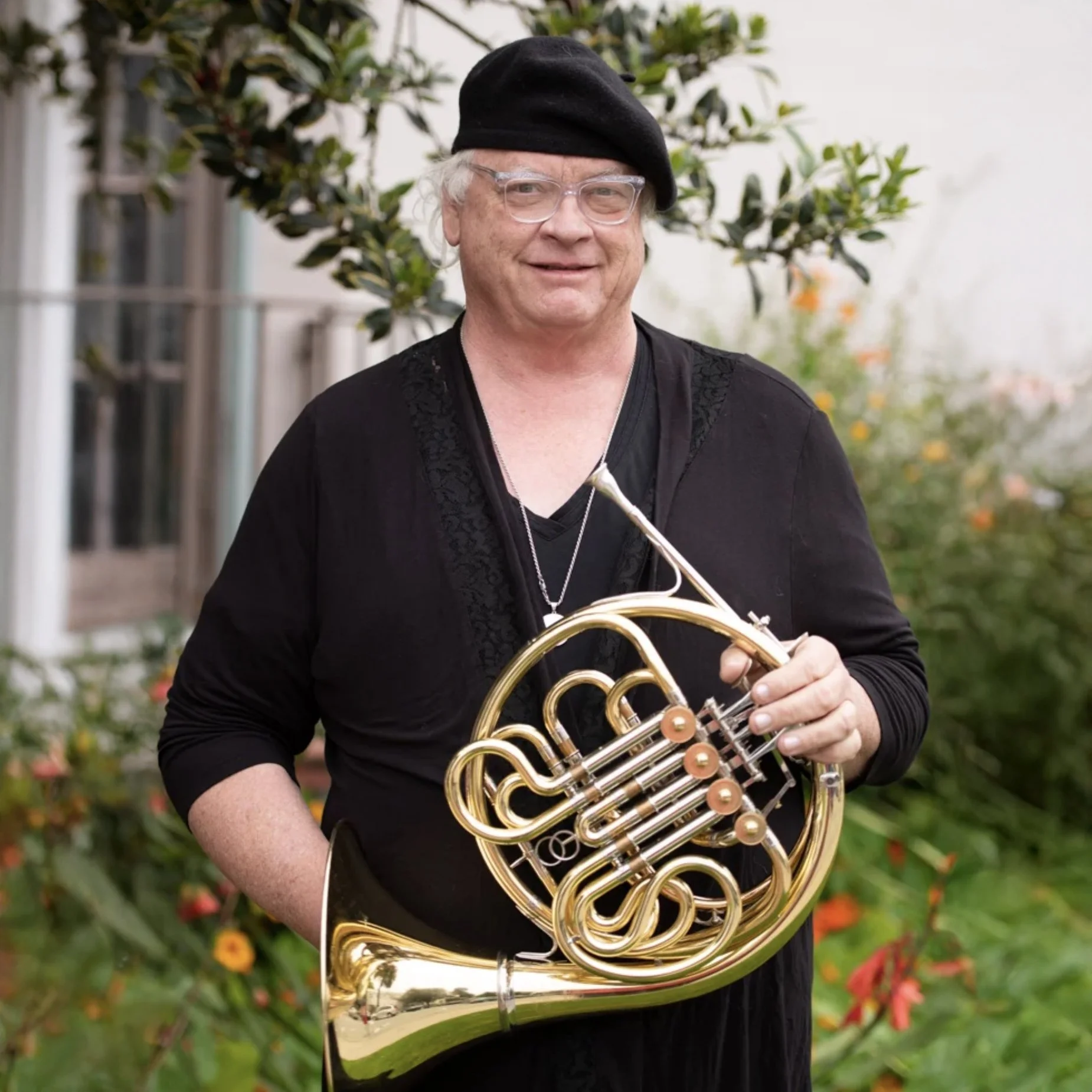
Coming down to the present day, the penultimate work in the concerts was a posthumous première of Chukchansi Overture: A California Tone Poem by a longtime member of the Santa Cruz Symphony family: John (“Jackie”) Orzel, who played horn in the orchestra for over three decades and whose wife, Jane Orzel, was principal bassoon. The Chukchansi people are located in Central California.
Composer Jackie Orzel
1955–2023
Orzel was a lifelong devotee of the music of Anton Bruckner. The influence of the great Austrian symphonist was clear throughout Orzel’s Chukchansi Overture in the textures, orchestration, structure and development of material. For example, it begins with a long, sustained great octave (i.e., the same note name sounding in multiple octaves) for the entire orchestra (strings, woodwinds and brass) in a manner reminiscent of the opening of many Bruckner symphonies. There are also similarities to epic film music.
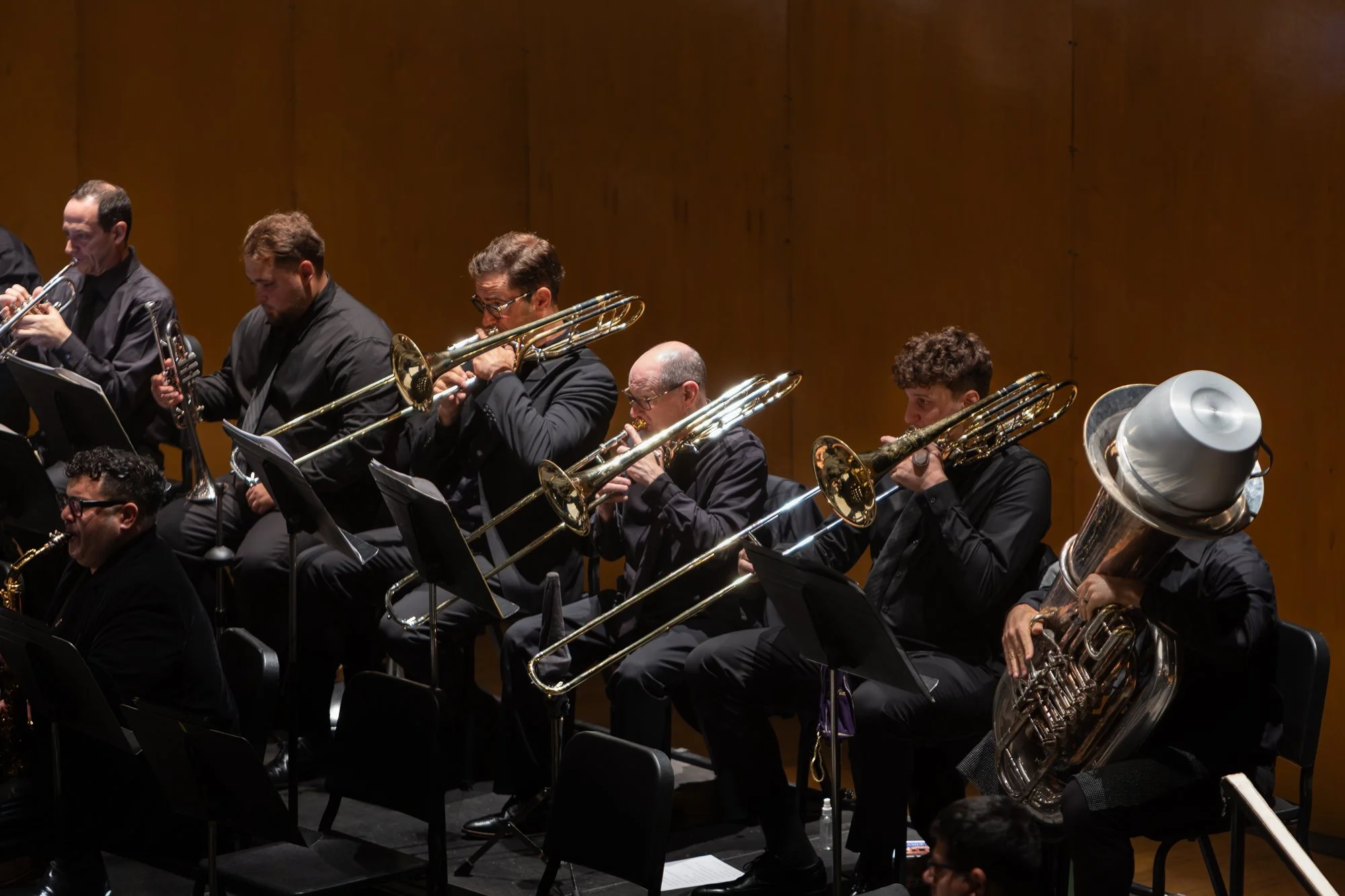
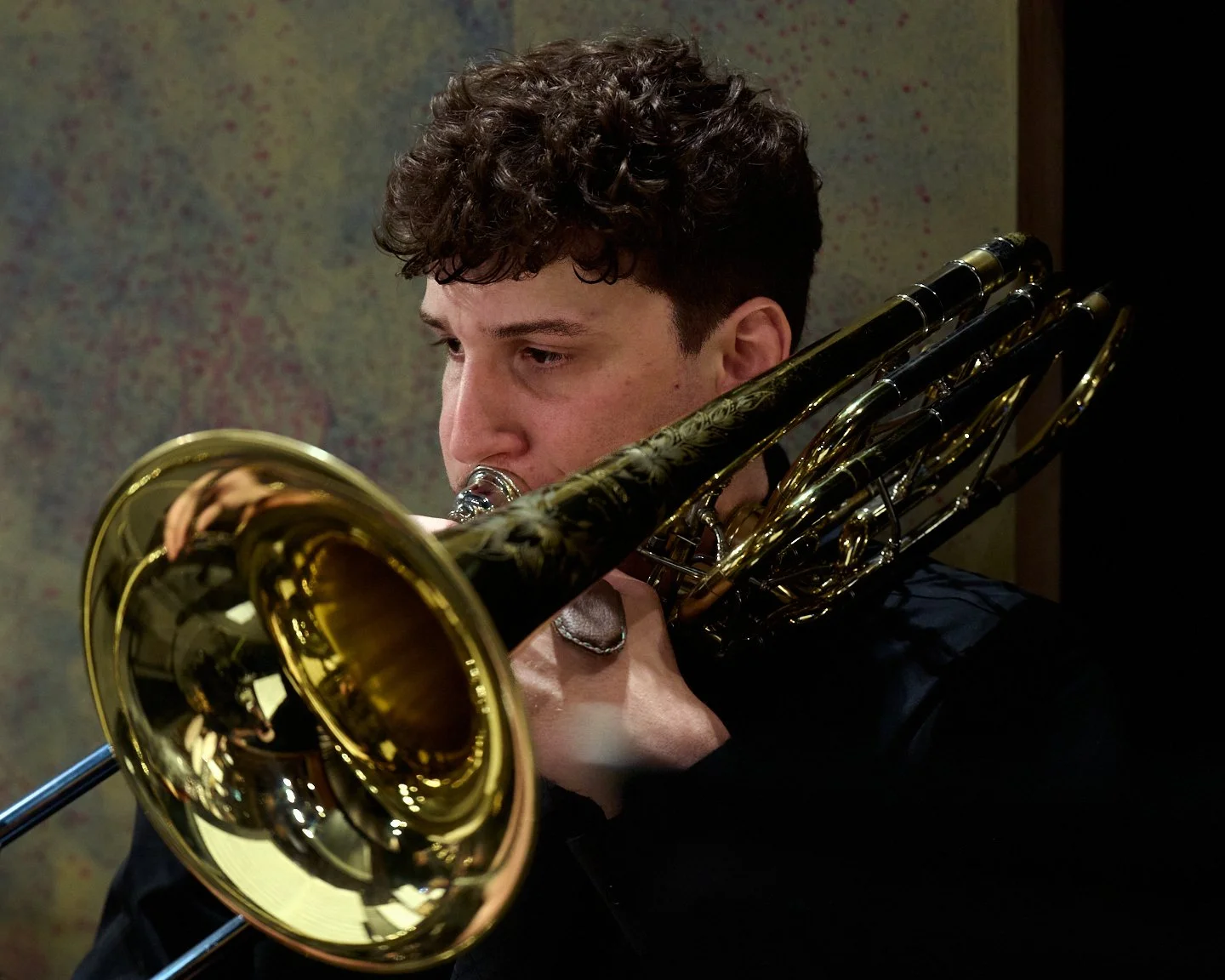
As might be expected from a composer who was a fourth horn player, there were prominent roles for the low brass. In particular, there was very effective use of the bass trombone. Bass trombonist Timmy Grabow received enthusiastic applause at the end. All in all, Chukchansi Overture is a magnificent work. As the applause died down at the Mello Center, someone shouted out, “Play it again!” I wish there had been time to do so.
MUSIC FROM STAR WARS
The final piece on the program was the main title music from John William’s Star Wars Suite, music the orchestra has often played before and music that needs no explanation. Indeed, Maestro Stewart commented that the opening theme might be as popular as the opening of Beethoven’s Fifth Symphony or “Happy Birthday”! (If you are a fan of John Williams’s music, mark your calendar for June 12th when the orchestra will be playing an entire concert of John Williams’s music.)
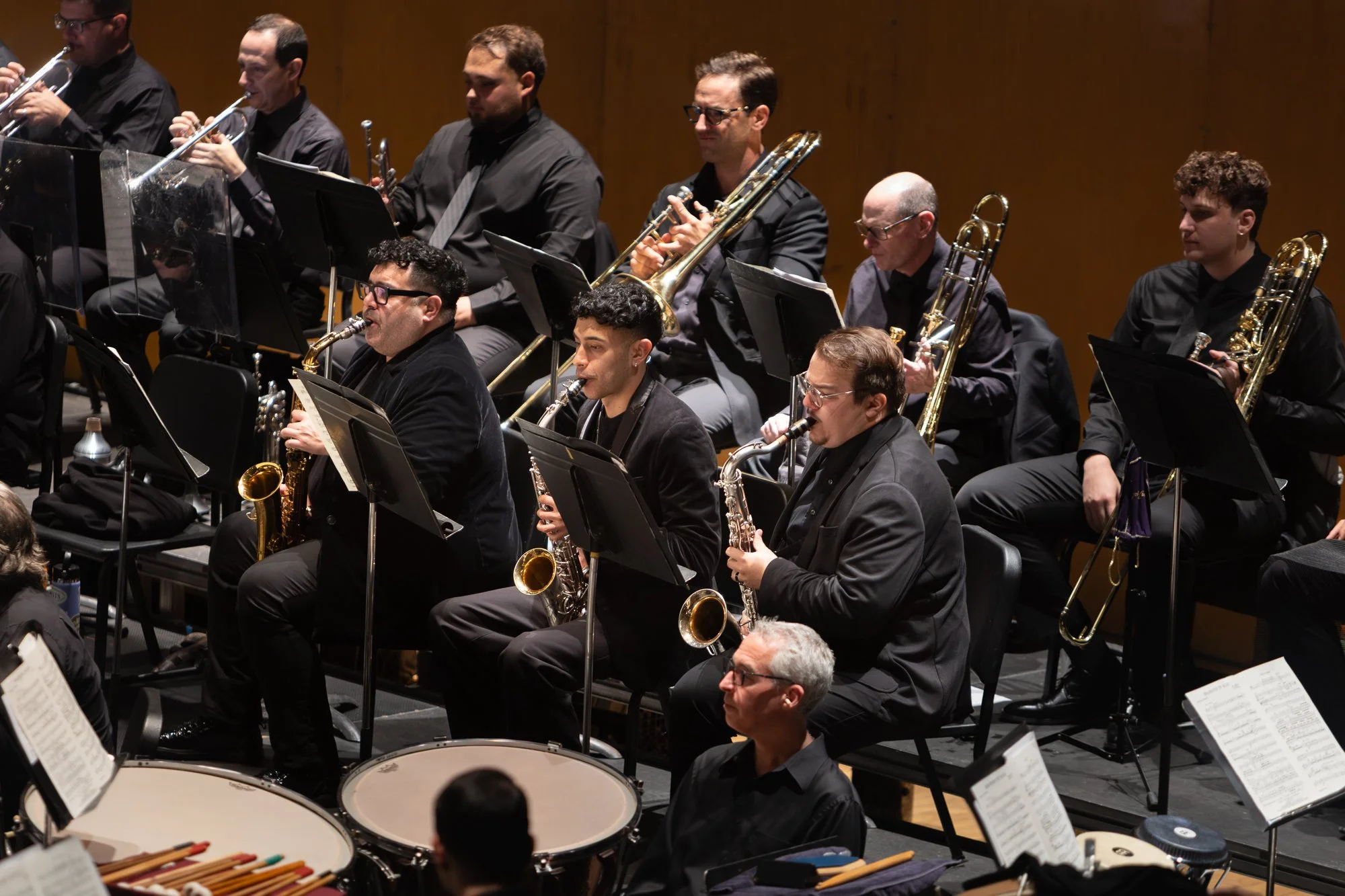
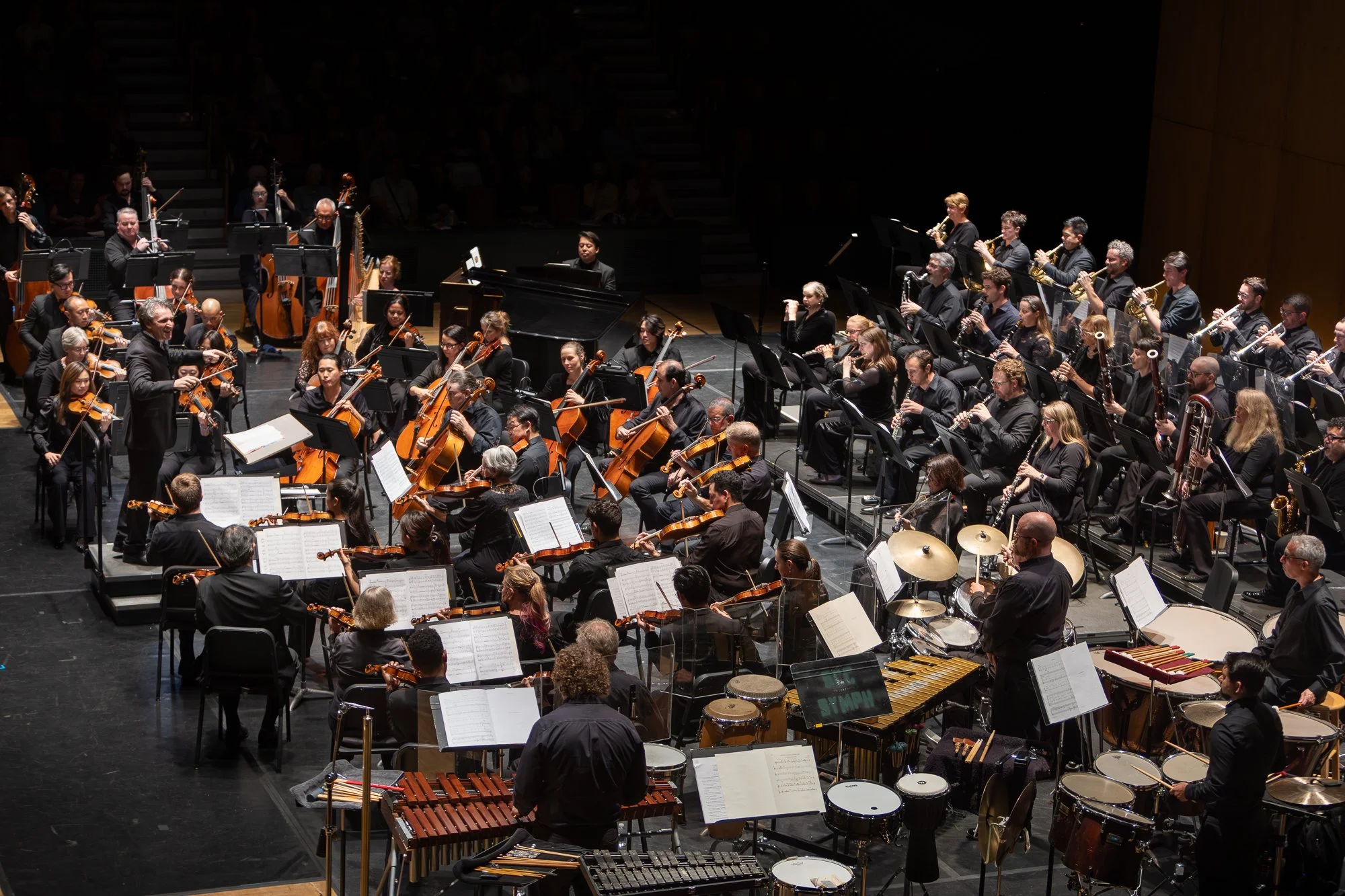
If the program of the weekend’s concerts had stuck to chronological order, Star Wars (1977) would have come before the 2022 Orzel Overture, but since it is hard to follow Star Wars with anything, the Williams was put last. That could have been the end, but Daniel Stewart chose to have a quiet encore — all of us singing the Iz version of Somewhere Over the Rainbow.
– Martin Gaskell