Last weekend’s Santa Cruz Symphony concerts offered an exciting première of a concert overture by young California composer Daniel Strebulaev and featured two works from the core Romantic symphonic canon: Felix Mendelssohn’s joyous Italian Symphony and a dazzling performance of Tchaikovsky’s Violin Concerto by newly-appointed Symphony Concertmaster In Sun Jang.
DANIEL STREBULAEV: Santa Cruz Overture
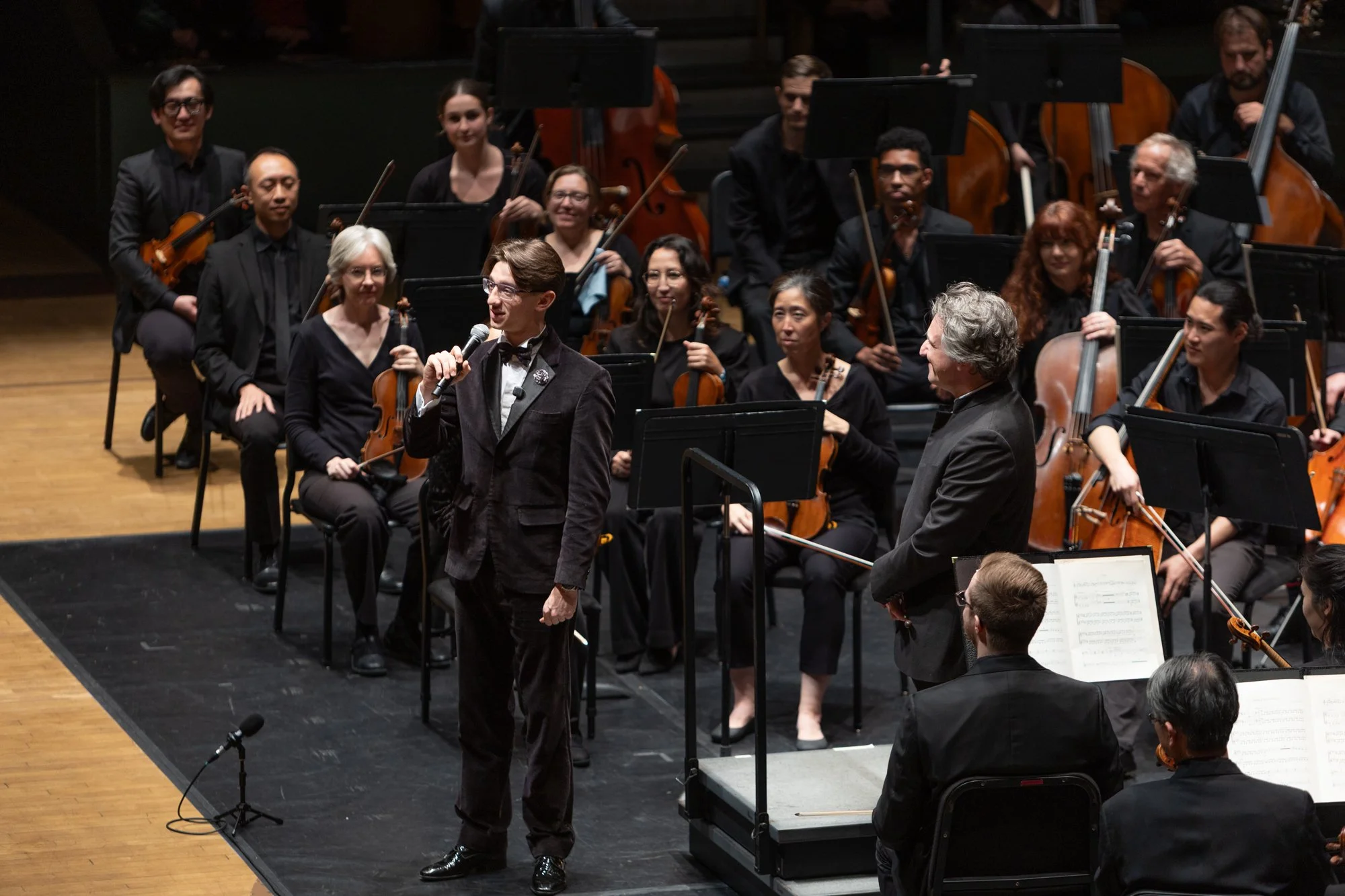
The concerts opened with the première of 18-year-old California native Daniel Strebulaev’s ebullient Santa Cruz Overture, a work commissioned by the orchestra. Saturday evening’s Santa Cruz concertgoers had the opportunity to hear an excellent interview of the composer by Kiefer Taylor in his pre-concert talk, and Daniel Stewart also had Strebulaev say a few words from the front about the overture before the orchestra played.
Strebulaev said that he is aiming for a career as a film composer. He explained that he saw the Santa Cruz Overture in cinematic terms. He encouraged us to hear our own story ideas in the music.
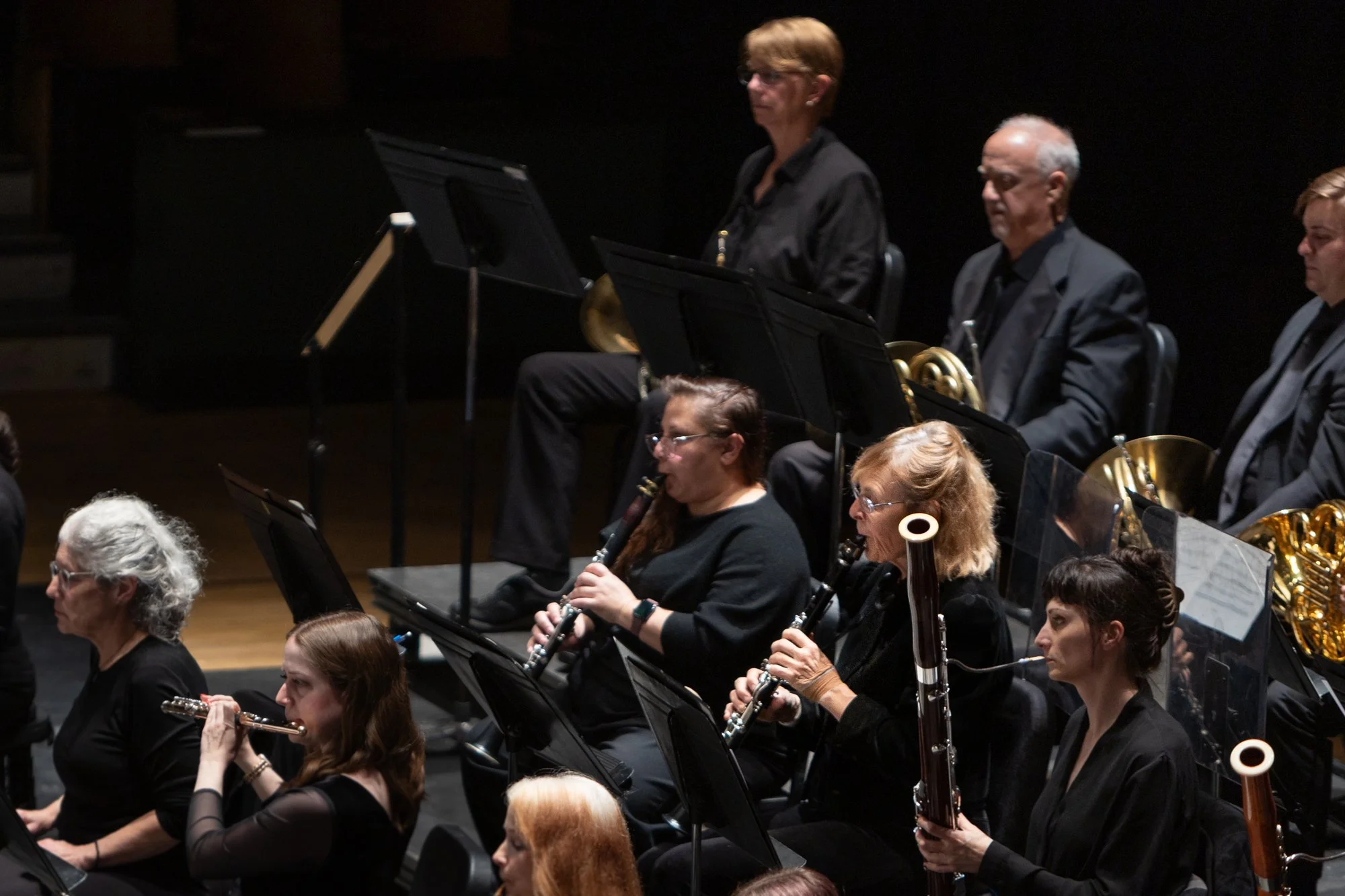
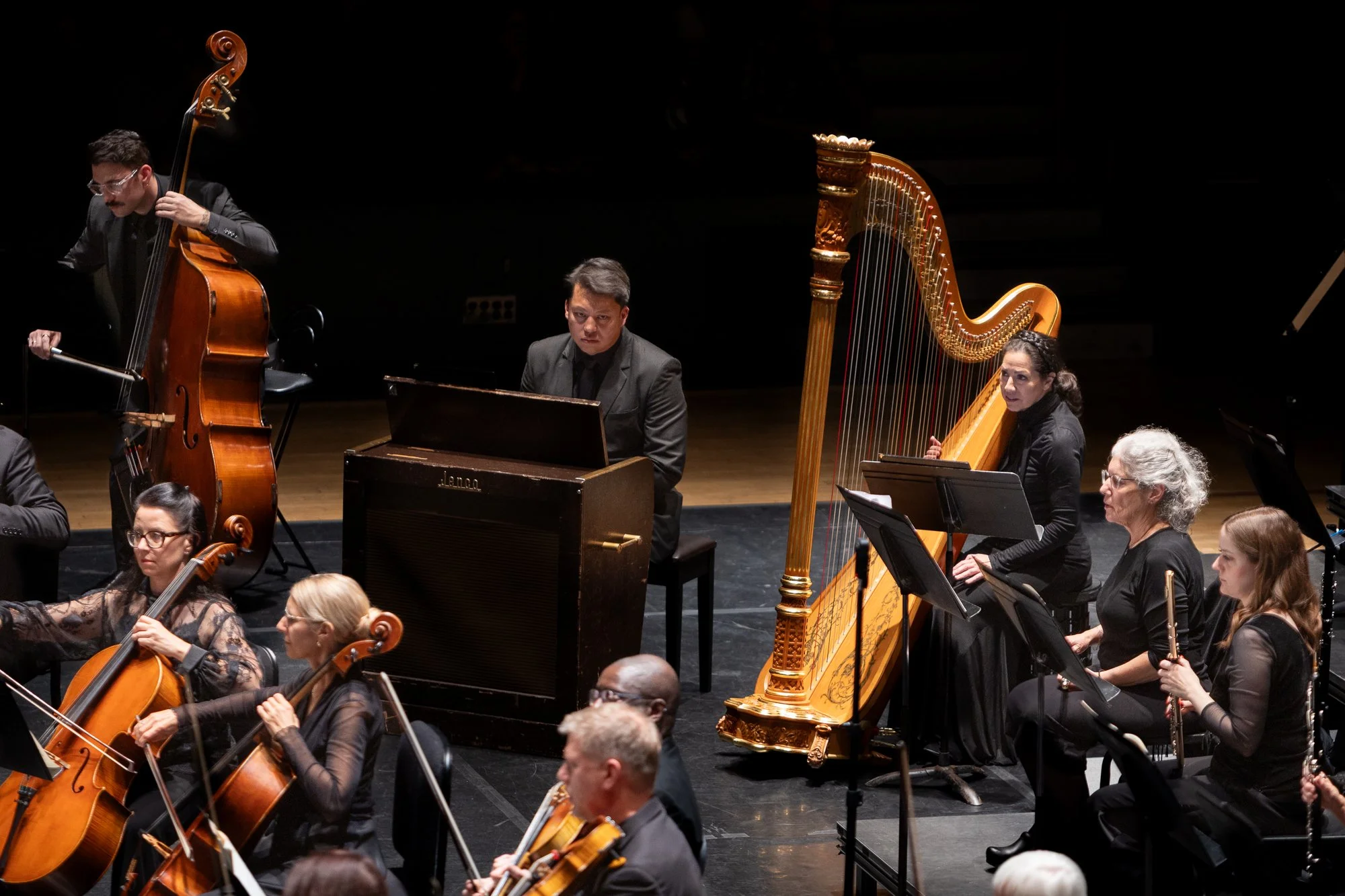
The overture is an upbeat and firmly tonal work. It employs what is basically “a Tchaikovsky orchestra,” but with the addition of harp, celeste, and a third trumpet. The only percussion in addition to the timpani are cymbals. A somewhat whimsical clarinet theme played at the beginning by principal clarinet Karen Sremac over an energetic accompaniment forms a basis of the work. This recurs throughout the overture.
The music is fast paced with rapid but not too abrupt changes of key, texture and mood. People commented that these changes are similar to how the soundtrack of a movie changes with the action. We got soaring string themes, driving timpani, exciting crescendos and some lively brass writing, but also, moments of calm and perhaps even mystery.
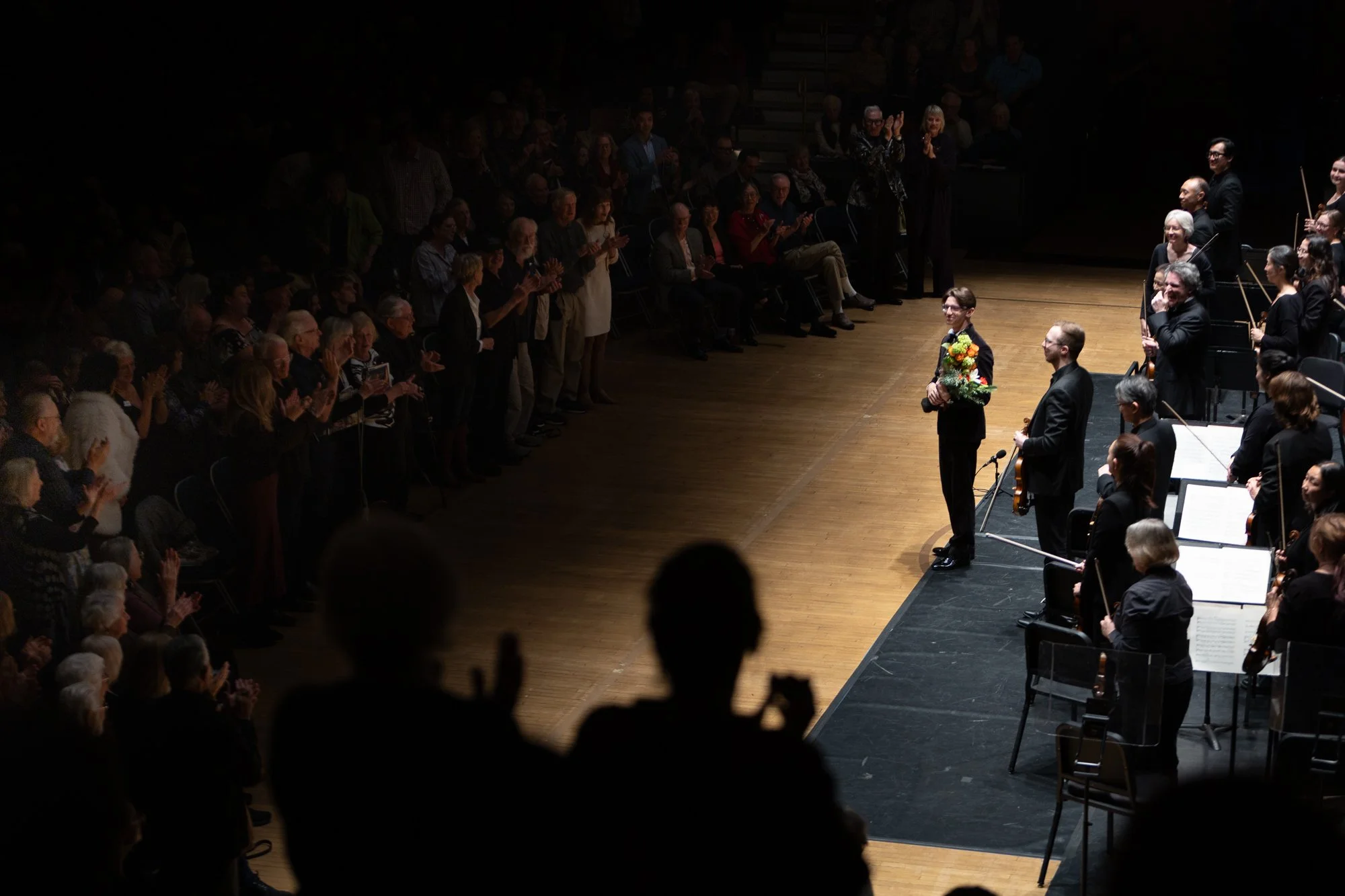
It was clear that the orchestra enjoyed playing the overture and it was appreciated by the audience, especially in Santa Cruz where there was an immediate big shout and whistling at the end and where the applause continued for over two minutes.
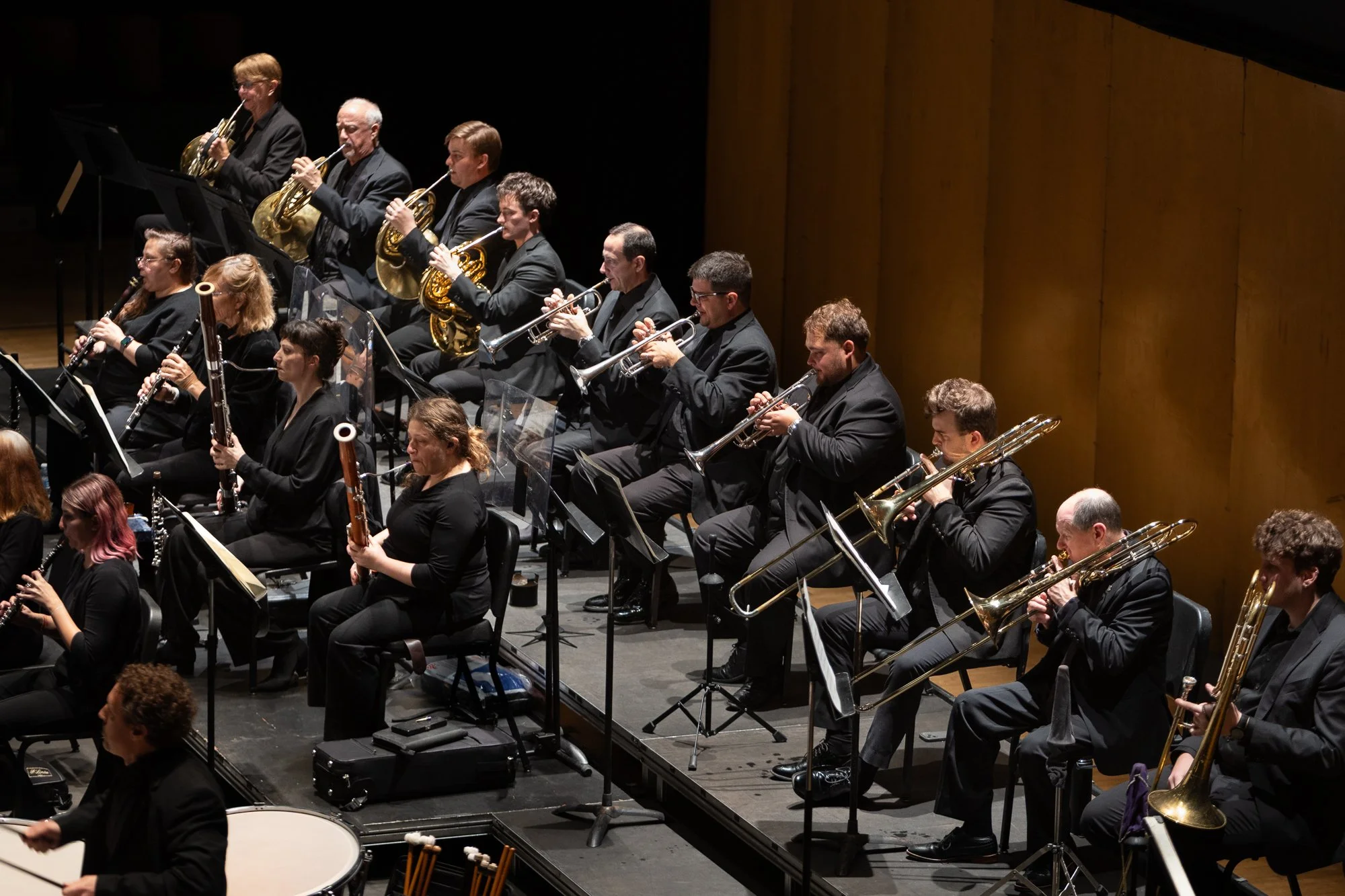
What impressed me right off the bat and all the way to the very last chord, was the extremely high quality of Strebulaev’s orchestration. He understands the characteristics of each instrument and knows how to use them to best effect both on their own and in varied textures. The balance and blending were always good.
Strebulaev says that a major influence on him has been superstar film composer John Williams. Strebulaev has clearly thoroughly absorbed Williams’s technique. On the basis of this overture, I would go so far as to say that he is a second John Williams! I personally would have no hesitation in highly recommending Strebulaev for writing the score to the next blockbuster hit.
FELIX MENDELSSOHN: ITALIAN SYMPHONY
The orchestra’s concerts in Santa Cruz and Watsonville concerts are usually very similar. Last weekend Daniel Strebulaev could not make the Sunday concert because he had to fly back to London, but that was the only change I was expecting. However, we ended up with an unplanned change in program order. At the Mello Center on Sunday afternoon when In Sun Jang should have come out, nothing happened. We waited and waited. It was announced that there had been “an injury backstage.”
After a worrying delay, Daniel Stewart came out to the podium and announced that the Mendelssohn Italian Symphony would be played to end the first half of the concert instead of the Tchaikovsky concerto. With that, the orchestra launched into the spritely opening of “the Italian,” but with an obviously worried orchestra and audience.
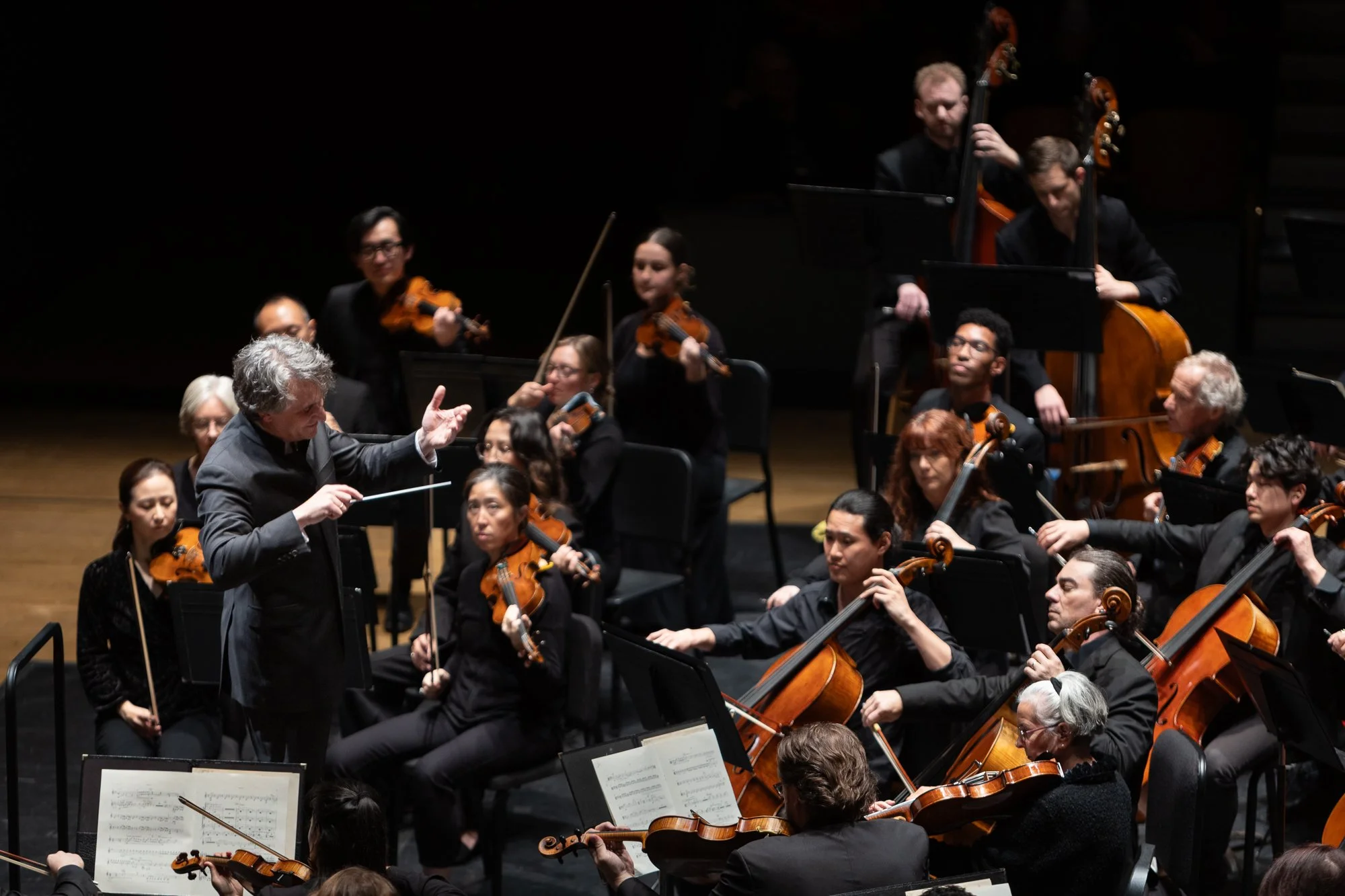
To me, the opening of Mendelssohn’s Italian has always conveyed the vibrancy of a warm day with sunshine and a perfectly clear blue sky. Mendelssohn wrote from Italy to his family that it was “the happiest piece I have written.” The orchestra’s performance captured this well. Maestro Stewart’s tempi felt just right. In the first movement he achieved a brightness and energy without rushing. I was very pleased that, unlike too many conductors, he did not cut out the repeat of the start of the first movement. (Because Mendelssohn wrote a long transition back to the beginning, I don’t believe that the repeat is a mere optional formality.)
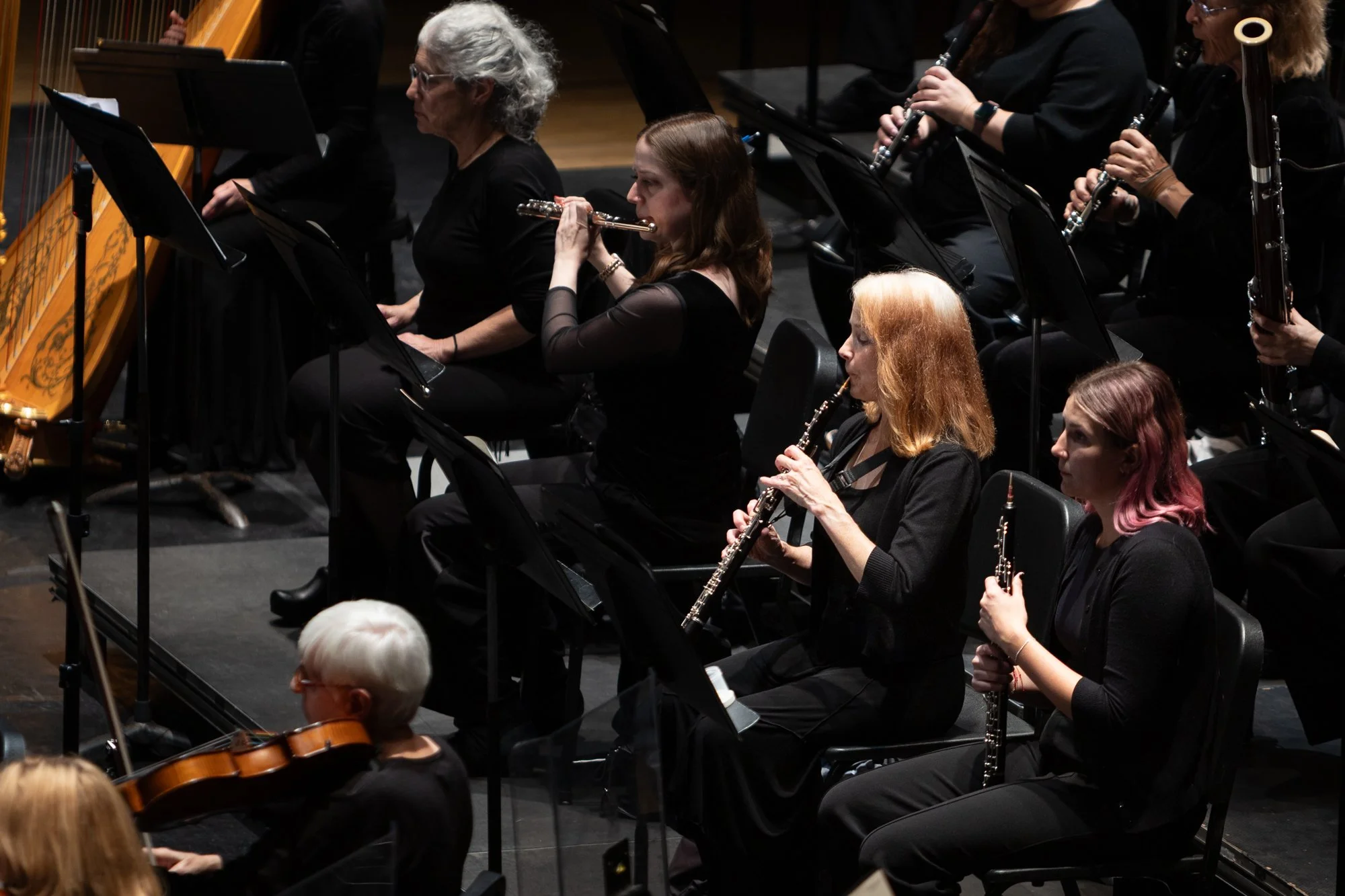
The woodwind playing in the first and last movements was very spritely. At Friday’s open rehearsal and both concerts one woodwind note especially caught my attention: the very long held high oboe A just before the recapitulation of the opening of the first movement. Compared with brass instruments or the clarinet, oboes have a rather narrow range of loudness, but principal oboist Laura Griffiths did a stunning job of making the high A seemingly come out of nowhere, swell and grow above the strings and then fade away again. At the end of the first movement, the audience in the Civic broke into applause.
The second movement of the Italian Symphony is believed to have been inspired by a religious march in Naples passing by and eventually fading into the distance. It starts with a “call to attention” in octaves. Stewart introduced a very interesting innovation here. He had half the strings play with vibrato, while the other half played the same notes with open strings. This was very effective. After the introduction, a solemn theme is played by the violas, the bassoons and an oboe.
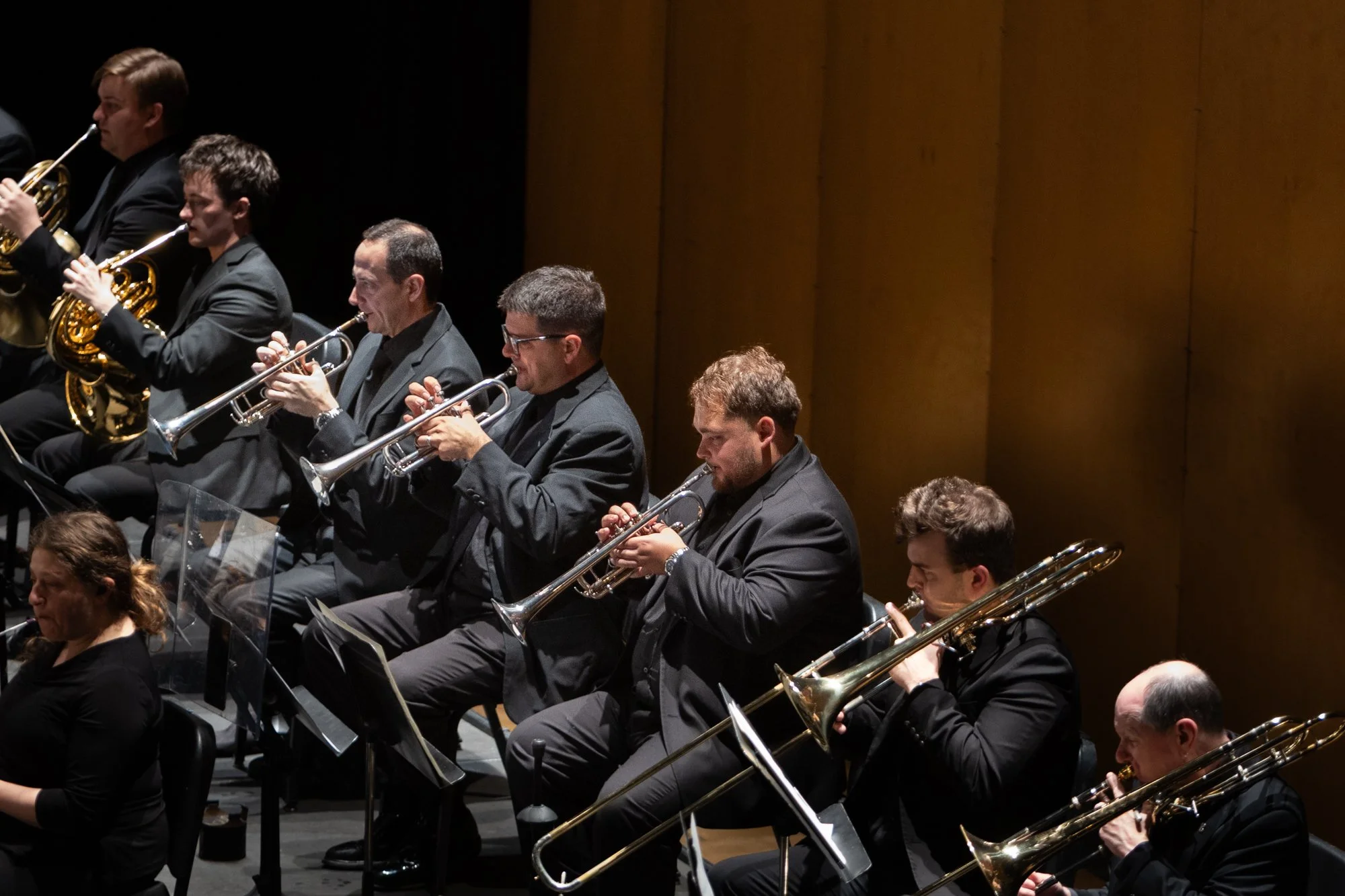
Saturday night’s audience also applauded at the end of this movement too, but at the end of the third movement, Stewart attacked the finale without any pause. As with the first movement, he chose a tempo that conveyed the drive and energy but did not come across as rushed. There was also a good balance in the interplay between the woodwinds and the strings. I appreciated how the trumpets (Michael Marmarou and Alan Matteri) blended in, giving a brilliant edge to the fortes and fortissimos but not dominating. At the end of the symphony, there was an immediate shout of appreciation, and everyone was on their feet.
Pyotr Ilyich Tchaikovsky: Violin Concerto
Needless to say, at the Mello Center before and during the intermission, we were left wondering whether we would get to hear the concerto. Would there just be an announcement that it would not be performed? Encouragingly, the orchestra reassembled and lights flashed to call us back to our seats. Then, to huge heartfelt applause, In Sun Jang and Daniel Stewart came out together.
It turned out that what had happened in the first half at the Mello Center was that some five minutes before In Sun Jang was to go on stage, the little finger on her left hand had got sliced open on a stage door mechanism leaving her with a painful, swollen and bleeding finger. In a social media post after the concert Jang said that it was such a heartfelt moment when she learned that many friends from the orchestra and the audience were praying for her. She said that, miraculously, with wonderful help from the orchestra’s videographer Kevin Monahan to treat and seal the bleeding finger correctly, it started feeling better and stopped bleeding.
The orchestra started their introduction and, to our immense relief, in came Jang! By the time she got to the lyrical first theme a few bars later, we knew that all was going to be well.
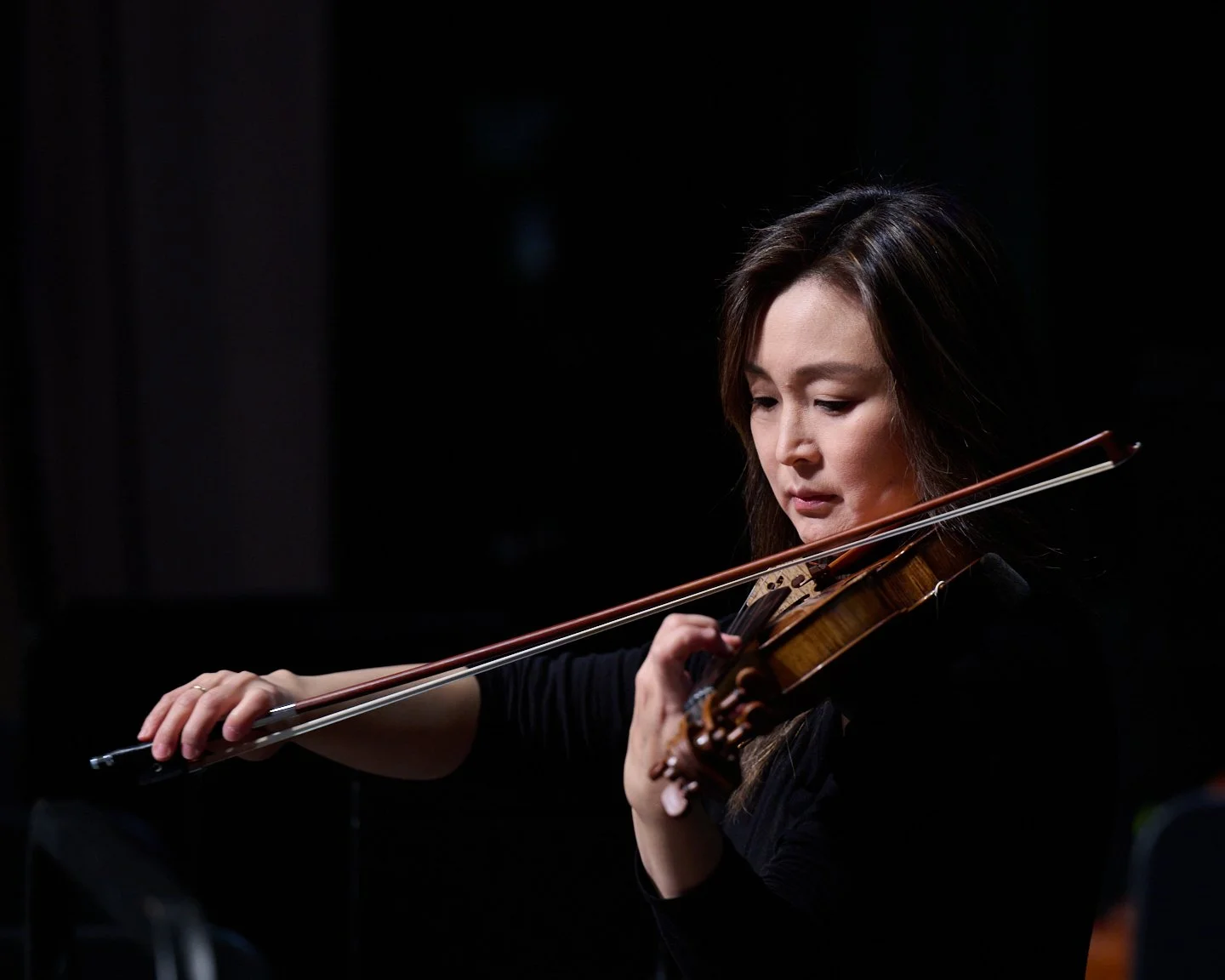
Tchaikovsky's violin concerto is widely recognized as one of the most challenging and technically demanding in the repertoire. He wrote in a draft of an autobiographical article that the great violinist Leopold Auer, to whom he initially dedicated the concerto, “pronounced it to be impossible to play.” (Auer later backpedaled on this in his memoirs decades later and claimed that he had merely said that the concerto was “unviolinistic.”)
Last weekend, in complete contrast to this early pronouncement, In Sun Jang had no trouble playing this allegedly “unplayable” concerto (even when she had a Band-Aid on her little finger!) Indeed, to my mind, one of the notable things about Jang’s performance was how effortless she made playing the concerto seem, even the cadenza of the first movement. When she played this on Saturday night, we were completely spell-bound. At one point during the cadenza there was a collective, barely audible sigh from the audience, which made me realize that I and many others had been holding our breath. In front of me, one audience member quietly shook his head in disbelief at Jang’s execution of a couple of passages.
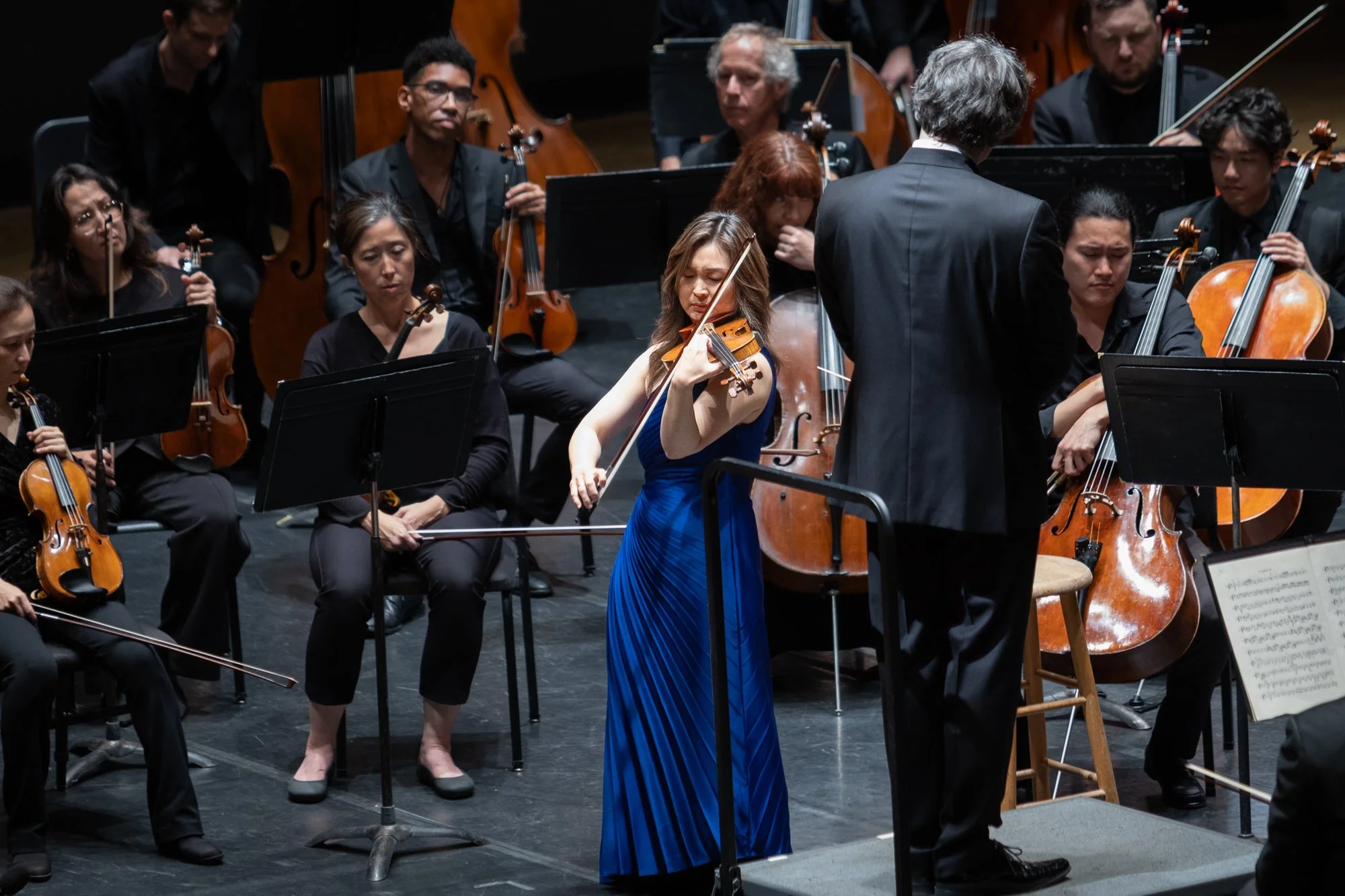
For a concerto, the partnership between soloist, the conductor and the orchestra is vital. I’ve heard recordings by very famous soloists over the years where the performance suffers from very lackluster orchestral playing by famous orchestras led by famous conductors (I won’t name names!). This was absolutely not the case with the weekend’s concerts. In addition to Jang’s seemingly effortless virtuosity, another most impressive thing was the relationship between soloist, conductor and orchestra.
From the left side of the auditorium at Saturday’s concert, we could observe Daniel Stewart attentively watching Jang. He was uxoriously looking down at he with great joy in his face and with an obvious tenderness. On Sunday, I was sitting on the right side and could see Jang’s face. With her first entry she gave a smile up to Stewart, a smile that must have been very reassuring to him given the earlier drama. Throughout the movement there were frequent tender smiles between them, especially in the hand-offs between violin solos and orchestral tuttis. The best description of this creative partnership came from an audience member who said after Saturday’s performance that “it was as though two hearts beat as one.” I simply can’t think of a better way of describing what we experienced.
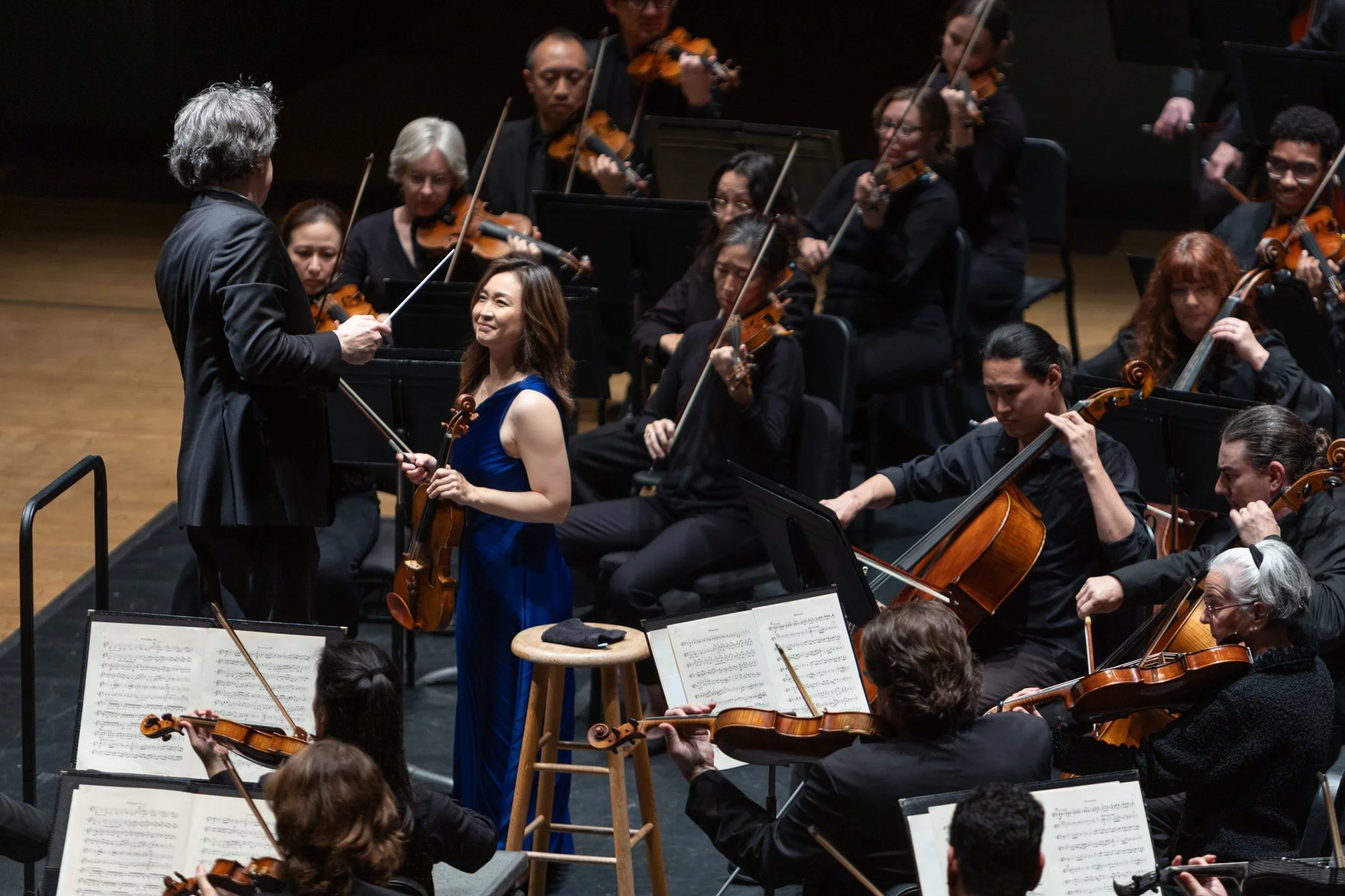
In the Mello Center, by the end of the first movement Jang’s playing had made us long forget her accident. As soon as the last chord ended, I witnessed something I had never seen before in the middle of a piece: a long, standing ovation not at the end of an entire piece or concert, but at the end of a movement! As soon as the last chord of the movement was over, everybody who could readily stand was up on their feet applauding.
Because of the ovation it was a while before Stewart could start the lyrical slow movement. This led without a break into the very fast finale. Once again, we experienced Jang’s effortless virtuosity. Her playing was powerful and the solo violin always came through clearly, even at the Civic (the Mello Center is kinder to soloists since the orchestra is set back on a stage while they are out front.) I especially admired how Jang made the very high notes at the top of runs ring out. I also appreciated that, unlike many performers, Stewart and Jang took the last movement without any cuts.
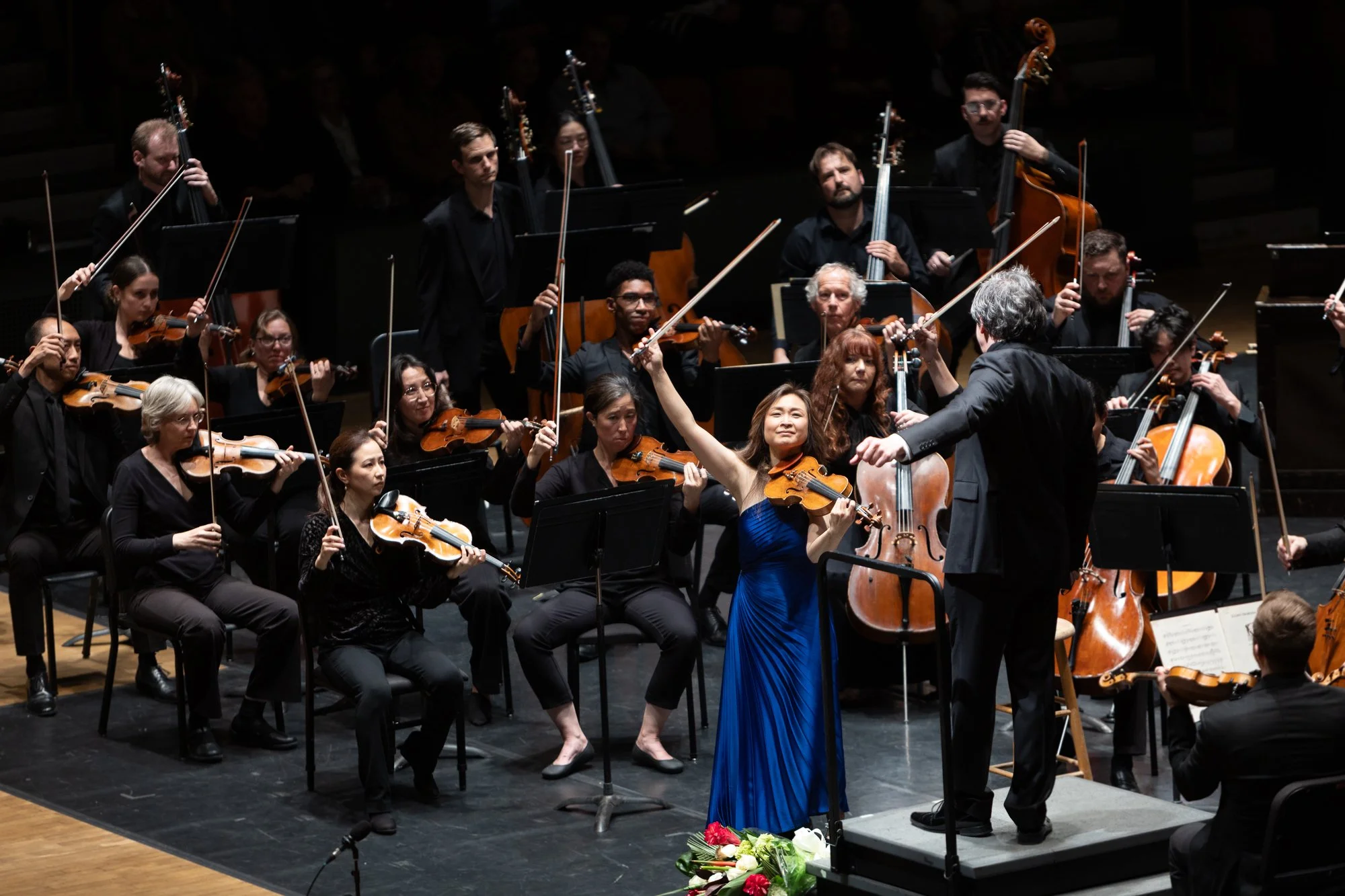
At the exciting end of the concerto, applause erupted before the sound of the last chord had a chance to die away. Daniel Stewart bent down from the podium to give In Sun Jang a big hug and there was a prolonged standing ovation.
– Martin Gaskell